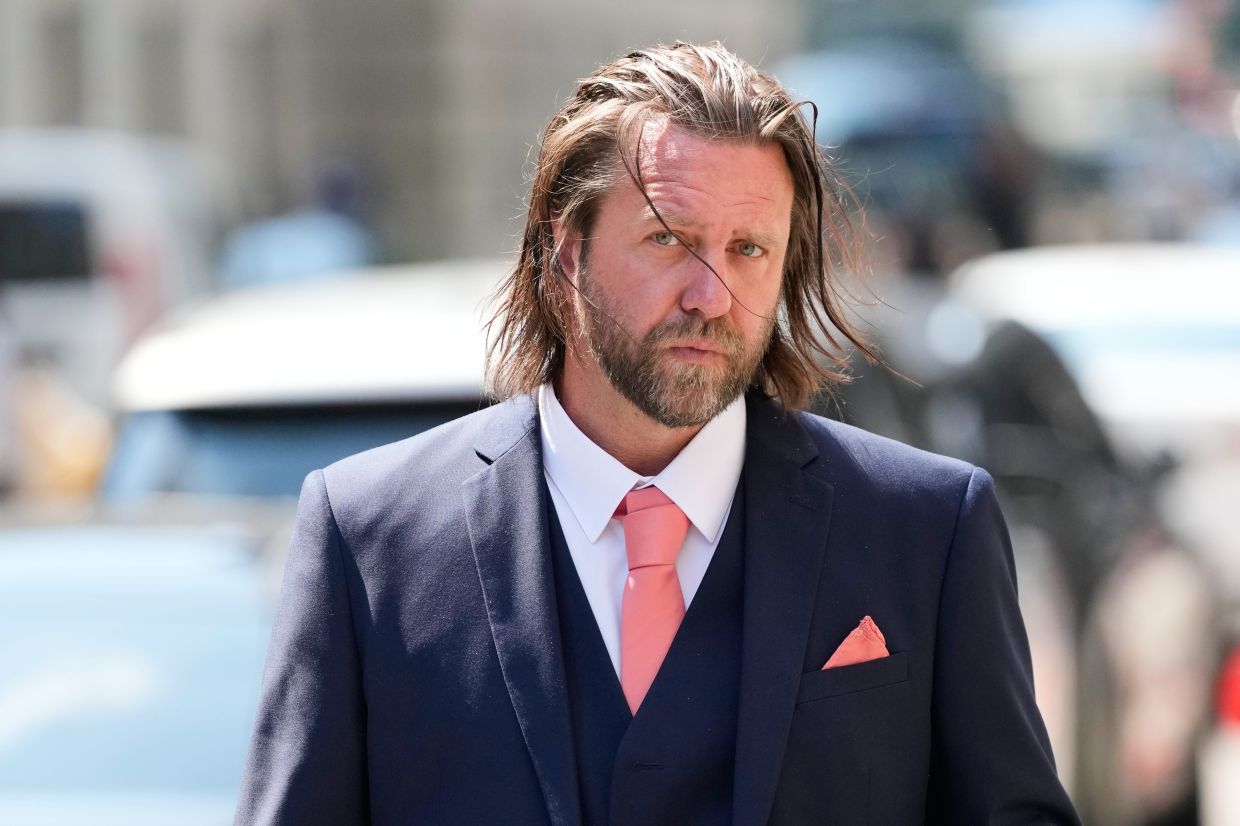
American film director Carl Rinsch has been handed a prison sentence after being found guilty of misappropriating US$11 million that Netflix provided to develop a science fiction television series in 2020. The case represents one of the streaming era's most notable fraud incidents, highlighting vulnerabilities in how creative projects receive funding and the responsibilities placed on established filmmakers to deliver contracted work.
Rinsch, 48, was convicted of redirecting substantial project financing into personal enrichment rather than production. According to Jay Clayton, the US Attorney for the Southern District of New York, the filmmaker abandoned his contractual obligation to create the show and instead engaged in speculative financial ventures and conspicuous consumption. The diversion of funds occurred across multiple categories of spending, demonstrating a systematic approach to converting studio money into personal assets.
The defendant's purchases exposed the full scale of the fraud. Court records reveal acquisitions spanning luxury automobiles—including a red Ferrari and five Rolls-Royces—along with designer clothing, fine furniture, and other high-end goods. Beyond tangible purchases, Rinsch deployed significant capital into volatile financial instruments, placing risky wagers on speculative stock options and cryptocurrency holdings. This pattern suggests deliberate rather than impulsive mismanagement, with diversified approaches to converting the Netflix funds into irretrievable personal wealth.
Beyond the custodial sentence, judicial order requires Rinsch to surrender the entire US$11 million to compensate Netflix for losses incurred through the fraud. The forfeiture requirement represents full financial restitution, stripping the defendant of ill-gotten assets accumulated through the scheme. This dual punishment—imprisonment combined with complete financial restitution—signals the severity with which US courts treat entertainment industry fraud, particularly where substantial corporate investments are involved.
Rinsch's legal team mounted a mitigation strategy centred on personal circumstances, requesting judicial leniency by framing the financial crimes within contextual pressures. Defence counsel argued that the misconduct occurred under significant career stress and amid an acrimonious divorce proceeding, suggesting that personal turmoil rather than pure criminal intent motivated the fund diversion. Such arguments attempt to distinguish between calculated fraud and behaviour stemming from emotional or psychological distress, though courts increasingly scrutinise whether such circumstances genuinely explain serious financial crimes.
The underlying project, a science fiction series initially titled with references to genetic engineering, represented a substantial creative and financial commitment from the streaming platform. According to court documents, the narrative concept centred on a scientist engineering an advanced clone population confined to an isolated walled district within a Brazilian city. The story envisioned these clones developing sophisticated technology and engaging in conflict with both baseline human populations and each other—a speculative narrative that would have required significant visual effects resources and location production.
Rinsch's cinematographic pedigree initially positioned him as a credible director for such an ambitious project. His previous feature film directorial efforts had established him within Hollywood circles as a capable filmmaker, providing the professional credibility necessary to secure Netflix's confidence and substantial funding allocation. The studio's willingness to advance US$11 million reflected industry-standard financing mechanisms whereby directors with established track records receive production budgets upfront, based on contractual deliverables and creative oversight.
The relationship between Rinsch and Netflix deteriorated as production timelines slipped and financial oversight raised questions about fund allocation. While Netflix was not formally named in prosecution documents, industry reporting had previously connected the conflict between the filmmaker and the streaming service to disputes over the planned series development. The specific disagreements apparently centred on production direction and budget utilisation, creating friction that escalated as the studio sought accountability for its investment.
Notably, director Keanu Reeves, under whom Rinsch had previously worked, submitted a character reference to the sentencing judge prior to conviction. Reeves advocated for clemency and compassion in the judicial determination, characterising Rinsch as an exceptionally talented artist whose personal psychology had led toward self-destructive patterns. Reeves' intervention suggested that colleagues within the entertainment industry recognised Rinsch's creative abilities while acknowledging psychological or behavioural vulnerabilities that may have contributed to the fraud.
The Rinsch case carries implications for streaming platforms and production studios across the industry, particularly regarding financial oversight mechanisms and advance payment protocols. The incident demonstrates that even established filmmakers with industry credentials represent fraud risks when provided access to substantial unmonitored funds. Studios have responded by implementing milestone-based disbursement systems and enhanced auditing procedures, moving away from lump-sum advances toward performance-conditional payments.
For Southeast Asian audiences and regional entertainment industries, the case illustrates the financial sophistication required to navigate international streaming production partnerships. As Netflix and competitors expand regional content development, similar arrangements between studios and local or Asian-Pacific filmmakers will increase. The fraud's mechanisms—diverting funds toward speculative investments and luxury consumption—remain possible regardless of filmmaker nationality or location, suggesting that rigorous financial governance must accompany creative autonomy in all cross-border entertainment ventures.
The sentencing establishes precedent for how US courts treat entertainment fraud, particularly where contractual obligations and fiduciary duties are breached through fund misappropriation. Future cases involving international production arrangements will likely reference Rinsch's conviction when establishing whether studio-filmmaker relationships constitute fiduciary relationships imposing heightened legal accountability. The outcome signals that streaming platforms, despite their contemporary scale and innovation leadership, remain entitled to the same fraud protections available to traditional film studios and broadcasters.

