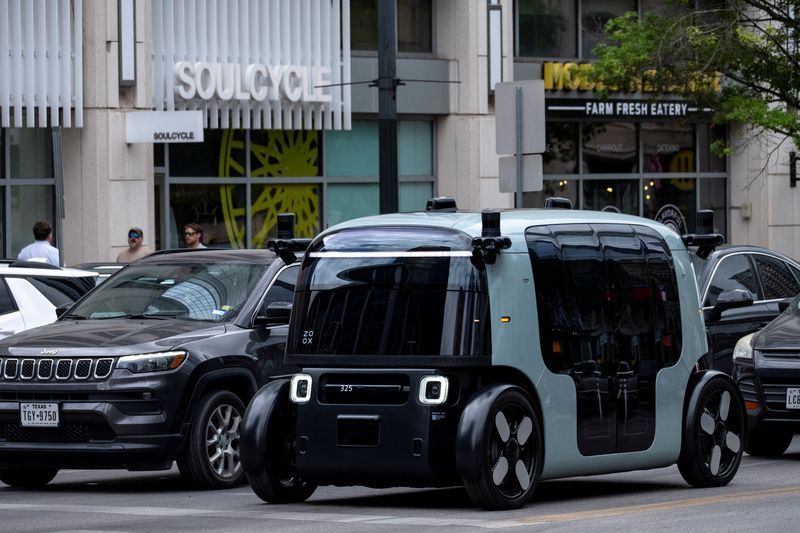
Amazon's autonomous vehicle subsidiary Zoox is moving from testing to commercial operations in Las Vegas, beginning paid robotaxi services from Monday following regulatory approval from the United States National Highway Traffic Safety Administration. The deployment represents a watershed moment for the autonomous ride-hailing sector, as companies race to transition from controlled trials to revenue-generating services that will determine the viability of fully driverless transportation networks.
Zoox's entry into paid operations comes just days after NHTSA granted the company an exemption from federal regulations mandating human controls in vehicles, a clearance that acknowledges the company's two-seater electric carriage meets safety standards equivalent to conventional vehicles. This exemption is particularly significant because it signals regulatory confidence in vehicles engineered from the ground up as autonomous platforms, rather than modified versions of traditional cars. The approval, however, comes with meaningful constraints: Zoox can deploy up to 2,500 vehicles in each of the next two years, and the company faces enhanced reporting obligations for crashes, safety incidents, and roadside malfunctions.
The Las Vegas rollout transforms Zoox from a free-trial operator into a direct competitor in the rapidly consolidating autonomous ride-hailing market. For over a year, Zoox has been ferrying passengers without charge across Las Vegas, San Francisco, Austin, and Miami, accumulating operational data and refining its systems. Now, the company will charge fares positioned at the premium end of the ride-hailing spectrum, comparable to the "comfort" tier offered by conventional services like Uber and Lyft, which typically command 20 to 40 percent premiums over standard fares for newer, more spacious vehicles. This pricing strategy reflects Zoox's positioning as a luxury autonomous experience rather than a budget-conscious alternative, betting that consumers will pay more for the novelty and comfort of fully autonomous rides in an upscale vehicle designed specifically for passenger experience.
Competition in the American robotaxi sector is intensifying rapidly as multiple technology leaders pursue distinct strategies. Alphabet's Waymo has already established commercial paid services across multiple metropolitan areas and possesses the most extensive real-world autonomous driving data. Tesla, under Elon Musk's direction, has begun deploying its own ride-hailing service using modified vehicles equipped with its autonomous capabilities. Zoox's entry adds a third major contender focused exclusively on purpose-built autonomous vehicles, creating a three-way race that will likely determine which technological and business approaches prevail in the emerging driverless mobility industry.
Zoox has outlined a transparent fare structure intended to build consumer trust during this critical commercialisation phase. The company will calculate fares based on a base charge plus time and distance metrics, with additional destination-specific fees clearly disclosed upfront, such as premium charges for airport pickups and dropoffs. Crucially, Zoox pledges that passengers will not face increased charges if the vehicle selects a longer route than anticipated, addressing a consumer concern about algorithmic routing that has plagued conventional ride-hailing platforms. This approach suggests Zoox is attempting to differentiate itself through transparent pricing and customer-friendly policies that acknowledge frustrations with existing ride-hailing services.
Despite the regulatory milestone, significant safety and operational challenges remain unresolved. Robotaxi operators continue to face intense scrutiny regarding their vehicles' responses to emergency scenes, interactions with unpredictable road users, and handling of edge cases that human drivers navigate through experience and intuition. Zoox specifically has grappled with these complexities, issuing multiple software recalls over the past two years. Most notably, in July, one of Zoox's robotaxis failed to detect heavy smoke at an emergency scene, highlighting a critical vulnerability in environmental sensing and situation assessment. Such incidents underscore the gap between laboratory performance and real-world complexity, particularly in chaotic or dangerous situations.
The regulatory framework governing Zoox's operations reflects NHTSA's gradual, evidence-based approach to autonomous vehicle deployment. Rather than imposing blanket prohibitions, the agency has created an exemption pathway that permits scaled commercial operation while maintaining oversight through mandatory incident reporting. This framework allows the agency to accumulate data on real-world performance and identify safety patterns that might not emerge during controlled testing. The additional reporting requirements imposed on Zoox serve both regulatory and public interest purposes, creating transparency into how frequently and under what circumstances the autonomous systems encounter problems or fail to respond appropriately.
For Southeast Asian observers, Zoox's Las Vegas launch offers both a template and a cautionary tale as regional governments consider autonomous vehicle policies. The success or failure of Zoox's commercial deployment will inform how Malaysian, Singaporean, Thai, and Indonesian authorities approach autonomous mobility regulation. If Zoox achieves strong safety records and consumer adoption in Las Vegas, regulatory bodies across Southeast Asia may accelerate approval timelines and create favourable conditions for autonomous ride-hailing services. Conversely, if significant safety incidents occur during commercial operations, regional governments will likely adopt more conservative stances, requiring longer testing periods and stricter safety thresholds.
The company has not disclosed timelines for expanding paid services beyond Las Vegas to other cities where it currently operates testing programs, suggesting a cautious approach to scaling that prioritises operational refinement and safety validation. This measured expansion strategy contrasts with the aggressive growth pursued by Waymo and Tesla, potentially reflecting Zoox's smaller scale relative to its competitors or strategic emphasis on establishing a strong reputation early in commercialisation. Each additional city launch will involve navigating distinct regulatory environments, local government approval processes, and local transportation infrastructure, making sequential rather than simultaneous expansion more feasible administratively.
The autonomous ride-hailing industry's rapid evolution reflects broader transformations in mobility, workforce displacement, and urban planning that extend far beyond the technical achievements of self-driving technology. As Zoox and competitors deploy robotaxis at scale, they will reshape transportation labour markets, alter urban traffic patterns, influence real estate development, and potentially reduce road fatality rates if safety records prove superior to human-driven alternatives. The Las Vegas pilot serves as an early indicator of whether this technological transition will deliver on its promises or confront insurmountable safety and social challenges that slow commercialisation.

