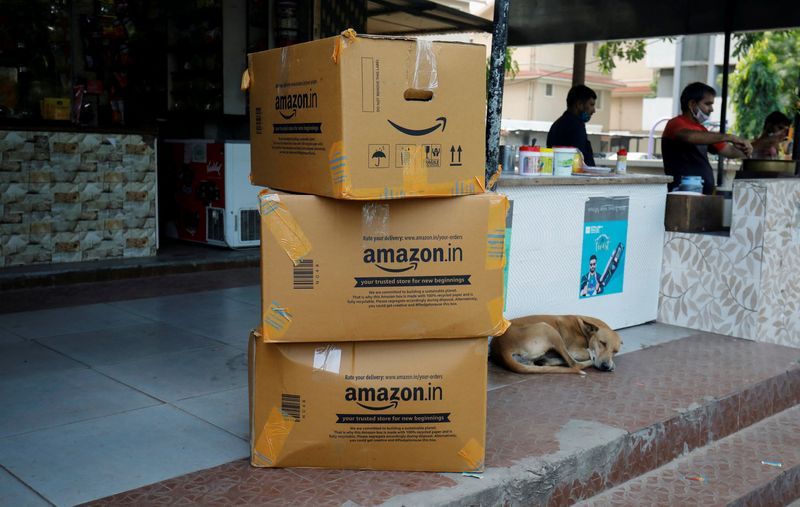
Amazon has announced it will pursue disciplinary measures against M&M Logistics Solutions, a major delivery partner operating across northern India, once local authorities conclude their investigation into a warehouse fire that claimed two lives on June 5 in Uttarakhand. The e-commerce giant, one of India's largest online retailers, is simultaneously conducting an internal inquiry into the circumstances surrounding the incident, according to sources close to the matter who declined public attribution due to confidentiality constraints.
The fire at M&M Logistics Solutions' facility in the northern state exposed serious gaps in workplace safety infrastructure. Official police documentation obtained by Reuters reveals the building lacked fundamental fire safety provisions, including a valid fire safety certificate, functional fire alarm systems, smoke detection equipment, and clearly marked emergency exits. These omissions represent fundamental violations of India's building and safety codes, raising questions about how such a facility could operate without proper regulatory oversight.
Amazon's statement to media outlets indicated that concrete consequences would follow once the investigation concludes, though the company stopped short of specifying what form these measures might take. Under Amazon's supplier code of conduct, third-party contractors operating delivery centres face potential suspension or termination for breaching established safety and workplace standards. M&M Logistics Solutions currently manages 45 Amazon delivery hubs across 21 cities in northern India, according to company announcements from 2023, making any disciplinary action potentially disruptive to Amazon's logistics operations in the region.
The incident has intensified scrutiny of working conditions within India's rapidly expanding e-commerce logistics sector, an industry where cost pressures often create environments vulnerable to safety lapses. The Amazon India Workers Union has demanded that judicial authorities initiate an independent inquiry into the deaths, characterising the fire as emblematic of systematic failures in workplace safety and protection of worker dignity. This call for external oversight reflects broader concerns within labour circles that internal corporate investigations may lack the rigour or transparency necessary to hold companies accountable.
Amazon's track record on labour issues in India has already drawn attention from regulatory bodies. Earlier in 2024, the National Human Rights Commission scrutinised the company over allegations that workers at a warehouse facility near New Delhi faced unsafe conditions during India's severe heatwave. Following those complaints, state authorities initiated legal proceedings under India's labour legislation, signalling that regulatory pressure on e-commerce companies regarding worker welfare is intensifying across the country.
The Uttarakhand fire incident arrives at a moment when questions about supply chain safety in India's e-commerce sector have become increasingly prominent. The sector has expanded rapidly over the past decade, but infrastructure development, regulatory enforcement, and safety standards have struggled to keep pace with this growth. Delivery partners and warehouse operators, often operating on tight margins, may prioritise speed and cost efficiency over investment in safety equipment and infrastructure, creating conditions where preventable disasters become possible.
M&M Logistics Solutions and Uttarakhand state police have not responded to requests for comment regarding the investigation or the allegations concerning building safety standards. The silence from the delivery partner company contrasts with Amazon's more proactive public positioning, though the company's statement remains cautious in committing to specific remedial actions pending the investigation's conclusion.
Amazon has consistently maintained that worker safety and wellbeing represent core priorities within its organisational values. However, critics argue that reliance on third-party contractors creates structural distance between the company and operational conditions at partner facilities, potentially enabling safety shortcuts to flourish. The complex web of subcontracting relationships that characterises India's e-commerce logistics industry means that accountability for safety failures can become diffused across multiple organisational layers.
The broader implications for Southeast Asia's e-commerce sector warrant consideration. As online retail platforms expand operations across the region, similar patterns of rapid growth outpacing safety infrastructure development could emerge in other countries. The Indian case provides a cautionary example of how scale and competitive pressures can erode safety standards unless regulatory bodies and e-commerce companies establish and enforce robust baseline requirements for all facilities within their supply chains, regardless of whether operations are directly controlled or managed by third parties.
Looking ahead, the investigation's findings and Amazon's subsequent actions will likely influence discussions about regulatory frameworks for e-commerce logistics across India and potentially influence policy conversations in neighbouring markets. If Amazon implements meaningful consequences for safety violations, it could establish precedent for stricter accountability within the industry. Conversely, if the outcome appears lenient or bureaucratically delayed, it may reinforce perceptions that corporate pledges regarding worker safety lack teeth when measured against profit margins and operational convenience.

