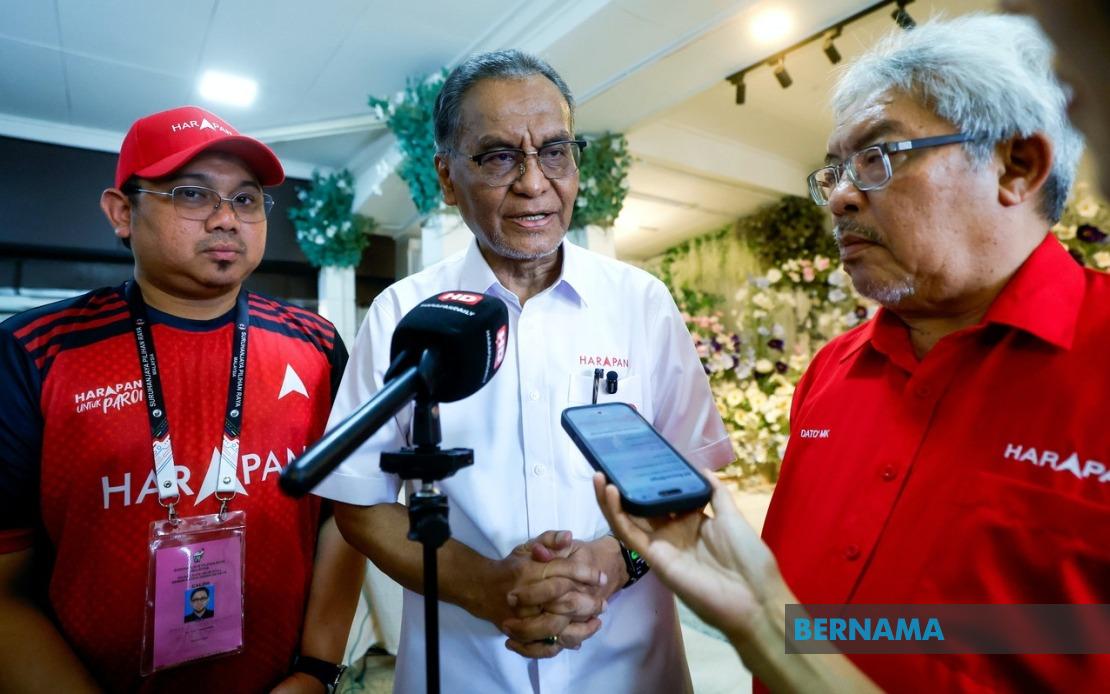
The 16th Negeri Sembilan state election is shaping up to be a contest between competing visions of governance, with Pakatan Harapan's Parti Amanah Negara positioning itself as a party of proven competence and community-focused administration. Nine Amanah candidates are now campaigning across the state with a deliberate emphasis on tangible achievements and solutions to everyday challenges facing voters, marking a strategic pivot away from rhetoric toward demonstrable results.
Amanah Vice-President Datuk Seri Dr Dzulkefly Ahmad articulated this approach when speaking to supporters in Seremban ahead of the August 1 polling date. He stressed that the party's campaign machinery would concentrate on showcasing what the incumbent state government has accomplished while simultaneously highlighting the qualifications and community ties of its candidates. This strategy reflects broader trends in Malaysian politics, where voters increasingly demand evidence of effective service delivery rather than simply responding to campaign messaging.
Within the wider Pakatan Harapan coalition, seat distribution reflects careful negotiation and mutual respect between component parties. Amanah is contesting nine of the coalition's 36 total seats, while Parti Keadilan Rakyat contributes 16 candidates and the Democratic Action Party fields 11. This allocation ensures that each party maintains a meaningful presence across the state while concentrating resources where they have the strongest organisational base and candidate quality. Such arrangements are crucial for coalition cohesion, particularly as Pakatan Harapan seeks to maintain its grip on a state government it has controlled since 2018.
The campaign methodology outlined by Amanah reflects lessons learned from recent electoral contests across Malaysia and the broader Southeast Asian region. Rather than relying solely on large-scale rallies and mass media, the party emphasises intimate engagement through small-group discussions, neighbourhood visits, and targeted social media communication. This grassroots approach allows candidates to understand local grievances in depth before escalating issues to relevant government agencies. For voters fatigued by generic campaign promises, such personalised attention can prove decisive in marginal constituencies.
Paroi state constituency exemplifies the scale of urban challenges that Amanah candidates must address. With more than 65,000 registered voters and a broader population exceeding 140,000, this constituency encompasses diverse economic interests and social concerns. Ahmad Shahir Mohd Shah, Amanah's candidate for Paroi, has identified support for small traders and business operators as a cornerstone of his platform. His specific proposals—streamlining licensing processes, ensuring adequate municipal infrastructure, and upgrading commercial districts through collaboration with local authorities—reflect a pragmatic understanding of what micro-entrepreneurs require to thrive in competitive urban markets.
Amanah's candidate slate reveals a deliberate strategy of fielding experienced individuals with established credentials within their respective communities. Incumbent Datuk Bakri Sawir defends Klawang, while Yaacob Mahmood contests Serting, Zarrina Abu Zarin seeks Lenggeng, and Mohd Hanis Alimin competes in Senaling. Additional candidates include Mohd Zailan Mohd Munawar in Johol, Muhammad Allif Ibrahim in Kota, Nasir Raman in Bagan Pinang, and Abd Latif A. Tambi in Gemencheh. This distribution spreads experienced campaigners across diverse geographical and demographic zones, maximising the party's capacity to mobilise existing support networks.
The electoral backdrop from the 2023 Negeri Sembilan state election provides important context for understanding current dynamics. Pakatan Harapan's 17-seat victory then, set against Barisan Nasional's 14 seats and Perikatan Nasional's five, established a comfortable working majority. However, electoral mathematics in Malaysian state politics remain fluid, and coalitions cannot assume that previous victories translate automatically into future ones. Voter sentiment can shift based on economic conditions, local governance performance, and broader national political developments.
For Malaysian observers and regional analysts, Negeri Sembilan's election holds significance beyond its state-level implications. As a bellwether contest, it tests whether Pakatan Harapan's governance narrative resonates with voters amid economic headwinds and evolving political competition. The emphasis on administrative track record rather than personality-driven appeals suggests that the coalition believes its strongest asset lies in demonstrable delivery. This approach contrasts with opposition parties that may emphasize change or alternative visions without established records of implementation.
The practical campaign machinery that Amanah describes also reveals sophistication in contemporary Malaysian electioneering. House-to-house canvassing remains labour-intensive but effective at generating voter engagement data. Social media outreach allows candidates to reach younger demographics and those less likely to attend physical gatherings. By integrating these channels, Amanah candidates create multiple touchpoints through which voters can encounter their messages and assess their viability as representatives. The strategy assumes that sustained engagement over weeks of campaigning builds stronger voter relationships than sporadic high-profile events.
From a Southeast Asian perspective, Negeri Sembilan's election reflects broader regional trends toward performance-based politics. In countries from Thailand to the Philippines, voters increasingly demand evidence that their representatives can solve practical problems—infrastructure gaps, livelihood opportunities, and responsive local governance. Amanah's emphasis on problem-solving capacity and service orientation aligns with this regional drift toward pragmatic electoral considerations, suggesting that Malaysian politics is not immune to these wider currents.
The practical deadlines for this election—early voting on July 28 and general polling on August 1—concentrate campaign activity into an intensive final phase. During these crucial weeks, the effectiveness of Amanah's grassroots engagement strategy will be tested against opposition efforts. Candidates must convert community meetings and social media interactions into actual voter turnout on election day. In marginal seats, the difference between victory and defeat may well hinge on which campaign organisation successfully mobilises its base when voters finally cast their ballots.
Looking ahead, the outcome in Negeri Sembilan will provide valuable signals about Pakatan Harapan's electoral prospects heading into future national contests. Should the coalition maintain or improve its position, it suggests that governance-focused messaging and community-oriented campaigning remain effective in Malaysian politics. Conversely, significant losses would indicate that voters have become convinced by opposition arguments or that the incumbent state government's record has failed to satisfy voter expectations. For Amanah specifically, strong performance in its nine contested seats would strengthen its position within the coalition and validate its organisational approach.

