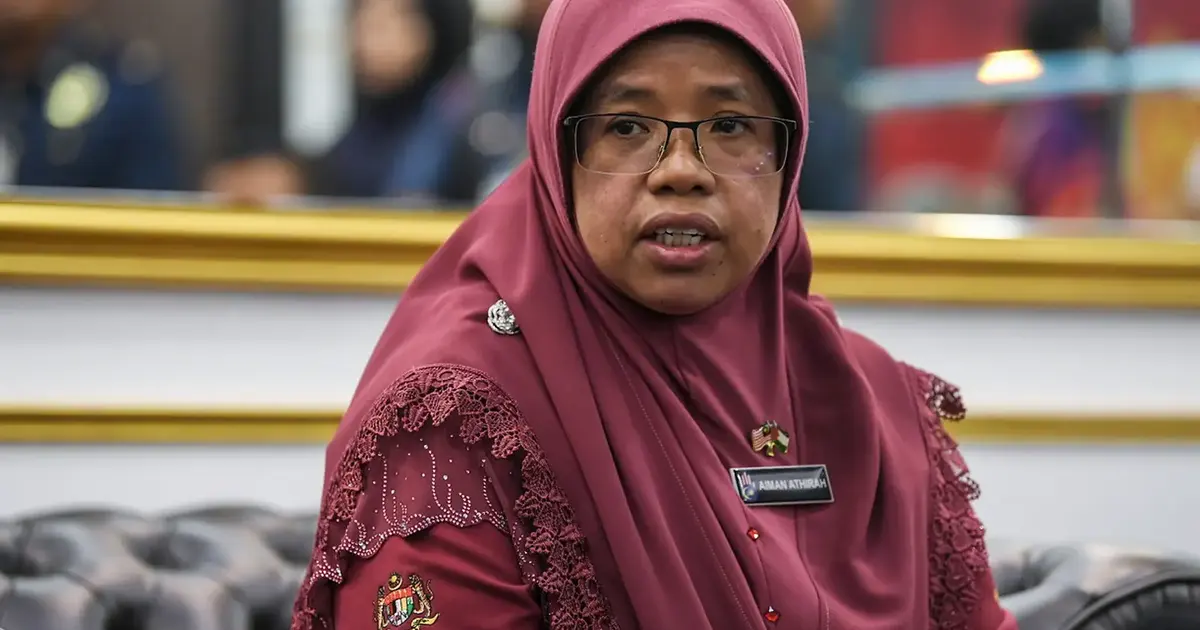
The political divide within Malaysia's Islamist movement has deepened as Amanah's Aiman Athirah Sabu directly confronted PAS president Hadi Awang over unsubstantiated claims against the Chinese-majority Democratic Action Party. Speaking to journalists, the Amanah vice-president demanded that Hadi either marshal credible proof of his allegations or resort to legal channels if he genuinely believed DAP was hostile toward Islam, creating a high-stakes moment in the ongoing rivalry between the two parties.
The challenge reflects a fundamental tension within Malaysia's political landscape, where accusations of religious hostility serve as potent rhetorical weapons in electoral competition. PAS, which has positioned itself as Islam's foremost defender in Malaysian politics, frequently invokes concerns about DAP's secularism and alleged indifference to Islamic values. Yet Amanah, which emerged from PAS in 2015, operates in a more complex ideological space, championing both Islam and pluralism. This positioning allows Amanah to critique PAS's more absolutist stance while maintaining credibility with both religious-minded and moderate voters.
Aiman Athirah's intervention carries particular significance because it underscores disagreement within the Islamic political establishment itself. Rather than allowing PAS to monopolize claims about Islamic authenticity, Amanah is essentially arguing that unsubstantiated attacks on DAP weaken rather than strengthen Muslim political interests. The ultimatum—either produce evidence or litigate—places Hadi in a difficult position, forcing him to either escalate to formal legal proceedings or appear to rely on empty rhetoric.
The broader context involves DAP's contentious relationship with religious constituencies across Malaysia. As a secular, multiethnic party, DAP has consistently advocated for constitutional protections of Islam as the federation religion while simultaneously supporting policies on civil law, education, and governance that some Islamist groups view with suspicion. DAP has repeatedly denied harboring anti-Islamic sentiment, pointing to its participation in various government coalitions and its support for provisions safeguarding Islamic institutions. Yet mistrust persists, particularly among PAS supporters who view DAP as fundamentally hostile to Islamic governance principles.
The timing of Amanah's challenge arrives amid Malaysia's evolving political realignment. The collapse of the Sheraton Move coalition in 2020 and subsequent shifts in government composition have created unstable coalitions where both PAS and DAP have had to navigate complex partnerships. Within this fluid environment, Amanah attempts to position itself as a rational voice capable of distinguishing between genuine religious concerns and opportunistic political mud-slinging. By demanding evidence from Hadi, Amanah implicitly acknowledges that voters increasingly expect substantive arguments rather than mere accusations.
For Malaysian observers, the dispute raises important questions about political accountability and the standards of evidence required in public discourse. If senior political leaders can make sweeping claims about opponents' positions toward Islam without tangible proof, what prevents the escalation of unfounded allegations into entrenched polarization? Aiman Athirah's challenge appears designed to restore a baseline of factual rigor to political debate, even as it simultaneously advances Amanah's competitive interests against both PAS and DAP.
The legal threat embedded in Amanah's challenge also merits attention. Malaysia's defamation laws provide mechanisms for parties to seek redress for false statements that damage reputation. If Hadi were to be taken to court, the judicial process would necessarily examine whether his claims about DAP's position toward Islam could withstand scrutiny. Such litigation would represent an unusual escalation in Malaysian politics, typically characterized by heated rhetoric rather than courtroom resolution of political disputes. Yet the very possibility underscores the seriousness with which Amanah views these allegations.
From a Southeast Asian perspective, Malaysia's intra-Islamic political disputes carry regional implications. The competition between PAS and Amanah for Islamic leadership influences broader patterns of coalition-building and governance across the peninsula and within ASEAN networks. How these two parties resolve their disagreements affects not only their respective organizational trajectories but also the regional balance between Islamist movements and secular parties. The confrontation between Aiman Athirah and Hadi thus operates at multiple levels simultaneously: local factional competition, national coalition politics, and regional ideological positioning.
Amanah's public challenge also reflects generational change within Malaysia's Islamic political establishment. Aiman Athirah, a younger politician from a newer party, is willing to directly confront the elder Hadi in ways that older-generation figures might have avoided. This generational dynamic introduces fresh competitive pressures and potentially new standards for how Islamic political parties conduct their mutual contestation. Rather than relying solely on institutional hierarchies and seniority, Amanah mobilizes public opinion and procedural legitimacy to challenge PAS's hegemonic claims.
The immediate political calculus appears straightforward: Hadi must either substantiate his claims or accept that Amanah has effectively neutralized his rhetoric through public exposure of its baselessness. If he pursues legal action, the evidentiary requirements of court proceedings would place serious burdens on PAS to prove its allegations. If he remains silent, Amanah benefits from appearing victorious in the exchange. Either outcome potentially shifts the balance of credibility within the broader conversation about how Malaysian political parties should address the intersection of Islam and governance. The challenge thus represents not merely a personal confrontation but a bid to reshape standards of political discourse around fundamental questions of religious commitment and national identity.

