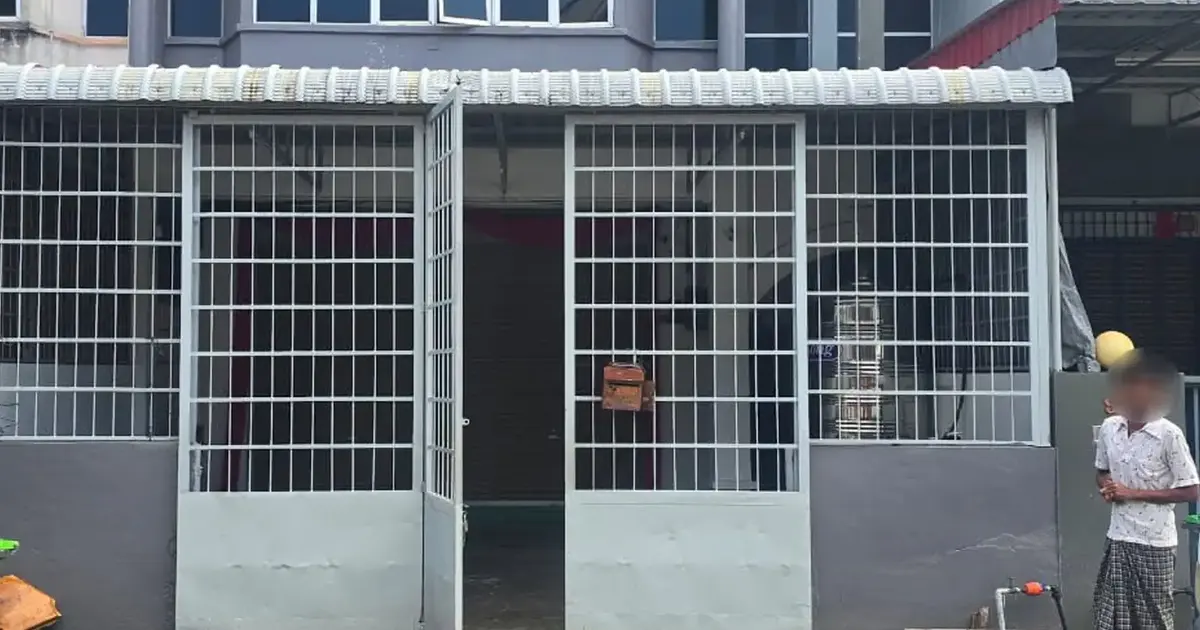
Alor Setar Municipal Council has moved against an industrial facility being repurposed as an educational venue for Rohingya children, triggering formal investigations into potential breaches of zoning regulations and unlicensed institutional operations. The enforcement action signals renewed scrutiny of how informal learning arrangements for refugee populations operate within Malaysia's jurisdictional framework.
The raided premises, located within an industrial zone in the Kedah capital, had been functioning as a de facto schooling space for Rohingya children without formal authorisation from relevant authorities. The discovery raises broader questions about the compliance landscape surrounding educational provision for vulnerable migrant communities, many of whom have limited access to formal schooling through official government channels. Such informal arrangements, while sometimes borne from practical necessity, frequently clash with municipal zoning codes and education ministry requirements.
Investigators are examining two distinct regulatory violations: the misuse of industrial-designated property for purposes fundamentally incompatible with its classified use, and the operation of what constitutes an educational institution without securing necessary permits or meeting prescribed institutional standards. These investigations will likely explore whether operators were cognisant of zoning restrictions and whether they pursued formal channels to legalise the arrangement before establishing the facility.
The enforcement action reflects Malaysian authorities' increasingly stringent approach to unauthorised educational spaces, particularly those serving non-citizen populations. While sympathy exists for the educational deprivation facing Rohingya refugee children—many of whom remain outside Malaysia's formal schooling ecosystem—regulators maintain that circumventing established licensing protocols creates accountability gaps and potentially compromises child welfare safeguarding standards.
Rohingya communities across Southeast Asia continue facing profound obstacles in accessing legitimate education. Malaysia hosts approximately 180,000 registered Rohingya refugees according to UNHCR data, alongside an estimated 60,000 to 100,000 undocumented individuals. Most remain ineligible for government school enrolment, driving parents to seek alternative learning arrangements. These informal educational networks, though resourceful responses to systemic exclusion, operate in regulatory grey zones that enforcement agencies increasingly target.
For Malaysian policymakers, the Alor Setar case exemplifies the tension between humanitarian imperatives and administrative compliance. Shuttering such facilities without establishing legitimate alternatives effectively denies vulnerable children educational access. Yet permitting unlicensed operations bypasses quality assurance mechanisms, health and safety protocols, and child protection frameworks that formal institutions must satisfy. This dilemma lacks straightforward resolution within conventional regulatory structures.
The investigation's outcome will influence how local authorities manage similar arrangements nationwide. If punitive measures dominate, operators may merely relocate rather than cease operations, potentially driving educational provision further underground into less transparent arrangements. Conversely, authorities could explore expedited pathways for licensing community-based learning centres serving refugee populations, establishing compliance frameworks that acknowledge both regulatory necessity and humanitarian obligation.
Kedah's municipal enforcement sits within the broader context of Malaysian immigration and education policy. The federal government maintains that public schooling remains unavailable to undocumented migrant children, while state-level authorities manage local regulatory compliance. This multi-jurisdictional framework frequently creates situations where grassroots education providers operate without clear legal pathways to legitimisation, yet face enforcement action when discovered.
The Alor Setar development may prompt civil society organisations working with Rohingya communities to reassess operational strategies. Some have successfully negotiated informal agreements allowing learning activities in community centres or religious institutions, though these arrangements remain precarious and subject to administrative challenges. The incident underscores the vulnerability of refugee-focused initiatives lacking formal institutional status and political advocacy support.
International refugee advocacy organisations have repeatedly flagged educational exclusion as a critical protection gap within the Malaysian system. Allowing refugee children to grow into adolescence without schooling perpetuates vulnerability, limiting future livelihood prospects and social integration possibilities. Yet Malaysia's legislative framework provides no explicit mechanism for creating educational institutions specifically serving non-citizen child populations, leaving administrators without clear legal templates.
The broader regional context intensifies these complications. Neighbouring countries including Thailand and Bangladesh operate large Rohingya populations with their own educational access challenges. Thailand's approach permits some informal schooling within camps under specific conditions, while Bangladesh's formal refugee camps operate educational programmes, albeit with significant resource constraints. Malaysia's predominantly urban refugee population lacks comparable institutional structures, amplifying reliance on improvised solutions.
Moving forward, the Alor Setar investigation outcome may catalyse discussions among municipal authorities, education ministry officials, and refugee-serving organisations about creating regulatory pathways that balance administrative compliance with humanitarian necessity. Whether Malaysian governance systems prove capable of accommodating such nuanced approaches remains uncertain, particularly given political sensitivities surrounding migrant populations. For now, informal education providers face mounting operational uncertainty.

