The funeral of Kumanjayi Little Baby on Saturday in Alice Springs has become a watershed moment for Australia's engagement with Indigenous welfare, drawing hundreds of mourners to the Garden Cemetery in the remote Northern Territory town and bringing renewed focus to the underlying social conditions that precipitated the tragedy. The five-year-old's death in April sent shockwaves through the nation and prompted violent disturbances in Alice Springs, a regional centre of 25,000 people situated roughly 1,250 kilometres south of Darwin, forcing a reckoning with decades of inadequate policy responses to Indigenous disadvantage in remote Australia.
According to Indigenous cultural protocols, the victim is referred to as Kumanjayi Little Baby, a naming convention that honours complex kinship relationships and ceremonial traditions central to Aboriginal Australian communities. The circumstances surrounding her death and the swift apprehension of the suspect—who was located and assaulted by community members before police intervention—catalysed the public unrest that followed, exposing the raw tension and frustration that has accumulated in Alice Springs over years of neglect and systemic failure.
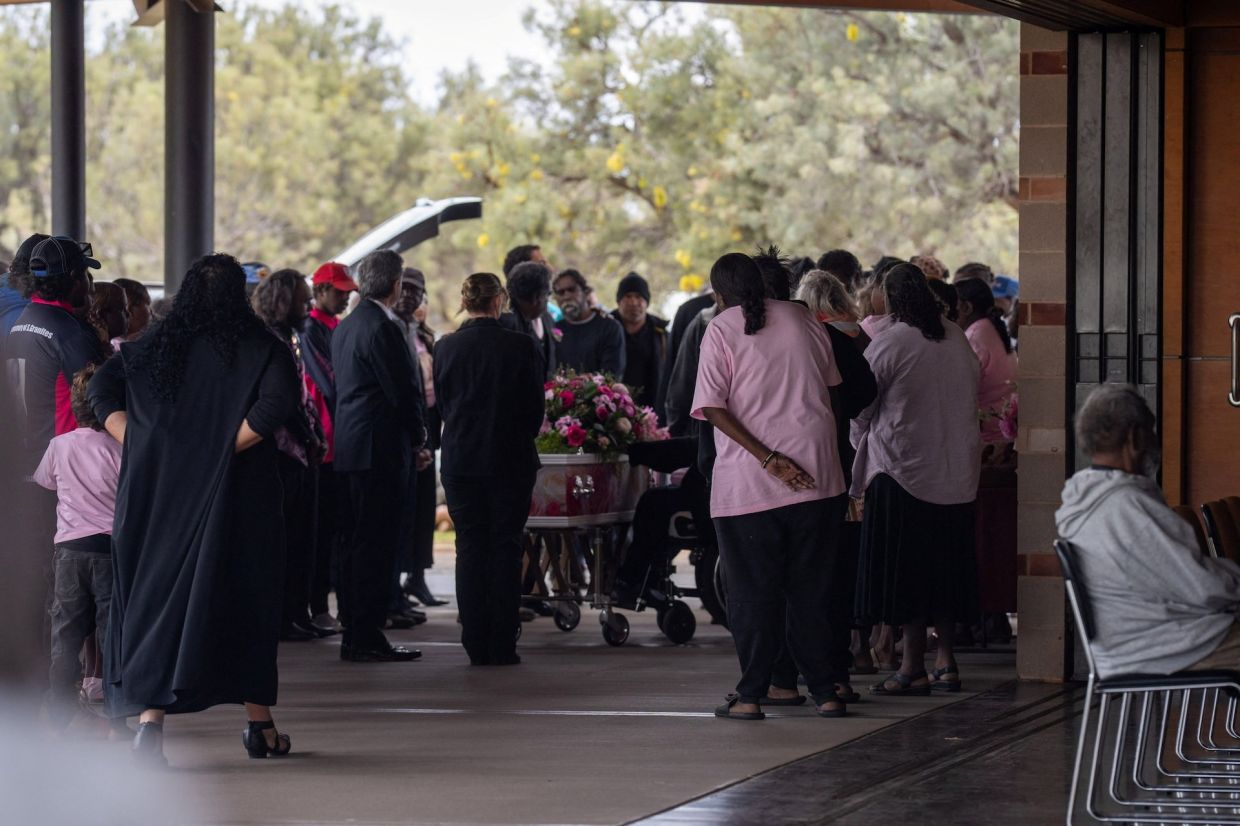
The Saturday funeral procession, captured in footage by the Australian Broadcasting Corporation, presented a striking visual testimony to community grief. Mourners, many deliberately wearing pink, the child's favourite colour, processed through Alice Springs to the cemetery service, which local media reports indicate attracted several hundred attendees. The coffin, adorned with flowers and carried in a black hearse, became a focal point for collective mourning and a symbol of the broader injustices facing Indigenous Australians in remote regions.
Following her death, the local community has engaged in what Indigenous Australians term "sorry business"—the extended mourning period and associated cultural practices that mark the passing of community members. This ceremonial framework, rooted in thousands of years of Aboriginal tradition, provides structure and meaning to grief within Indigenous societies, though the intensity and duration of mourning in this case reflects the profound shock of a child's violent death within a vulnerable community.
The demographics of Alice Springs underscore the concentration of Indigenous disadvantage in the region. Approximately one-fifth of the town's population identifies as Indigenous, with thousands of community members, including the victim's extended family, residing in informal camp settlements on the town's periphery. These encampments have become flashpoints for policy debate, characterised by overcrowding, inadequate housing infrastructure, limited access to essential services, and economic marginalisation that has created cycles of poverty and social dysfunction.
Prime Minister Anthony Albanese issued public statements in the immediate aftermath of the killing, calling on territorial authorities to accelerate efforts to improve living conditions within these Indigenous communities. His intervention signalled federal-level concern about the correlation between environmental deprivation and the acute social problems—including violence, substance abuse, and child welfare crises—that disproportionately affect remote Indigenous populations. The pressure from the top leadership indicated recognition that localised governance had proven insufficient to address entrenched disadvantage.
The alleged perpetrator, Jefferson Lewis, aged 47, has been formally charged with the murder of Kumanjayi Little Baby and two additional offences, the particulars of which remain subject to legal suppression orders that protect ongoing judicial processes. The prosecution will need to establish motive and intent before a court, though the circumstances of his apprehension—being located and assaulted by angry community members—raised questions about the adequacy of local law enforcement responses and the escalation of community anger.
The Alice Springs riots that followed the incident represented more than a spontaneous reaction to one tragic crime; they reflected accumulated grievances over housing shortages, alcoholism fuelled by limited recreational alternatives, gang activity, substance trafficking, and the absence of meaningful economic opportunity for young Indigenous people. The violence provided a window into the desperation characterising remote Indigenous communities where federal and state governments have struggled to coordinate effective long-term interventions.
For Malaysian and Southeast Asian observers, the Alice Springs situation offers a cautionary case study in how systemic neglect of indigenous and marginalised populations in remote regions can precipitate social breakdown and community instability. Australia's struggle to provide adequate housing, healthcare, education, and economic pathways for Indigenous peoples despite decades of policy attention demonstrates the complexity of addressing historical injustice and structural inequality in geographically isolated populations. The funeral itself—a moment of communal grief conducted according to cultural principles—stands in poignant contrast to the policy failures that created the conditions for tragedy.
Moving forward, the case will likely intensify debate about whether the current combination of localised Indigenous governance initiatives, federal funding mechanisms, and territorial administration has genuinely improved outcomes or merely perpetuated a cycle of crisis response rather than preventive investment. The visibility of Kumanjayi Little Baby's death and funeral places pressure on Australian policymakers to demonstrate concrete improvements in Indigenous welfare, particularly in remote communities where social problems remain intractable despite considerable public resources being directed toward them.

