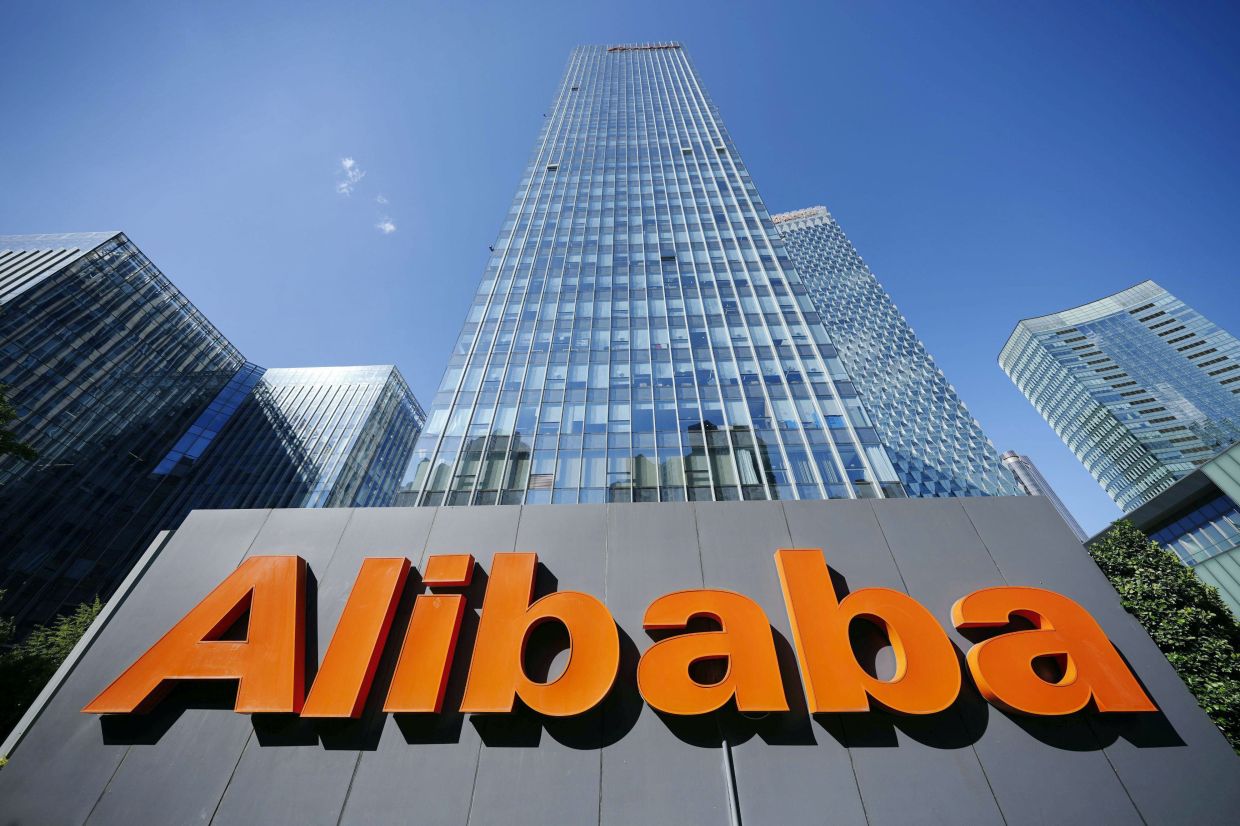
Alibaba Group Holding, the Chinese technology and e-commerce powerhouse headquartered in Hangzhou, has escalated tensions between Washington and Beijing by launching a legal challenge against the US Department of Defence. The company filed suit in a district court in San Jose, California, on Tuesday, demanding removal from a Pentagon blacklist that categorises it as a military-affiliated enterprise. The lawsuit represents a bold assertion of corporate rights in a deepening geopolitical conflict, with Alibaba arguing that the Pentagon's action violates constitutional protections including due process guarantees and free speech rights.
The Pentagon added Alibaba to its blacklist on June 9 under Section 1260H of the National Defence Authorisation Act, alongside a constellation of other Chinese technology companies spanning artificial intelligence, electric vehicles, robotics, networking equipment, biotechnology and solar energy sectors. The list included BYD and Nio, the electric vehicle manufacturers; Baidu, the search engine giant; Unitree Robotics; and TP-Link, which specialises in networking equipment. This sweeping action reflects Washington's strategic assessment that these companies operate at the intersection of commercial success and potential military application, precisely where American and Chinese technological competition has intensified most sharply.
While the Pentagon designation does not automatically impose sanctions, its consequences prove substantial enough to warrant legal defence. Companies on the 1260H list face significant barriers to accessing American capital markets and securing contracts with the US government—restrictions that could severely hamper Alibaba's ability to expand in the world's largest economy. For an enterprise of Alibaba's scale and global aspirations, such constraints threaten not only immediate revenue opportunities but also long-term strategic positioning in a world increasingly divided along technological lines.
Alibaba's response in its court filing fundamentally contests the Pentagon's factual foundation. The company categorically denies any connection to China's State-owned Assets Supervision and Administration Commission, the government body that oversees state enterprises. It similarly rejects Pentagon assertions that Alibaba contributes to military-civil fusion efforts through ties to the Ministry of Industry and Information Technology. According to the company's account, its limited interactions with MIIT constitute nothing more than routine regulatory compliance obligations faced by all major technology firms operating within China's jurisdiction. This distinction between ordinary business operations and strategic military collaboration forms the crux of Alibaba's legal argument.
The company emphasised to the court its effort to engage directly with Pentagon officials before the blacklist decision materialised. Alibaba representatives met with Defence Department officials in January to discuss the potential designation, and the company submitted written responses in March addressing the Pentagon's concerns. Nevertheless, the Pentagon proceeded with its June listing despite this engagement. This sequence of events shapes Alibaba's characterisation of the Pentagon's action as arbitrary and capricious—terms carrying legal weight in challenging administrative decisions that allegedly lack rational basis.
Alibaba's position receives reinforcement from coordinated statements by other designated companies. BYD and Baidu have both strongly opposed the Pentagon's decision, signalling that this dispute transcends any single enterprise and reflects broader Chinese corporate resistance to what Beijing regards as economic weaponisation disguised as security policy. The Chinese embassy in Washington has likewise condemned the blacklist mechanism itself, contending that the United States has stretched its concept of national security to serve protectionist economic aims and that the designations constitute discriminatory treatment inconsistent with international norms.
The legal challenge arrives amid escalating tit-for-tat measures that underscore how thoroughly security concerns have infiltrated commercial relations. China's Ministry of Commerce responded on Monday by adding ten American companies to its own export control list, targeting firms specialising in advanced technologies including robotics, drones, aerospace and rare earth materials. The designated American companies—spanning Red Cat Holdings, Teal Drones, IMSAR, Jaia Robotics, Ball Aerospace & Technologies, Oshkosh Defense, L3Harris Maritime Services, MP Materials, USA Rare Earth and Aveox—operate predominantly in sectors where they compete with or support Chinese technological advancement.
China's retaliation extended further the same day when the Ministry of Finance announced restrictions on forty-six American companies' participation in Chinese government procurement. This separate action, effective immediately, targets defence contractors and their partners including Lockheed Martin, Raytheon Missiles & Defense, General Atomics, Boeing's Defence division, General Dynamics and the Javelin Joint Venture partnership between Lockheed Martin and Raytheon. The exclusion from procurement opportunities, particularly when affecting major defence suppliers, represents a symbolic but meaningful economic consequence that mirrors the Pentagon's own restrictions.
For Malaysian and Southeast Asian observers, Alibaba's lawsuit carries broader significance beyond the immediate dispute between two technology superpowers. The case exemplifies how the United States and China increasingly employ regulatory tools and security designations to advance competitive advantage in critical technology sectors. Regional economies deeply integrated into both supply chains and investment networks face growing pressure to navigate contradictory restrictions and choose technological alignment. The precedent established in Alibaba's case—whether courts validate the Pentagon's authority to blacklist foreign companies or constrain such administrative power—will influence how Beijing and Washington weaponise their respective legal systems in coming competition.
The lawsuit also highlights vulnerabilities affecting Chinese companies with global ambitions, particularly those operating across multiple jurisdictions with conflicting regulatory regimes. Alibaba's ownership of the South China Morning Post itself demonstrates the cross-border nature of modern Chinese enterprises, potentially complicating efforts to compartmentalise domestic and international operations. For multinational corporations throughout the region, Alibaba's courtroom battle serves as cautionary evidence that scale and legitimacy offer limited protection against geopolitical designation decisions.
The outcome remains uncertain, with the Pentagon declining to comment on ongoing litigation while maintaining its original designation. Federal courts will need to determine whether the Pentagon satisfied administrative procedure requirements and whether the blacklist mechanism itself withstands constitutional scrutiny. The decision will likely influence similar cases involving other Chinese technology companies contesting their designations, potentially reshaping how both superpowers deploy regulatory power in their technological competition.

