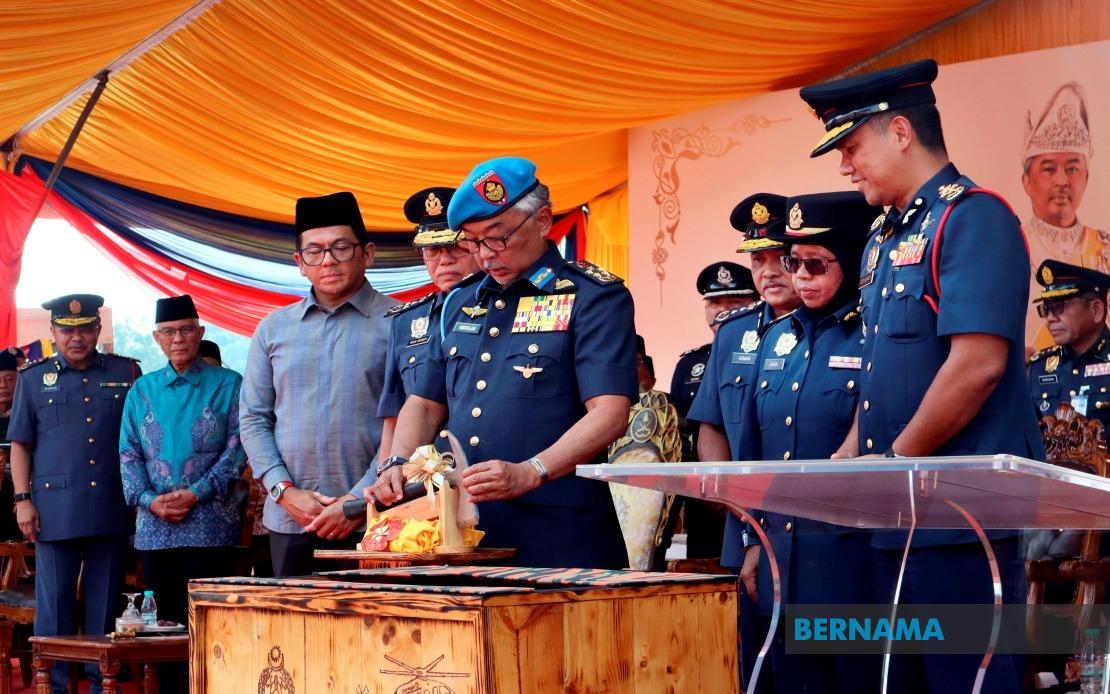
The Sultan of Pahang, Al-Sultan Abdullah Ri'ayatuddin Al-Mustafa Billah Shah, has commended both the federal and state administrations for directing funds toward infrastructure development that directly serves the people of the state. Speaking during the official opening of the Sungai Lembing Fire and Rescue Station in Kuantan on July 2, the monarch highlighted the significance of these capital investments, particularly those directed toward reducing flood risks—a chronic concern for many Pahang communities during the annual monsoon season.
Flood management remains one of the most pressing infrastructure priorities in Pahang, a state historically vulnerable to inundation. Sungai Lembing, a township in the Kuantan district, occupies a critical position in Pahang's flood geography. Its vulnerability during heavy rainfall episodes serves as an early warning indicator for broader flooding risks affecting Kuantan and surrounding areas. By investing in mitigation infrastructure in Sungai Lembing, authorities are addressing both immediate local concerns and contributing to early-warning capacity across the wider region. The Sultan's explicit recognition of these efforts signals royal acknowledgment of the financial burden such projects place on public budgets while underscoring their essential nature.
Beyond flood management infrastructure, the Sultan referenced broader capital works undertaken across Pahang, acknowledging that substantial public expenditure has been deployed across multiple sectors. This reflects a wider appreciation for coordinated development planning between the state government and federal authorities—a collaborative approach that has become increasingly important as Malaysian states navigate competing demands for limited resources. The presence of Pahang Menteri Besar Datuk Seri Wan Rosdy Wan Ismail at the event, alongside federal representatives including Deputy Housing and Local Government Minister Datuk Aiman Athirah Sabu and Deputy Economy Minister Datuk Mohd Shahar Abdullah, underscored the inter-agency nature of Pahang's development agenda.
In a directive that carries particular weight given the Sultan's constitutional position, Al-Sultan Abdullah instructed that river channels adjacent to population centres be deepened as a structural measure to reduce overflow risk during monsoon periods. This intervention reflects growing recognition that climate variability and increasing rainfall intensity during monsoon seasons necessitate proactive adaptation of existing water management infrastructure. Deepening river channels represents a relatively straightforward engineering response to rising flood risk, though such projects require coordination between federal agencies, state authorities, and local governments—as well as significant capital allocation.
Beyond infrastructure matters, the Sultan took the occasion to express appreciation for the men and women of the Fire and Rescue Department, whose responsibilities extend far beyond fire suppression to encompassing disaster response across multiple hazard types. The Sultan's daily monitoring of news concerning Fire and Rescue operations reflects the close attention he pays to emergency management in the state. His recognition of their work in responding to fires, vehicular accidents, and other calamities acknowledges the multifaceted nature of the department's mission and the unpredictable demands placed upon personnel across diverse operational environments.
The monarch's stated commitment to visiting disaster and emergency scenes demonstrates an engaged approach to royal duties in contemporary Malaysia. Such site visits serve multiple functions: they provide comfort to affected residents, signal executive attention to crisis management, and generate public recognition of emergency personnel's contributions. By undertaking these visits personally and pledging to continue doing so, Al-Sultan Abdullah positions the monarchy as an active stakeholder in disaster response and community resilience—a particularly resonant message in a state accustomed to recurring flood emergencies.
The Sultan also raised the need for a volunteer fire brigade to be established in Kampung Bantal, Ulu Tembeling in Jerantut, a township characterised by remote geography that creates response delays during emergencies. This proposal addresses the practical challenge that professional emergency services, despite best efforts, face inherent delays in reaching isolated settlements. The development of community-based volunteer fire brigades could enhance local capacity to respond to initial emergencies, potentially reducing casualty and property loss while also building social resilience through local engagement. Such initiatives have proven effective in rural and remote areas across Southeast Asia where professional emergency infrastructure cannot be deployed with equal density.
Pahang's vulnerability to natural disasters and the state's vast geography make it a critical test case for disaster management coordination in Malaysia. The Sultan's interventions—from directing infrastructure deepening to advocating for volunteer emergency capacity in remote areas—illustrate how constitutional monarchs in Malaysia increasingly engage with practical governance challenges beyond ceremonial functions. These actions reflect the particular pressures facing Pahang, where flood risk represents both a recurring economic threat and a test of government competence in disaster preparedness.
For Malaysian policymakers and emergency management authorities, the Sultan's statements underscore several implicit priorities: adequate budget allocation for preventive infrastructure, interagency coordination between federal and state governments, professional support for front-line emergency responders, and innovative approaches to extending service capacity into remote regions. The cumulative effect of these interventions, if implemented systematically, could meaningfully reduce Pahang's vulnerability to the recurring flood emergencies that have cost lives and disrupted livelihoods across the state. The Sultan's engagement suggests that enhancing disaster resilience will remain a central focus of governance in Pahang over coming years, with both royal and executive attention sustained on infrastructure development and emergency preparedness.

