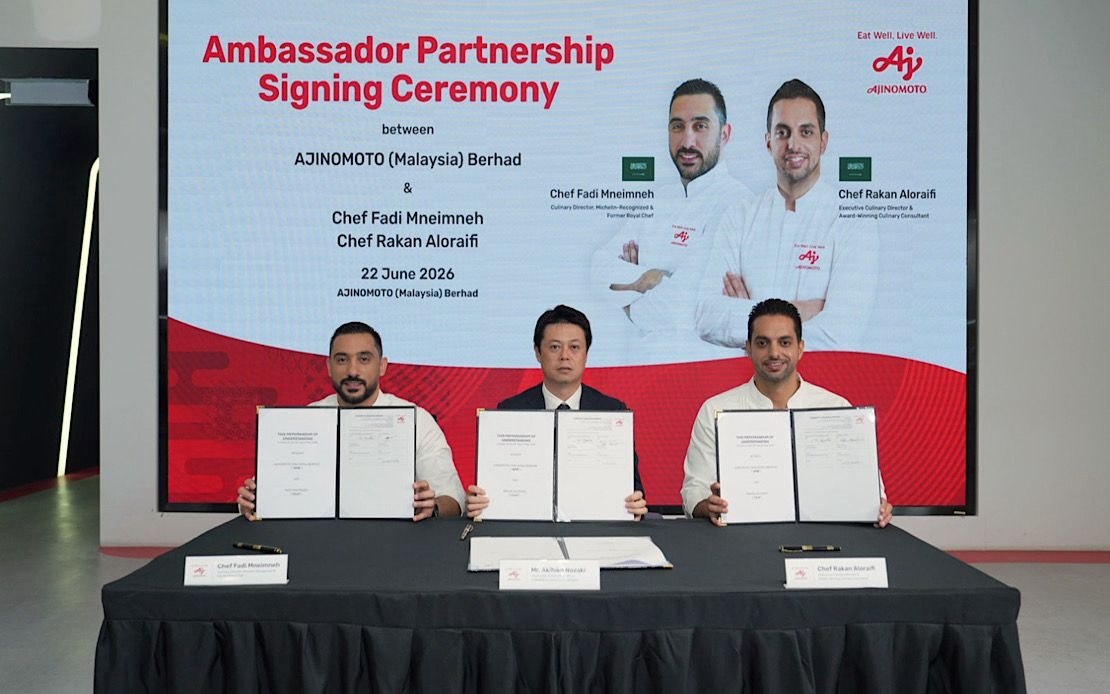
Ajinomoto (Malaysia) Berhad is making a calculated push into the lucrative Middle Eastern market by aligning itself with two of Saudi Arabia's most respected culinary personalities. The partnership with Chef Fadi Mneimneh and Chef Rakan Aloraifi represents a strategic shift in how the Malaysian food manufacturer approaches regional expansion, moving beyond traditional sales channels to engage influential figures who shape dining trends and purchasing decisions in hospitality sectors.
The collaboration addresses a fundamental challenge facing Malaysian food exporters in the Middle East: building trust and credibility in unfamiliar markets. Rather than relying solely on product certifications and distribution networks, AMB is investing in credibility through association with recognized culinary authorities. Both chefs carry significant influence within Saudi Arabia's thriving hospitality industry, with Chef Fadi holding a Michelin star and having served as a royal chef, whilst Chef Rakan operates as an award-winning executive director and culinary consultant. This positioning elevates AMB's brand perception beyond that of a mere ingredient supplier to a partner in culinary excellence.
The two chefs recently undertook a facility tour of AMB's manufacturing plant in Bandar Enstek, Negeri Sembilan, where the company demonstrated its halal certification processes, production standards, and quality assurance protocols. The visit served a dual purpose: it provided the chefs with firsthand knowledge of how Ajinomoto products are manufactured under stringent halal standards, and it generated authentic testimonials from respected voices rather than corporate marketing claims. This factory exposure strategy is particularly effective in Middle Eastern markets where transparent supply chain visibility increasingly influences commercial partnerships and consumer purchasing behaviour.
A central element of the partnership involves educating Middle Eastern culinary professionals about umami, the Japanese concept of savory taste that has gained global recognition. While umami is well-established in Asian cuisines, its application in traditional Middle Eastern cooking represents relatively new territory. By demonstrating how umami-rich Ajinomoto products can enhance authentic regional recipes without compromising their traditional character, AMB is positioning itself as a bridge between culinary traditions rather than as a foreign ingredient imposing unfamiliar flavours. This messaging is particularly resonant given growing consumer preference for authentic heritage recipes across the Gulf region.
During their Negeri Sembilan visit, both chefs conducted live cooking demonstrations that explicitly showcased how Ajinomoto products could be incorporated into genuine Middle Eastern dishes. These weren't sterile product showcase events; rather, they were culinary performances that illustrated practical applications within a familiar cultural context. The demonstrations emphasized how umami elements could add depth and complexity to traditional flavours, effectively reframing Ajinomoto not as a foreign additive but as a culinary enhancement tool that respects and elevates established cooking traditions.
The timing of this initiative reflects AMB's recognition of accelerating demand for premium halal-certified food solutions across the Middle East. The region's rapid economic growth, expanding middle class, and increasingly sophisticated food service sectors have created unprecedented appetite for quality ingredients and innovative food technologies. Saudi Arabia specifically has become a focal point for such expansion, driven by Vision 2030 initiatives that prioritize diversification beyond oil and substantial investment in tourism and hospitality infrastructure.
AMB's strategy extends beyond immediate product sales to establishing long-term industry relationships and thought leadership. The involvement of the company's Brunei distributor representative during the chefs' visit underscores how the manufacturer is building a coordinated regional approach involving multiple markets simultaneously. This network-building aspect is crucial for developing ecosystem support for new product introductions and maintaining sustained market presence rather than pursuing transactional one-off sales.
Looking ahead, AMB has committed to ongoing collaboration with both chefs at the Hotel, Restaurant and Café exhibition tentatively scheduled for October 2026 in both Riyadh and Jeddah. These industry events will serve as platforms for live demonstrations targeting professional chefs, hospitality managers, and procurement decision-makers—precisely the gatekeepers who determine which ingredients are stocked and recommended in commercial food preparation settings. Success in HORECA channels often precedes retail consumer demand, as professional endorsements influence both institutional purchasing and consumer preferences.
The partnership strategy positions Malaysia's food manufacturing sector as an innovation partner rather than merely a commodity supplier. As Malaysian companies increasingly seek higher-value markets in the Gulf, this model of investment in relationship-building through credible culinary voices offers valuable lessons. The approach acknowledges that Middle Eastern markets, particularly those with sophisticated hospitality sectors, value trusted recommendations and demonstrated expertise over aggressive marketing claims.
For Malaysian stakeholders, this initiative illustrates how halal certification—while table stakes for market entry—is insufficient for competitive differentiation. The real competitive advantage emerges through deliberate cultivation of influencer relationships, transparent supply chain demonstration, and sophisticated positioning that respects local culinary heritage whilst introducing valuable innovation. AMB's willingness to invest resources in comprehensive facility tours and extended chef partnerships reflects confidence in both the quality of its products and the receptiveness of Middle Eastern markets to Malaysian food innovation.
The broader implications extend to Malaysia's regional food trade strategy. As Middle Eastern nations diversify their food sources and seek alternatives to traditional suppliers, Malaysian manufacturers with established halal credentials, modern production capabilities, and strategic market positioning have genuine opportunities to capture significant market share. The success of initiatives like AMB's chef partnership programme will likely influence how other Malaysian food exporters approach Gulf market entry in coming years.

