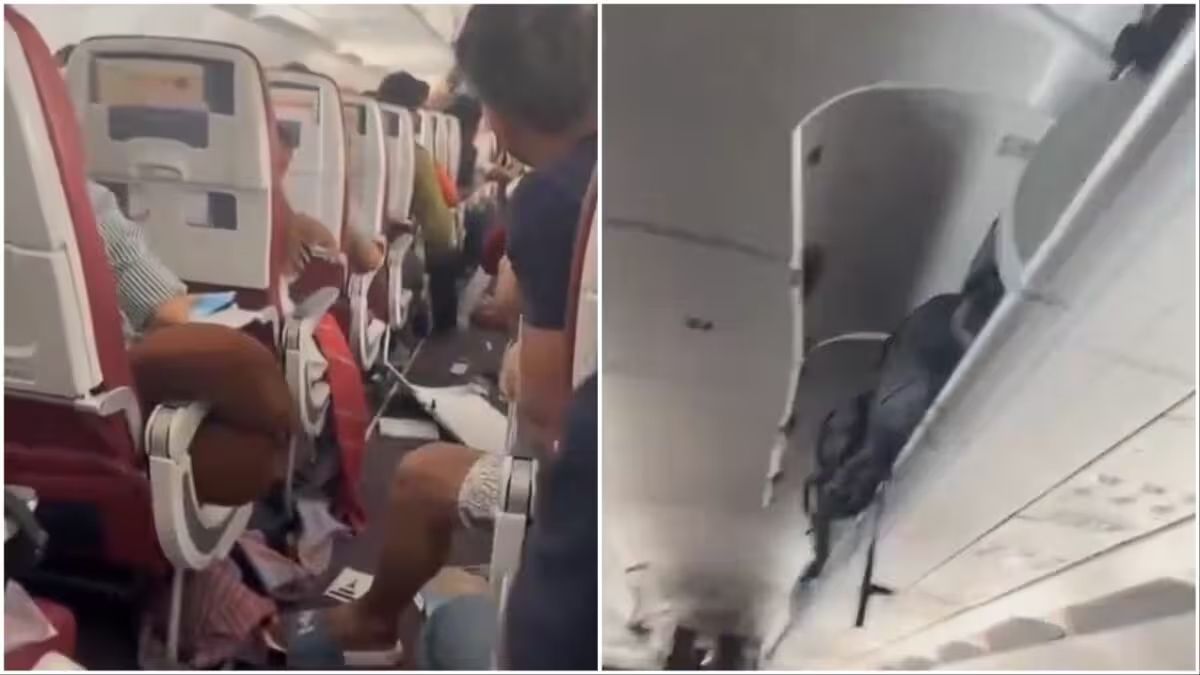
Airbus announced it would dispatch a team of technical experts to New Delhi this week to support the ongoing investigation into an Air India flight that underwent a terrifying mid-air descent, injuring 17 people aboard. The aircraft manufacturer's decision to send specialists underscores the seriousness of the incident and reflects standard protocol when a major aviation incident involves one of Airbus's aircraft operating in a commercial context.
The Airbus A320, operating as Air India's service connecting Phuket to New Delhi, carried 137 passengers and eight crew members when it encountered trouble on August 4. During the flight, the aircraft suddenly lost approximately 300 feet in altitude before the crew managed to stabilise the aircraft and continue safely to its destination. The emergency descent, though ultimately controlled, proved traumatic enough that eight passengers and four crew members required hospitalisation after landing in the Indian capital.
India's civil aviation regulator has classified the occurrence as a Serious Incident, assigning the investigation to the Aircraft Accident Investigation Bureau (AAIB). This designation indicates that while the outcome was not catastrophic, the incident carried sufficient potential for harm to warrant rigorous scrutiny of all contributing factors. Airbus confirmed it is providing "technical assistance" to the investigating authorities, a role that typically involves making available the aircraft's design documentation, maintenance records, and engineering expertise to help reconstruct what happened.
The investigation has taken on additional complexity given preliminary reports that the aircraft experienced several technical problems in the moments preceding the altitude loss. However, neither Air India, Indian authorities, nor Airbus have publicly confirmed specific details about these technical anomalies, maintaining the standard investigative protocol of not releasing findings before a comprehensive assessment is complete. This measured approach reflects international best practices established under the International Civil Aviation Organization's guidelines for serious incident investigations.
A significant element of the probe centres on the flight crew's condition during the incident. India's aviation ministry disclosed that both pilots underwent standard psychoactive substance screening tests immediately after landing. The pilot-in-command's initial screening indicated a result requiring further confirmatory testing, with samples dispatched for detailed laboratory analysis. The aviation authorities have not yet released the final report on these tests, and the delay in publishing results has allowed speculation to build in Indian media circles about potential contributing factors. Both pilots have been suspended from flight duties pending completion of the investigation.
This incident represents yet another challenge for Air India, an airline that has endured a difficult operational period marked by multiple setbacks. The carrier has contended with significant disruptions stemming from regional instability in the Middle East, which has constrained flight schedules and operational flexibility across its network. Beyond these external pressures, the airline's reputation suffered severe damage in June 2025 when Air India Flight 171, a Boeing 787 Dreamliner bound for London from Ahmedabad, crashed immediately after takeoff with catastrophic consequences—241 of the 242 people on board perished, along with 19 people on the ground. The scale of that disaster placed intense scrutiny on the airline's operational standards and safety culture.
The airline's leadership has acknowledged the need for comprehensive organizational renewal following these crises. In response to mounting pressure to restore confidence in Air India's operations, the carrier appointed Tewolde Gebremariam as its new chief executive last week. Gebremariam brings extensive experience from his previous role leading Ethiopian Airlines, a carrier that has built a strong reputation for safety and operational excellence within Africa and on international routes. His appointment signals Air India's commitment to implementing structural and cultural improvements designed to restore confidence among passengers, regulatory authorities, and the aviation community.
For Malaysian and Southeast Asian observers, the Air India incident carries particular relevance given the region's dense air traffic and the critical importance of maintaining rigorous safety standards across all regional carriers. The Phuket-New Delhi route operates through airspace shared by multiple Southeast Asian nations, and incidents involving sudden altitude changes raise questions about air traffic control coordination and weather monitoring systems that affect flights throughout the region. Additionally, the involvement of an Airbus A320—the most widely operated commercial aircraft globally and extensively used by Malaysian carriers—ensures that any findings from this investigation will be closely studied by operators and regulators across the region.
The investigation's focus on both technical and human factors reflects the complexity of modern aviation safety. While the aircraft ultimately responded to crew inputs and landed safely, understanding why the sudden descent occurred in the first place will inform future training protocols, maintenance procedures, and possibly aircraft design modifications. For Air India in particular, demonstrating transparency and cooperativeness throughout this investigation represents a crucial opportunity to rebuild stakeholder confidence after the devastating crash of Flight 171 just months earlier.
As Airbus specialists prepare to arrive in New Delhi, the technical investigation will likely involve detailed examination of the aircraft's flight data recorders, cockpit voice recordings, maintenance logs, and weather conditions at the time of the incident. This comprehensive forensic analysis typically takes several weeks to complete and may ultimately reveal findings that extend beyond the specific circumstances of this August 4 flight to inform broader operational guidance for the aviation industry. For Air India and its new leadership team, the investigation's outcome will carry implications well beyond the immediate incident, potentially shaping the airline's operational recovery and competitive positioning in an increasingly challenging regional and global aviation environment.

