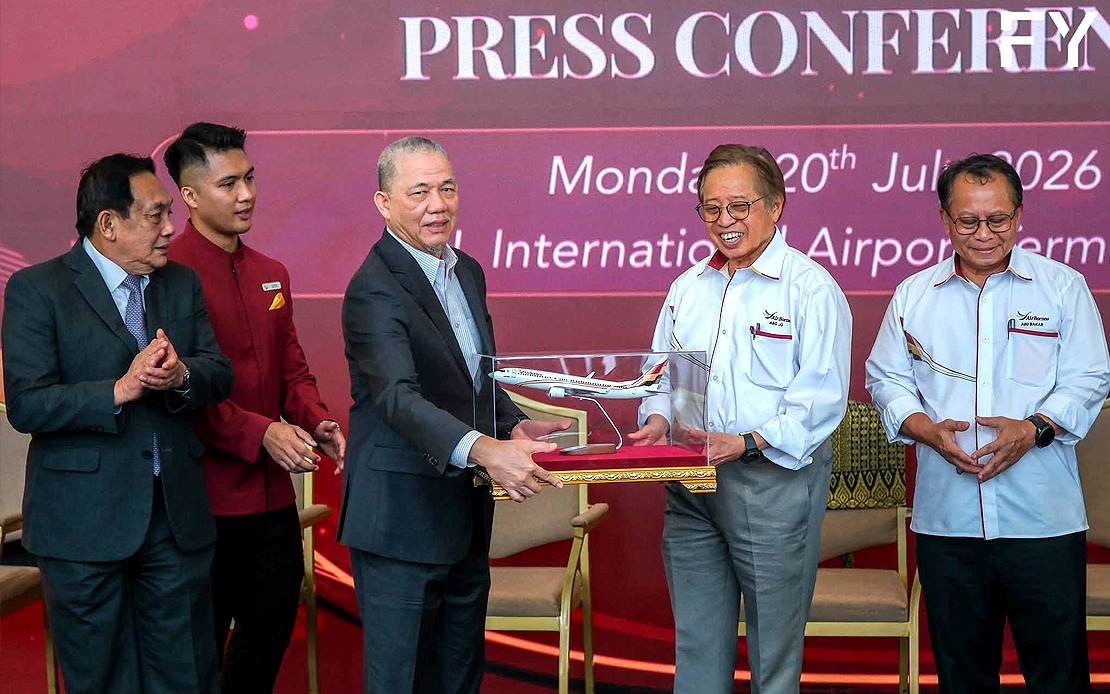
Sarawak has taken a significant step toward resolving decades of frustration over escalating flight costs with the launch of AirBorneo Airways, a state government-owned carrier that commenced operations with its maiden flight from Kuching to Kuala Lumpur International Airport Terminal 1. The timing of the inaugural service, which arrived on July 20, held symbolic weight—occurring just two days before the Sarawak Day commemoration on July 22, marking what officials view as a watershed moment in the state's economic trajectory.
Deputy Prime Minister Datuk Seri Fadillah Yusof framed the airline's establishment as far more than a commercial venture, describing it instead as a manifestation of Sarawak's autonomy and determination to chart its own economic course. His remarks underscored a critical disparity that has long plagued the state: the absence of sufficient domestic competition in regional air services, which has historically permitted dominant carriers to maintain premium pricing structures that burden Sarawak's residents and businesses alike.
The vision articulated by Sarawak Premier Tan Sri Abang Johari Tun Openg centres on AirBorneo functioning as a strategic lever for broader economic transformation. By introducing a competitor with the backing of state resources and ostensibly aligned with local interests rather than purely shareholder returns, policymakers anticipate downward pressure on fares across Sarawak's air transport network. This competitive dynamic represents a departure from the market conditions that have persisted, where limited routing options and consolidated carrier dominance have enabled sustained price premiums on routes serving the state.
Fadillah's emphasis on affordability, transparency, and passenger-focused service standards suggests an operational philosophy divergent from purely profit-maximising carriers. These commitments carry particular resonance in Sarawak, where rural communities and smaller towns depend critically on air connectivity for access to healthcare, education, and economic opportunities. Many such settlements lack road infrastructure to major urban centres, making aviation not a discretionary convenience but an essential utility—one rendered inaccessible to ordinary citizens when pricing structures reflect capacity constraints rather than cost realities.
The enhancement of air connectivity that AirBorneo's operations promise extends implications across multiple economic sectors. Tourism stands to benefit from reduced transport costs for both domestic and international visitors exploring Sarawak's cultural heritage and natural attractions. Trade and investment sectors may experience renewed dynamism as logistics costs moderate and business travel becomes economically viable for previously marginalised commercial activities. Regional development initiatives centred on remote districts become more credible when accessibility ceases to function as a prohibitive barrier.
AirBorneo's strategic importance transcends conventional airline metrics. The carrier embodies Sarawak's assertion of greater self-determination in managing transportation infrastructure—a domain historically shaped by federal policies and national carriers prioritising peninsular routes. By establishing its own airline, the state signals determination to capture value chains associated with air transport rather than remaining a passive consumer of services dictated by external actors. This dimension carries resonance across East Malaysia more broadly, where sentiment regarding equitable development funding and infrastructure autonomy remains a persistent political undercurrent.
Rural air service provision constitutes another critical consideration animating the AirBorneo initiative. National carriers operating on commercial principles often regard regional routes connecting smaller towns as unviable, leading to service withdrawals that strand isolated communities. A state-owned entity committed to maintaining connectivity across geographically dispersed settlements can absorb such routes as strategic investments in territorial cohesion rather than viewing them as losses to be minimised. This rationale reflects a fundamentally different calculus—one that treats transport access as essential infrastructure supporting citizen wellbeing rather than merely as financial assets.
The inaugural flight's passenger manifest, which included Abang Johari and a delegation of state ministers, conveyed symbolic significance. The ceremonial nature of the service launch underscored official commitment to the venture and signalled government backing at the highest levels. Such visible leadership endorsement serves both as a confidence signal to the travelling public and as a clarification that AirBorneo represents not merely a private commercial experiment but an extension of state policy in transport and economic development.
For Malaysian policymakers observing from the peninsula, Sarawak's airline initiative presents instructive lessons regarding infrastructure decentralisation and state-level economic agency. The model raises questions about whether other regions experiencing service gaps or excessive pricing might likewise benefit from targeted government investment in competitive alternatives. Furthermore, AirBorneo's establishment demonstrates the continued relevance of state ownership in sectors where market failures persistently underserve public welfare—a theme likely to animate regional policy discussions across Southeast Asia.
The airline's operational success will ultimately depend on execution capabilities: fleet reliability, service consistency, route scheduling efficiency, and sustained pricing discipline. Early months of operation will provide evidence regarding whether AirBorneo can translate aspirational objectives into tangible improvements that Sarawak residents discern through cheaper tickets and expanded flight options. Should the carrier achieve operational viability whilst maintaining affordable fares, it would validate the developmental rationale underlying state ownership in transport infrastructure—a conclusion with implications extending well beyond Sarawak's borders.
Longer term, AirBorneo's trajectory may reshape competitive dynamics across the entire regional aviation market. Established carriers confronting a well-resourced competitor backed by state commitment may respond through their own pricing adjustments, potentially yielding benefits for consumers beyond Sarawak. Conversely, if the carrier struggles financially despite government support, it might vindicate arguments that airline operations prove inherently challenging for publicly-owned entities lacking deep industry expertise. The coming years will reveal which narrative the evidence supports.

