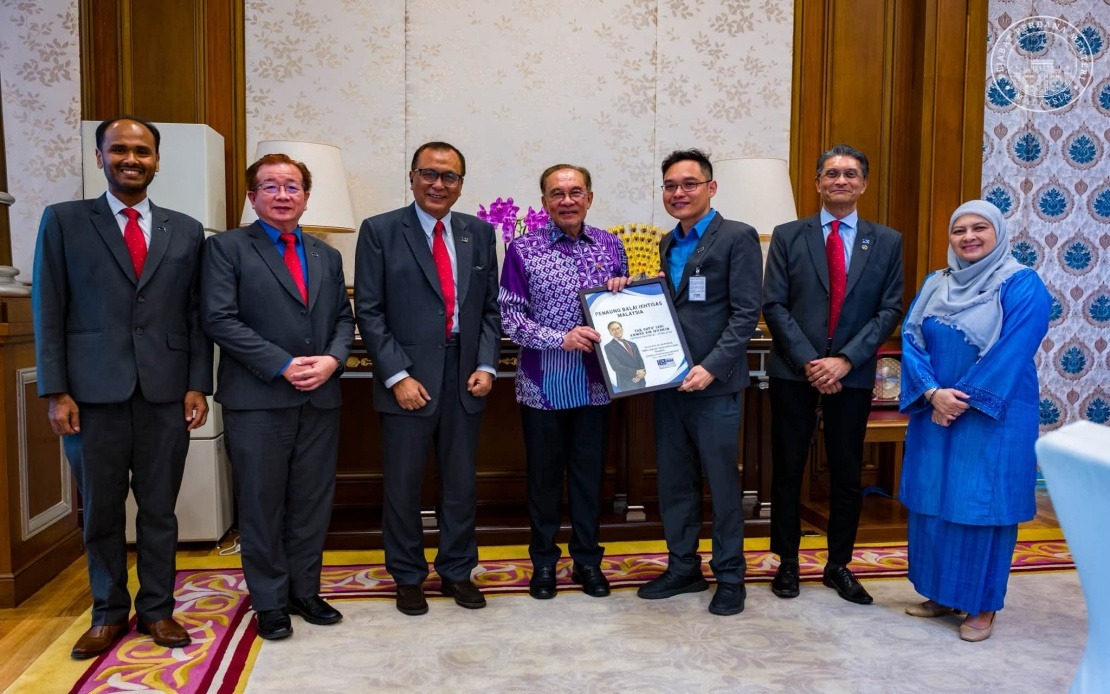
Prime Minister Datuk Seri Anwar Ibrahim has placed artificial intelligence preparedness and professional talent development at the forefront of Malaysia's economic strategy, signalling the government's determination to equip the nation's workforce with skills needed for the digital age. During a courtesy meeting with Balai Ikhtisas Malaysia (BIM), the Malaysian Professional Centre, Anwar underscored the critical importance of these twin initiatives in sustaining the country's standing as a regional destination for professional excellence. The discussion, which featured BIM President Prof ChM Dr Juan Joon Ching leading the delegation, reflects broader governmental recognition that Malaysia's economic future depends on cultivating a highly skilled professional cadre capable of navigating technological disruption.
The emphasis on AI readiness comes at a pivotal moment for Southeast Asia, where countries across the region are grappling with how to prepare their workforces for rapid technological transformation. Malaysia, as a relatively mature economy with established professional institutions and services sectors, faces particular pressure to ensure its professionals remain competitive against counterparts in Singapore, South Korea and other regional leaders in digital innovation. By engaging directly with BIM, the government signals its commitment to treating professional bodies not merely as interest groups but as strategic collaborators in national economic planning. This approach reflects a shift towards recognising that government-directed talent policy alone cannot succeed without deep partnership with the professional community itself.
Anwar's framing of professionals as strategic partners in advancing national competitiveness addresses a key tension in Malaysian economic policy. While the government has emphasised large-scale infrastructure projects and manufacturing investments, the role of high-value professional services—particularly in finance, technology, consulting and creative industries—has sometimes taken a secondary position in policy discourse. By explicitly linking professional development to the MADANI agenda, Anwar situates talent cultivation within the broader vision of inclusive growth and people-centric development. This integration suggests that future economic gains will increasingly depend on harnessing intellectual capital rather than relying primarily on capital-intensive industries or resource extraction.
The focus on developing talent with integrity and competitive edge reflects lessons learned from Malaysia's previous economic cycles. Regional competitors have consistently outpaced Malaysia in attracting and retaining top professional talent, partly because they offer clearer pathways for career advancement, innovation-friendly regulatory environments, and recognition of professional achievement. By investing in domestically developed talent while emphasising integrity, the government appears to be addressing both the quantity and quality dimensions of professional workforce development. This dual emphasis suggests an understanding that merely producing graduates with technical skills will prove insufficient if the business environment does not reward ethical leadership and principled decision-making.
The invitation to Hari Ikhtisas Malaysia, the national professional services celebration, carries symbolic weight beyond ceremonial attendance. Prime ministerial participation in such events sends clear signals about government priorities to international investors and multinational corporations considering Malaysia as a regional hub. These companies increasingly base location decisions on whether host countries possess not just technical talent but vibrant professional communities and institutions that support continuous learning and career development. By accepting the invitation and pledging stronger government-professional ties, Anwar positions Malaysia as a country that values and invests in its professional class.
The AI dimension of this engagement deserves particular scrutiny given its implications for Malaysia's technological trajectory. Artificial intelligence will reshape professional work across sectors—from law and accounting to engineering and medicine—requiring professionals to acquire new competencies and adapt to emerging tools and methodologies. Malaysian professional bodies must therefore move quickly to integrate AI literacy into continuing professional education programmes, certification requirements and practice standards. Government support for this transition, whether through funding, regulatory flexibility or infrastructure investment, could prove decisive in determining whether Malaysian professionals thrive or struggle in an AI-augmented economy.
The timing of this initiative also reflects global momentum around AI governance and professional responsibility. As countries worldwide grapple with ensuring AI systems are deployed ethically and transparently, the involvement of professional bodies becomes increasingly important. Lawyers, engineers, accountants and other professionals will play crucial roles in translating AI principles into practice within their respective fields. Malaysia's emphasis on developing AI-ready professionals with strong ethical foundations positions the country to contribute meaningfully to regional and global conversations about responsible AI deployment.
For Malaysia's broader economic strategy, this initiative addresses a critical gap in the nation's competitiveness agenda. While the government has invested heavily in digital infrastructure and promoted the technology sector, the development of experienced professionals who can lead organisations through digital transformation has received less systematic attention. By partnering with BIM, the government gains access to insights about professional workforce needs, existing capability gaps and emerging skill requirements. Conversely, BIM gains government backing for initiatives to upgrade professional standards and competitiveness, creating potential for enhanced professional mobility within ASEAN and beyond.
The emphasis on nurturing talent with vision to lead Malaysia forward suggests a longer-term perspective on nation-building than typical policy cycles permit. Developing truly competitive professionals requires sustained investment over years, consistent regulatory support and cultural shifts that reward merit and innovation. The government's willingness to engage seriously with professional bodies on these questions indicates recognition that Malaysia's economic future cannot be secured through short-term tactical moves alone. Instead, the nation must commit to systematic development of human capital as a strategic asset comparable to physical infrastructure or natural resources.

