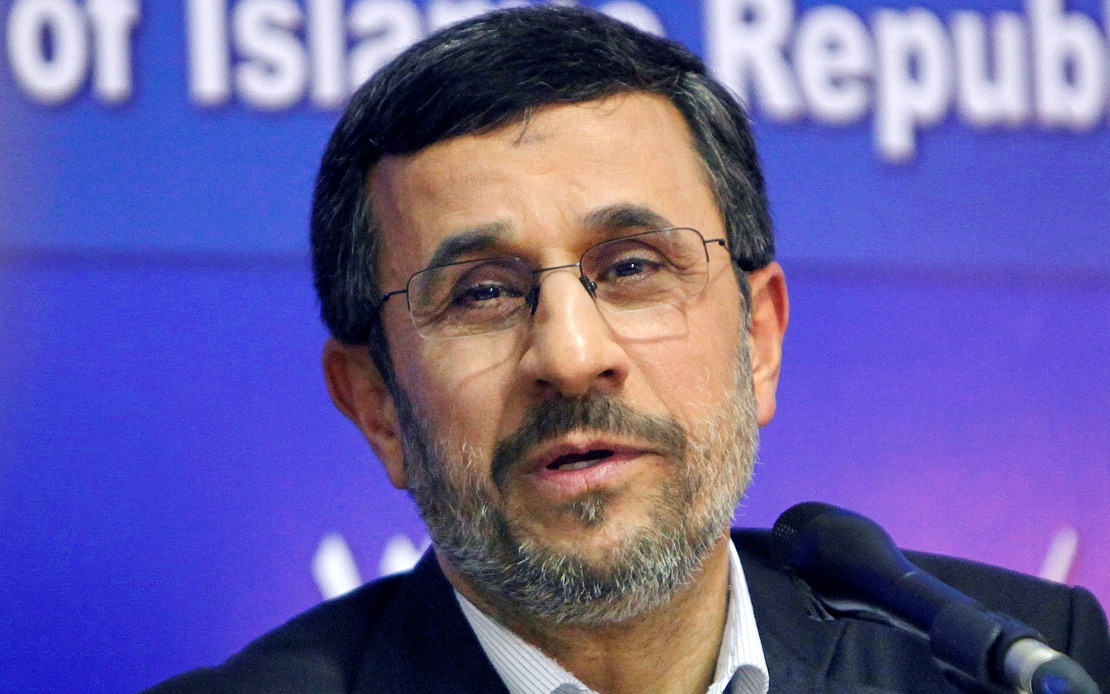
Former Iranian President Mahmoud Ahmadinejad has categorically denied allegations published by The New York Times suggesting that Israel's Mossad intelligence service sought to enlist his cooperation and that he remains under house arrest. Speaking through his office on Tuesday, Ahmadinejad dismissed the accusations as wholly fabricated attempts to manipulate public perception and foment discord within Iran's political establishment. His response came immediately after the American newspaper's Monday report detailing what it described as a covert Israeli operation spanning recent years.
The disputed New York Times investigation claimed that Mossad operatives had approached Ahmadinejad in an attempt to position him as a potential alternative leader for Iran, with the operation allegedly involving substantial financial incentives and clandestine meetings in locations such as Budapest. According to the newspaper's account, Israeli officials secretly provided housing and travel funds while cultivating what they viewed as a promising channel for influence. Ahmadinejad's representatives characterised these assertions as part of what they called the newspaper's broader pattern of disseminating misleading material designed to sow division within Iranian society.
The allegations gained particular significance when the Times reported that the recruitment effort allegedly culminated during late February, when heightened military tensions between Israel and Iran brought matters to a critical juncture. The newspaper contended that Israeli intelligence attempted to physically remove Ahmadinejad from Tehran as part of a more ambitious scheme to facilitate regime change and install him as a replacement leadership figure. This timing aligned with what the publication described as Israel's initial campaign targeting senior Iranian officials and infrastructure, suggesting a coordinated multi-faceted approach to destabilising the Iranian government.
Central to the Times' narrative was an account of an Israeli airstrike on February 28 directed at Ahmadinejad's residential compound. The operation allegedly struck structures housing his security personnel alongside his armoured vehicle. The newspaper then cited four senior Iranian officials who purportedly witnessed the aftermath, describing how a black Peugeot vehicle appeared at the scene, collected the former president, and transported him to an undisclosed location within Iranian territory. American and Iranian officials quoted in the report allegedly characterised the vehicle's operators as Mossad personnel executing an extraction operation.
Ahmadinejad's denial proves significant given his profile within Iran's fractious political landscape. During his presidency from 2005 to 2013, he emerged as a polarising figure both domestically and internationally, attracting fierce opposition from rival Iranian factions while simultaneously commanding support among certain constituencies. His public statements have frequently provoked controversy, and his relationship with Iran's supreme leadership has experienced notable fluctuations. The allegations that foreign intelligence services viewed him as a viable replacement leader for Iran carry implications regarding perceptions of his political standing and potential utility in scenarios involving governmental upheaval.
The timing of Ahmadinejad's public denial reflects broader geopolitical tensions reshaping the Middle Eastern security environment. His first appearance at the funeral of late Iranian Supreme Leader Ali Khamenei last week marked a significant moment, suggesting that recent developments have altered his position within Iran's power structure or internal security situation. The fact that he attended such a high-profile state occasion provided an opportunity to address the Times' claims while demonstrating his continued presence in official proceedings. This public visibility directly contradicted assertions that he remained under house arrest, though Ahmadinejad's office emphasised that detention claims were entirely fabricated.
The dispute reflects longstanding tensions between Israeli and Iranian interests in the region, with intelligence operations representing a critical dimension of their strategic competition. Historical precedent demonstrates that both nations have engaged in sophisticated intelligence activities targeting each other's officials and institutions. The alleged Mossad operation, if accurate, would exemplify strategies aimed at exploiting internal political divisions and cultivating alternative power centres. However, the absence of independent verification leaves significant questions regarding the Times' sources and the reliability of information attributed to American and Iranian officials.
From a Malaysian and Southeast Asian perspective, the controversy highlights how Middle Eastern conflicts increasingly intersect with regional security considerations. Iran's internal stability affects shipping routes, energy markets, and broader regional balance-of-power calculations that influence Southeast Asian economic and strategic interests. Intelligence operations targeting high-profile Iranian figures carry implications for understanding how major powers prosecute proxy competitions and seek to influence outcomes in strategically significant nations. The incident underscores the opacity surrounding intelligence activities and the challenges facing governments attempting to navigate an environment where allegations and denials often receive greater attention than verifiable facts.
Ahmadinejad's categorical rejection dismisses both the recruitment narrative and suggestions of his confinement, positioning the Times' reporting as a coordinated effort to undermine Iran's government through sensationalism rather than journalism. His office's assertion that the newspaper published fabricated material to mislead international audiences reflects broader criticism of Western media coverage of Iran. These counterclaims introduce fundamental questions about sourcing, verification, and the standards governing publication of sensitive allegations involving intelligence operations. Without access to independent confirmation or classified documentation underlying either the original report or the denial, assessing the claims' veracity remains extraordinarily difficult for observers outside Iran's security establishment.

