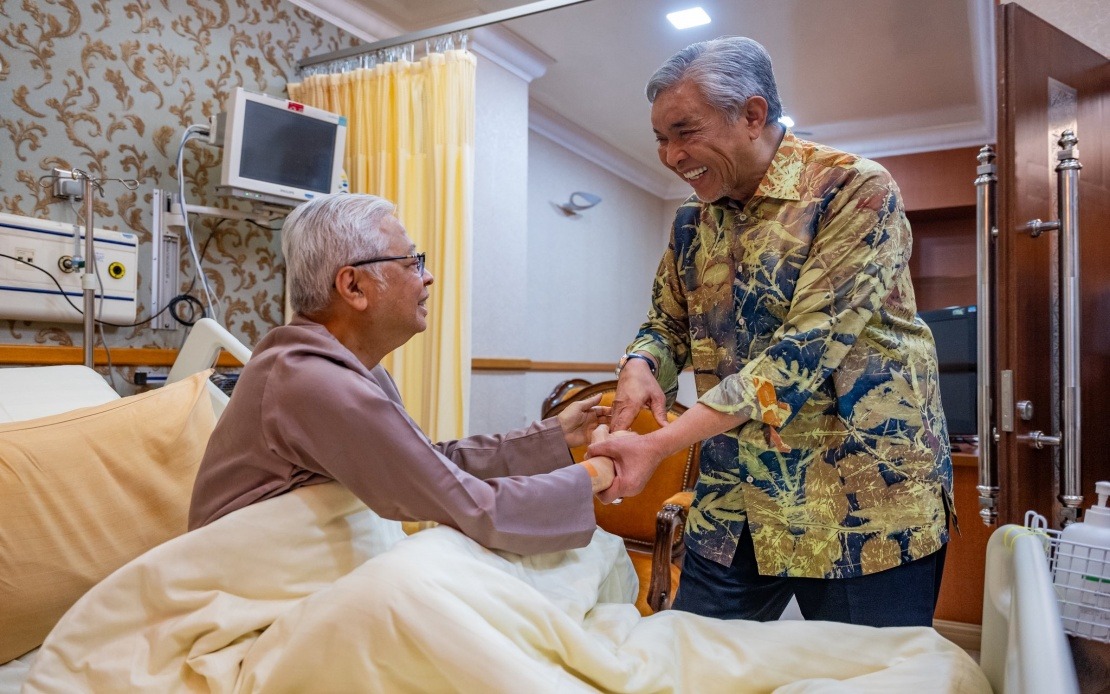
Deputy Prime Minister Datuk Seri Dr Ahmad Zahid Hamidi made a visit to the National Heart Institute in Kuala Lumpur to check on former Prime Minister Datuk Seri Ismail Sabri Yaakob, who is currently undergoing medical treatment at the facility. The gesture underscores the continued bonds within Malaysia's political establishment, even as the nation navigates a complex coalition government landscape.
Through a post on his X social media account, Ahmad Zahid expressed his well-wishes for the Bera Member of Parliament's full recuperation. He conveyed prayers for Ismail Sabri to be granted renewed strength and improved health, asking that all matters be resolved smoothly and that recovery be swift and complete. The deputy premier additionally expressed hope that the former chief executive would be able to resume his normal responsibilities and daily routine without complications.
Ismail Sabri's health setback occurred unexpectedly on August 6 during an engagement that had nothing to do with his medical condition. While attending the Malaysian Anti-Corruption Commission headquarters to provide a recorded statement, he experienced acute health complications that necessitated emergency medical intervention. Medical teams swiftly transferred him to the specialist cardiac facility for urgent assessment and treatment.
Doctors at the institute determined that the former prime minister required intervention to address an irregular heart rhythm condition. To manage this abnormality, clinicians performed a procedure to insert a wireless pacemaker—a modern cardiac device that regulates heartbeat without the need for traditional surgical implantation techniques. This technology represents an advancement in treating arrhythmia patients, offering benefits such as reduced infection risk and faster recovery compared to conventional pacemaker insertion.
The episode illustrates how health emergencies can strike without warning, even affecting those in high office or public prominence. Ismail Sabri, who served as Prime Minister from August 2021 to November 2022, has maintained a public presence since leaving the top job, continuing his parliamentary duties representing his Bera constituency. His unexpected hospitalisation prompted concern across the political spectrum, with various leaders and colleagues reaching out to express solidarity.
The timing of his medical crisis—occurring during a MACC engagement—reflects the ongoing political complexities in Malaysia. The former premier has been subject to several investigations related to his tenure and financial matters, a reality that underscores the scrutiny that often accompanies high political office in Malaysia. Nevertheless, such health challenges typically transcend partisan divisions, with colleagues from across the political divide acknowledging the human dimension of such experiences.
Cardiac health issues remain a significant concern in Malaysia, with heart disease ranking among the leading causes of mortality nationwide. The prevalence of such conditions has prompted increased investment in specialist treatment facilities and technological innovations in cardiac care. The National Heart Institute, where Ismail Sabri receives treatment, stands as one of the region's premier cardiac medicine centres, equipped with advanced diagnostic and therapeutic capabilities.
Wireless pacemakers represent a notable advancement in cardiac technology, offering patients improved mobility and reduced post-procedure complications. The procedure undertaken at IJN reflects Malaysia's capacity to provide cutting-edge medical interventions, positioning the country as a regional hub for specialised healthcare services. This capability has attracted patients from across Southeast Asia seeking advanced treatment options.
For Malaysian political observers, such personal visits between senior figures carry symbolic weight beyond mere courtesy. Ahmad Zahid's hospital visit represents acknowledgment of Ismail Sabri's continued significance within the political establishment, regardless of their current positions or party affiliations. In Malaysia's coalition-dominated political environment, where alliances frequently shift and realign, maintaining cordial personal relationships among leaders often proves essential for maintaining political stability and institutional functionality.
The incident also serves as a reminder of the physical and mental demands placed upon those holding high public office. Former leaders, despite stepping down from their executive roles, continue to shoulder significant responsibilities as parliamentarians and party figures. Managing these obligations whilst navigating health challenges requires substantial personal resilience, a reality that transcends political ideology or party loyalty.
As Ismail Sabri progresses through his recovery phase, the support extended by fellow political figures like Ahmad Zahid likely provides not only emotional encouragement but also practical reassurance regarding his ability to maintain his parliamentary responsibilities. Given Malaysia's reliance on coalition arithmetic and parliamentary majorities, the health and continued participation of established parliamentarians carries implications beyond individual welfare considerations.

