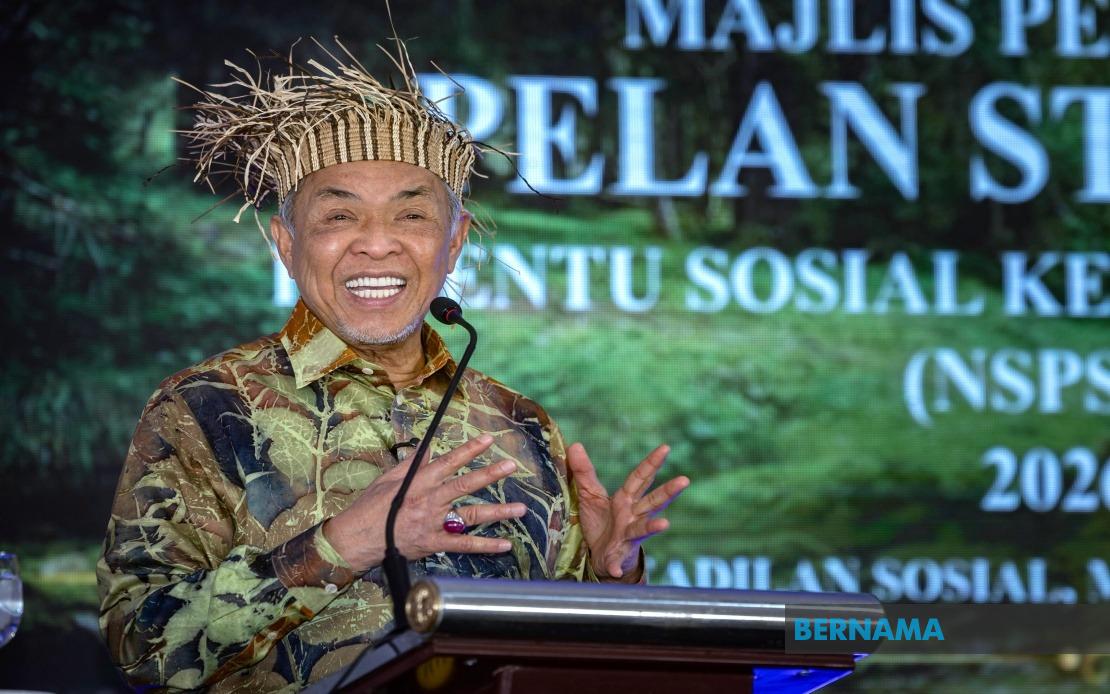
Deputy Prime Minister Datuk Seri Dr Ahmad Zahid Hamidi has appealed to the Malaysian public to offer prayers for Prime Minister Datuk Seri Anwar Ibrahim's swift recovery following a minor surgical intervention. The call comes after Anwar underwent an elective laparoscopic procedure to address a para-umbilical hernia, with medical authorities confirming the operation proceeded without complication and the patient is already in physiotherapy.
Addressing reporters in Gerik during the launch of the 2026-2035 National Social Determinants of Health Strategic Plan for Orang Asli, Ahmad Zahid conveyed confidence that Anwar would require only a modest convalescence period before resuming his responsibilities. The Deputy Prime Minister disclosed that Anwar had briefed him on the forthcoming procedure during their meeting on 4 August, demonstrating advance coordination within the government's upper echelon. Ahmad Zahid's remarks sought to reassure citizens that despite the surgical intervention, government operations would continue uninterrupted and that the Prime Minister's absence would be temporary.
The medical procedure itself was carried out successfully by a specialist team, according to Datuk Dr Asri Ranga Abdullah Ramaiah, head of the Prime Minister's Medical Team. Laparoscopic surgery represents a minimally invasive approach, involving small incisions through which surgical instruments and a camera are inserted, enabling surgeons to repair the hernia with reduced trauma to surrounding tissue compared to traditional open surgery. This technique typically permits faster recovery and shorter hospital stays, making it the preferred choice for such procedures in contemporary medical practice.
Anwar is presently undergoing intensive physiotherapy to rebuild strength and mobility in the abdominal region as part of his structured rehabilitation programme. The Prime Minister remains under continuous observation by his medical specialist team, ensuring that his recovery trajectory proceeds according to protocol and that any complications are identified and managed promptly. This close monitoring reflects the high standards of care extended to Malaysia's chief executive and underscores the importance of post-operative supervision in preventing setbacks during the healing phase.
In a significant administrative measure, Ahmad Zahid confirmed that Anwar had delegated him to preside over Cabinet meetings during the Prime Minister's recuperation period. This arrangement ensures governmental continuity and allows the executive machinery to function smoothly without requiring the Prime Minister's physical attendance while he recovers. Such delegation is standard practice in parliamentary democracies and demonstrates advance planning to maintain institutional effectiveness during periods when the chief executive is temporarily incapacitated by medical requirements.
Ahmad Zahid's characterisation of the surgery as minor, whilst medically accurate given the elective nature and the absence of reported complications, also serves a political purpose in managing public perception. By framing the procedure as routine and the recovery timeline as brief, government leadership seeks to prevent unnecessary anxiety among the population and financial markets, both of which can be sensitive to signals of instability in the nation's political apex. The Deputy Prime Minister's explicit statement that only two days of downtime would be necessary attempts to convey that normal government operations would resume quickly.
The timing of the disclosure itself merits attention, coming some days after the procedure was performed and after the Deputy Prime Minister had been informed and was prepared with a substantive government announcement. This controlled release of information reflects careful media management and suggests that the government's communications apparatus had prepared messaging to accompany the disclosure, rather than allowing word of the Prime Minister's medical intervention to emerge through speculation or rumour. Such discipline in government communications helps shape the narrative surrounding sensitive issues affecting national leadership.
For Malaysian observers and regional analysts, the incident illustrates the institutional frameworks now in place to manage transitions of executive authority during unforeseen circumstances. The Cabinet's ability to convene under alternative leadership, coupled with the presence of a well-equipped medical team capable of providing world-class surgical care, demonstrates that Malaysia's governance structures have evolved to handle such situations with professionalism and continuity. These arrangements provide assurance that critical governmental functions and decision-making capacity would not be compromised by temporary absences of the Prime Minister.
The public call for prayer represents a cultural and religious gesture particularly resonant in the Malaysian context, where Islam, Buddhism, Hinduism, and Christianity form the spiritual landscape for different communities. Ahmad Zahid's invocation of collective prayer transcends sectarian boundaries and appeals to the nation's diverse population to unite in hopes for their leader's wellbeing. This rhetorical move has deep roots in Malaysian political tradition and serves to reinforce social cohesion around central institutions of state during moments of potential vulnerability.
Looking forward, the incident underscores the reality that even senior political figures are subject to the ordinary medical conditions affecting human beings, regardless of their elevated position. While this particular surgical intervention appears straightforward and uncomplicated, it serves as a reminder of the biological constraints upon political leadership and the importance of robust succession planning and institutional safeguards. Malaysia's governance architecture now includes mechanisms to accommodate such contingencies, reflecting lessons learned from international practice and the evolving sophistication of Southeast Asian democracies.

