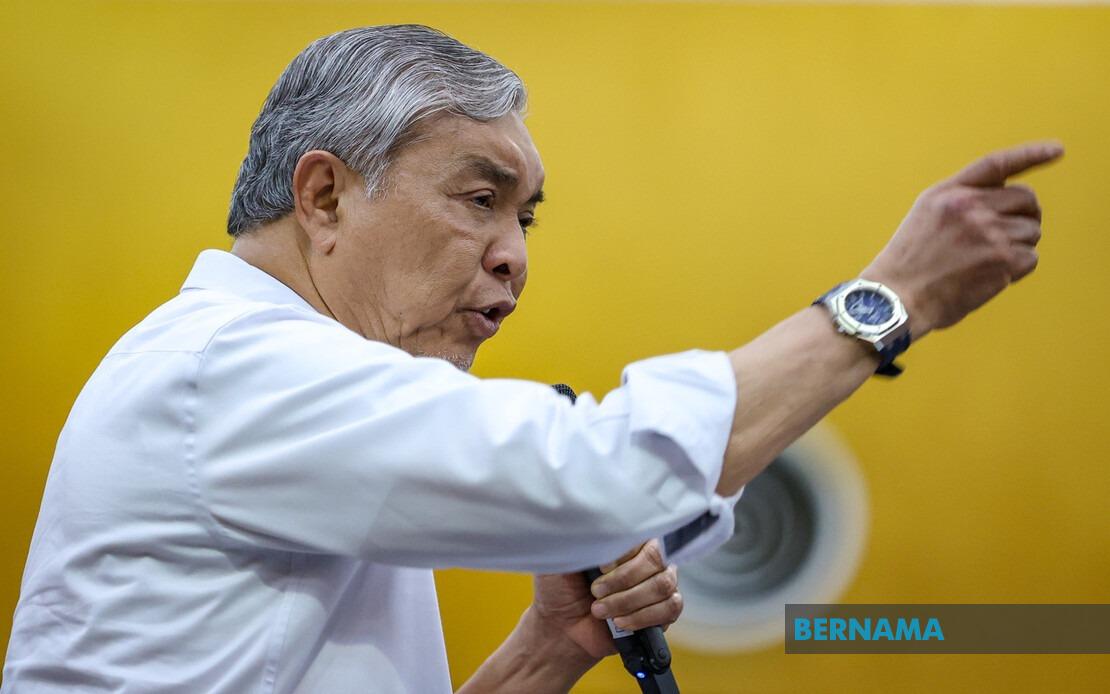
Deputy Prime Minister Datuk Seri Dr Ahmad Zahid Hamidi has called for Student Representative Councils (MPP) across Malaysia's universities and colleges to participate in structured leadership and political education programmes designed to deepen their comprehension of democratic principles and the nation's complex political ecosystem. Speaking in Johor Bahru on July 9, Ahmad Zahid emphasised that equipping young student leaders with knowledge about contemporary national issues would help develop a generation capable of understanding and navigating Malaysia's political landscape with greater maturity and awareness.
The proposal reflects broader governmental concern about youth engagement with civic matters and political literacy. Ahmad Zahid, who chairs Barisan Nasional, argued that such educational initiatives would cultivate leaders better prepared to address future challenges and contribute meaningfully to the nation's political development. The courses would expose student representatives to practical insights about how political systems operate and the responsibilities that come with leadership roles in democratic societies.
Recognising potential financial barriers, Ahmad Zahid indicated the government's willingness to shoulder the cost of these programmes across all MPPs nationwide, provided that the Higher Education Minister Datuk Seri Dr Zambry Abd Kadir approves the funding. This commitment suggests a prioritisation of youth political education within the current administration's policy agenda, treating it as a public investment rather than an optional institutional activity.
Ahmad Zahid drew from his personal experience to contextualise his position, recalling his own student activism at Universiti Malaya (UM) and framing it as foundational to his subsequent political involvement. However, he was careful to distinguish between encouraging political awareness and mandating political participation. The deputy prime minister stressed that young Malaysians, particularly first-time voters aged 18 and above, need not become actively involved in partisan politics to benefit from understanding how the political system functions.
The distinction he made carries particular significance for Malaysian student communities, where concerns about political neutrality and academic independence have long been sensitive. By framing the initiative as educational rather than recruitment-oriented, Ahmad Zahid positioned political literacy as a democratic competency rather than a pathway to party membership. Young people, he argued, should possess sufficient knowledge to make informed electoral choices without necessarily assuming leadership roles within political organisations.
Emphasis on informed voting reflects a recognised challenge within Malaysian politics: voter apathy and decisions made without adequate understanding of candidates, platforms, or policy implications. Ahmad Zahid highlighted how individual votes collectively determine party leadership and political direction, suggesting that voter ignorance represents not merely a personal missed opportunity but a collective democratic weakness. This framing attempts to elevate political knowledge from optional to essential for responsible citizenship.
The timing of Ahmad Zahid's proposal coincided with Johor's state election campaign, where 56 state seats were being contested. The announcement, made amid active electoral competition, carried implicit messaging about BN's commitment to youth engagement and institutional development. Student councils represent organised youth constituencies with potential influence over campus political climates, making them strategically relevant actors in electoral calculations.
Implementing such courses would require coordination across Malaysia's diverse higher education landscape, encompassing public universities, private institutions, and polytechnics serving different student demographics and institutional cultures. The variation in student council structures, institutional autonomy, and existing political education frameworks would present logistical and pedagogical challenges. Curriculum design would need careful calibration to provide balanced exposure to Malaysia's multi-party system without appearing to favour any particular political faction.
The proposal also intersects with ongoing discussions about campus politics and free expression in Malaysian universities. Student councils have historically served as platforms for youth political expression, but institutional regulations limit certain forms of political activity. Ahmad Zahid's proposal for structured educational courses might serve as an alternative channel for formalised political engagement that operates within institutional parameters while providing substantive engagement with political concepts and processes.
From a regional perspective, Malaysia's approach to youth political education contrasts with varying practices across Southeast Asia. While some nations emphasise civic education through formal curricula, Ahmad Zahid's suggestion targets already-positioned youth leaders within existing institutional structures. This approach recognises that student representatives, by virtue of their roles, already possess leadership aspirations and platforms from which to influence peers.
Successful implementation would likely depend on whether institutions view such courses as enhancing student leader effectiveness or as unwelcome political interference in campus life. The government's willingness to fund the initiative without prescriptive curriculum requirements might encourage institutional participation, though some universities may maintain scepticism about initiatives appearing to politicise student governance spaces. Ultimately, the proposal reflects recognition that political knowledge gaps among young leaders represent a vulnerability for democratic health, and that structured educational intervention offers one mechanism for addressing this concern.

