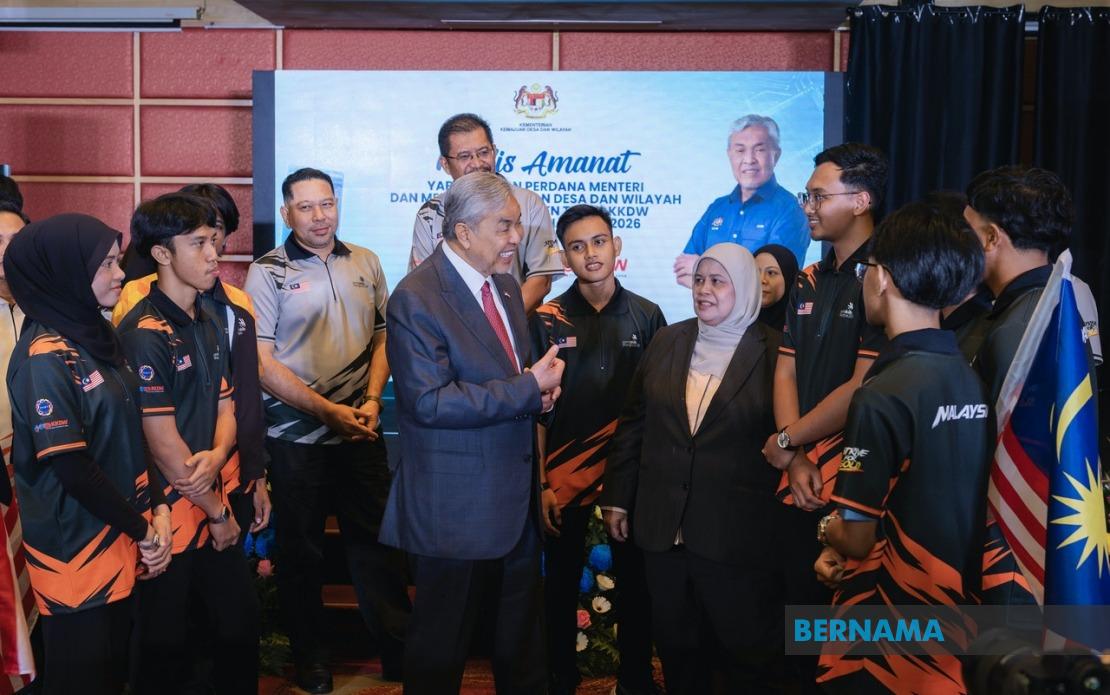
Deputy Prime Minister Datuk Seri Dr Ahmad Zahid Hamidi has announced an ambitious incentive scheme aimed at motivating Malaysian vocational training representatives competing at the upcoming WorldSkills Competition in Shanghai. Speaking at a send-off ceremony for the TVET@KKDW contingent, Ahmad Zahid pledged to personally fund umrah pilgrimages not only for gold medallists but also for their parents, a gesture he framed as recognition of their sporting achievement and dedication to vocational excellence.
The WorldSkills Competition 2026, scheduled for September 22 to 27 in Shanghai, China, represents a significant international platform where Malaysia will field nine competitors across diverse technical disciplines. Ahmad Zahid, who serves concurrently as Rural and Regional Development Minister overseeing the technical vocational education and training sector under his ministry, stressed that the sponsorship would derive entirely from his personal coffers, underscoring his individual commitment to supporting these young professionals.
The scope of Ahmad Zahid's pledge carries substantial financial implications. Should all nine representatives return with gold medals—an optimistic but ambitious scenario—the deputy prime minister indicated his willingness to facilitate umrah trips for eighteen individuals: the nine competitors and their respective parents. In practice, this translates to a significant personal investment, as umrah packages typically cost between RM3,000 and RM7,000 per person depending on duration and inclusions, potentially reaching six figures for the entire cohort if such outcomes materialise.
Malaysia's contingent reflects a broad spectrum of technical expertise relevant to regional and global industry demands. Nadratulliyana Ab Malek competes in Fashion Technology, while Haziq Syahmi Nazri represents the automotive sector through Automobile Painting. The delegation also includes specialists in Cyber Security through Mohammad Ezaly Iman Ramli, Electronics via Amirul Sharif Sharifudin, and Rail Vehicle Technology represented by Wan Hamiz Ozai Wan Hamidzi. These selections demonstrate Malaysia's commitment to developing workforce capabilities across both traditional trades and emerging digital-era skills.
Three additional competitors round out the contingent in construction and engineering-related fields. Khairul Idham Bahari brings expertise in Cabinetmaking, a traditional craft still valued in high-end manufacturing. Muhamad Nashrul Zulkifli and Muhammad Haziq Lailla Zamri represent digital and electrical construction specialities, sectors gaining prominence as infrastructure and smart building initiatives expand throughout Southeast Asia. Muhammad Huzairy Mohamad Thes completes the roster in Mechanical Engineering CAD, a digital-focused discipline increasingly critical to manufacturing competitiveness.
The WorldSkills platform holds particular significance for Malaysia and other developing economies seeking to elevate technical education standards and workforce quality. Unlike university-focused academic competitions, WorldSkills directly showcases vocational training outcomes, demonstrating to international audiences and domestic stakeholders the calibre of talent emerging from technical institutions. Gold medals at this level generate substantial prestige and open doors for both individual competitors and their parent institutions in terms of attracting future enrolment and industry partnerships.
Ahmad Zahid's personal sponsorship strategy also serves broader political and social objectives within Malaysia's technical education ecosystem. By attaching tangible religious and spiritual rewards to competitive success, the initiative appeals to the values of largely Muslim participants and their families, framing sporting achievement within a framework of personal development and spiritual enrichment. This approach potentially strengthens public support for vocational pathways, which historically have attracted less parental enthusiasm compared to university education in Malaysian society.
The gesture additionally highlights the Ministry of Rural and Regional Development's emphasis on developing technical talent outside major metropolitan centres. TVET institutions under the ministry's purview serve population cohorts that might otherwise lack access to quality skilled training, making such incentive structures particularly impactful for motivating rural and semi-urban participants to pursue excellence in technical disciplines.
From a Southeast Asian perspective, Malaysia's contingent competes within a regional context where Thailand, Vietnam, Indonesia, and the Philippines also send substantial delegations to WorldSkills. The international competition serves as a bellwether for technical education quality across the region, and gold medals enhance Malaysia's standing alongside peer economies. Success in Shanghai would reinforce Malaysia's positioning as a technically sophisticated nation capable of competing globally in emerging sectors like cyber security and digital construction.
The competitive intensity at WorldSkills 2026 should not be underestimated. Host nation China typically deploys extensively trained competitors, while established industrial economies send representatives backed by years of specialised preparation. Malaysian participants, despite local training excellence, will encounter formidable international competition, making Ahmad Zahid's incentive scheme both a confidence-building gesture and an acknowledgment of the genuine difficulty in securing medals against such calibre of opposition.
Beyond immediate competition outcomes, Ahmad Zahid's commitment signals governmental priority toward technical education as a development pillar. Alongside broader initiatives to reduce Malaysia's reliance on foreign skilled labour and enhance domestic manufacturing competitiveness, such high-level political support for TVET students carries symbolic weight in reshaping perceptions of vocational pathways as prestigious career foundations rather than secondary educational options.
The initiative also underscores the intersection of faith-based motivation and professional aspiration in Malaysian society. By coupling competitive achievement with spiritual fulfillment through umrah sponsorship, Ahmad Zahid frames technical excellence within a holistic worldview recognising both material success and spiritual development—a framing likely to resonate with target audiences and potentially inspire broader participation in vocational training programmes across Malaysia's regions.

