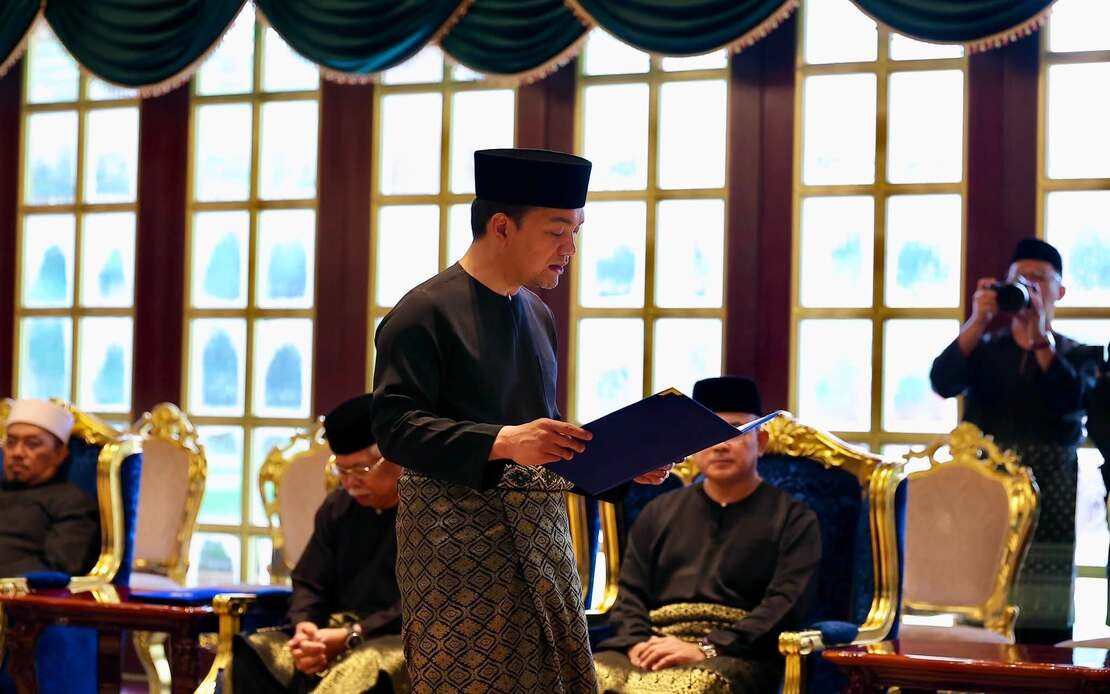
Datuk Onn Hafiz Ghazi has officially assumed office as Johor Menteri Besar following his swearing-in ceremony before the Regent of Johor, Tunku Ismail Sultan Ibrahim, at Istana Bukit Serene in Johor Bahru. The appointment comes in the immediate aftermath of Barisan Nasional's commanding performance in the state elections, marking a significant moment for the coalition's leadership in Malaysia's southern region.
Deputy Prime Minister Datuk Seri Dr Ahmad Zahid Hamidi, who chairs Barisan Nasional, has publicly acknowledged Onn Hafiz's elevation to the top executive position in Johor through a Facebook message. In his statement, Ahmad Zahid characterised the electoral outcome as a robust mandate from voters, describing it as an opportunity to advance Johor's development agenda with renewed vigour and strategic direction.
Ahmad Zahid's endorsement emphasises continuity and excellence in governance, framing Onn Hafiz's role as custodian of the people's trust and steward of Johor's future trajectory. The Deputy Prime Minister stressed the importance of maintaining political stability within the state while pursuing sustainable economic and social development initiatives that benefit all Johor residents.
Onn Hafiz, who represents the Machap state assembly constituency and previously chaired Johor's BN machinery, brings both legislative experience and party organisational background to the Menteri Besar position. His appointment represents a transition in Johor's leadership structure and reflects the coalition's confidence in his capacity to manage the state's affairs during what analysts view as a consolidation period for the ruling coalition nationally.
The electoral backdrop for this appointment carries substantial significance. Barisan Nasional secured a two-thirds supermajority in the recently concluded 16th Johor state election, claiming 48 of the 56 available assembly seats. This commanding majority provides Onn Hafiz with considerable parliamentary flexibility to advance legislative initiatives and implement policy reforms without facing significant arithmetic constraints in the state assembly.
Ahmad Zahid's congratulatory message invoked religious sentiments, invoking divine blessing and guidance for Onn Hafiz's tenure. This rhetorical approach reflects broader Malaysian political culture wherein religious references often accompany official pronouncements by senior political figures, particularly those from Malay-Muslim majority parties within the Barisan Nasional framework.
The emphasis placed on welfare prioritisation and political stability in Ahmad Zahid's statement suggests the coalition's awareness of voter concerns regarding economic hardship and social cohesion. By highlighting these themes through the new Menteri Besar's appointment, Barisan Nasional appears to be signalling its commitment to addressing grassroots grievances that may have influenced electoral dynamics in Johor and beyond.
For Malaysia's political landscape, Onn Hafiz's appointment reinforces Barisan Nasional's consolidation of power following its 2023 comeback at the federal level. Johor remains economically significant as a major contributor to Malaysia's GDP and as a geopolitical buffer state bordering Singapore. The leadership transition in the state capital, therefore, carries implications beyond regional administration, potentially influencing national coalition dynamics and federal-state coordination mechanisms.
The swearing-in ceremony's formal nature, conducted before the Regent at the principal royal residence, underscores the constitutional and ceremonial dimensions of executive transitions in Malaysia's constitutional monarchy framework. This protocol reflects the sovereign's role in appointing chief ministers and validates the new administration through established institutional channels.

