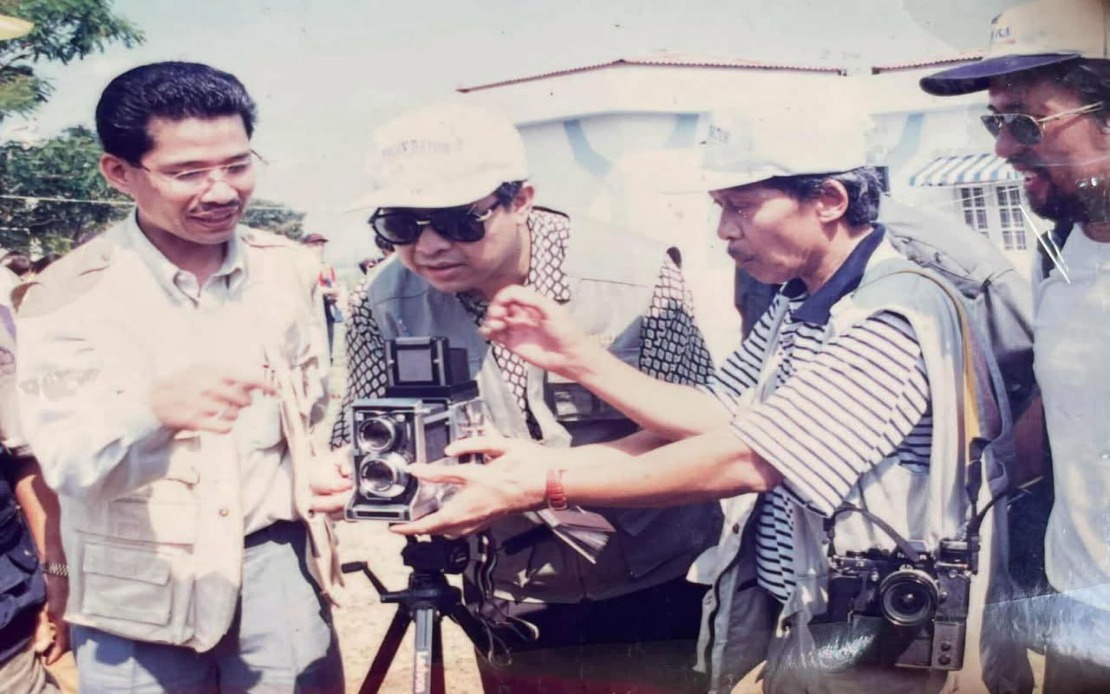
Deputy Prime Minister Datuk Seri Dr Ahmad Zahid Hamidi has extended greetings to photographers globally on World Photography Day 2026, highlighting the profound importance of their work in documenting human experience and creating lasting visual records. His tribute, shared via social media, recognised the diverse spectrum of photographers whose efforts ensure that fleeting moments are preserved for posterity—from seasoned professionals to casual documentarians preserving family memories.
The Deputy PM's message encompassed the full range of photography practitioners, acknowledging that the craft extends far beyond commercial studios and newsrooms. He specifically highlighted professional photographers who operate as commercial entities, media photographers who cover events and breaking news, and the informal role that many individuals assume as custodians of family memory through smartphones and cameras at gatherings and celebrations. This inclusive recognition underscores an evolving understanding of photography's democratic nature in the digital age, where technological advancement has made image capture accessible to virtually everyone.
Ahmad Zahid reflected on the universal appeal of photography in contemporary life, noting how images occupy multiple roles in modern society. Photographs serve as personal keepsakes that individuals treasure for sentimental value, while others are elevated to gallery-worthy status through framing and deliberate display in homes and offices. Beyond personal significance, he acknowledged that certain photographs transcend their original context to become historical documentation, serving as visual evidence that future generations rely upon to understand past events and cultural moments. This transformation from snapshot to historical artifact represents photography's unique capacity to bridge past and present.
The Deputy PM's observations delved into the technical and psychological dimensions of photography practice. He emphasised the patience and discernment required behind every successful image, describing the photographer's role as one of constant observation, strategic waiting, and decisive action. The moment when a photographer releases the shutter represents the culmination of anticipation and judgment—a fraction of a second that determines whether a scene becomes a memorable image or remains fleeting and undocumented. His characterisation highlighted that photography is not merely mechanical reproduction but rather an intentional act requiring skill, aesthetic sensibility, and timing.
In articulating that significant visual narratives sometimes crystallise within mere seconds, Ahmad Zahid drew attention to photography's compression of time and meaning. A photographer's accumulated experience informs their ability to recognise valuable compositions instantaneously, to anticipate developments, and to position themselves advantageously. Yet paradoxically, despite the brevity of the actual moment of capture, photographs possess remarkable longevity. Images created in seconds can endure across decades, maintaining their communicative power and emotional resonance long after their subjects have aged or circumstances have transformed beyond recognition.
The Deputy PM's message carries particular resonance for Malaysia, where photography serves integral functions across journalism, documentation, cultural preservation, and social record-keeping. In Southeast Asia's rapidly evolving landscape, where modernisation often occurs at accelerated pace, photographers play a crucial role in documenting societal transitions and preserving visual heritage. Professional photographers in Malaysia contribute substantially to international news dissemination, while countless individuals maintain visual family archives that serve as generational memory banks—especially significant in multicultural Malaysia where diverse communities rely on imagery to transmit cultural narratives.
World Photography Day, observed annually on August 19th, marks the invention of the daguerreotype process in 1839, a foundational moment in photography's history. The commemoration provides opportunity for global reflection on how imaging technology has evolved from experimental chemical processes to the ubiquitous digital systems that now saturate modern communication. Ahmad Zahid's participation in this international observance reflects Malaysia's engagement with global cultural conversations and demonstrates official recognition of photography's societal significance.
The message also implicitly addresses contemporary discussions about image authenticity and responsibility. As photography becomes increasingly democratised through smartphone technology, questions about accuracy, ethical representation, and the manipulation of images have intensified. Ahmad Zahid's tribute, by emphasising the photographer's role as careful observer and selector of moments, subtly reinforces the deliberative dimension of the craft—the notion that photographers bear responsibility for the narratives they construct and the truths they document.
For Malaysian photographers across professional and amateur spectrums, official governmental acknowledgement of their contributions carries practical and symbolic weight. Recognition from high-level political figures validates photography as a worthy endeavour worthy of societal appreciation, potentially influencing attitudes toward photography as career pathway and encouraging emerging practitioners to develop their craft seriously. In creative industries discourse relevant to Malaysia's economic diversification strategies, such recognition supports arguments for investing in visual arts and media infrastructure.
Ahmad Zahid's closing exhortation—that photographers should continue capturing moments because today's images will become tomorrow's memories—reframes photography as a form of futurity. By documenting present reality, photographers effectively create the visual foundation upon which future understanding rests. This perspective aligns with heritage preservation priorities increasingly important to nations seeking to maintain cultural continuity amid rapid change. For Malaysia specifically, where generational knowledge transfer and cultural documentation remain significant challenges, encouraging photographic preservation work supports broader objectives around heritage conservation.
The tribute ultimately celebrates photography's dual capacity to serve both intimate personal needs and larger historical purposes. Whether a snapshot documenting a child's graduation, a journalist's photograph of a breaking news event, or an artist's conceptual exploration, photographs function as bridges between experience and memory, between present observation and future reflection. Ahmad Zahid's acknowledgement recognises that behind every image stands an individual whose choices, training, and vision determine what the world will see and remember.

