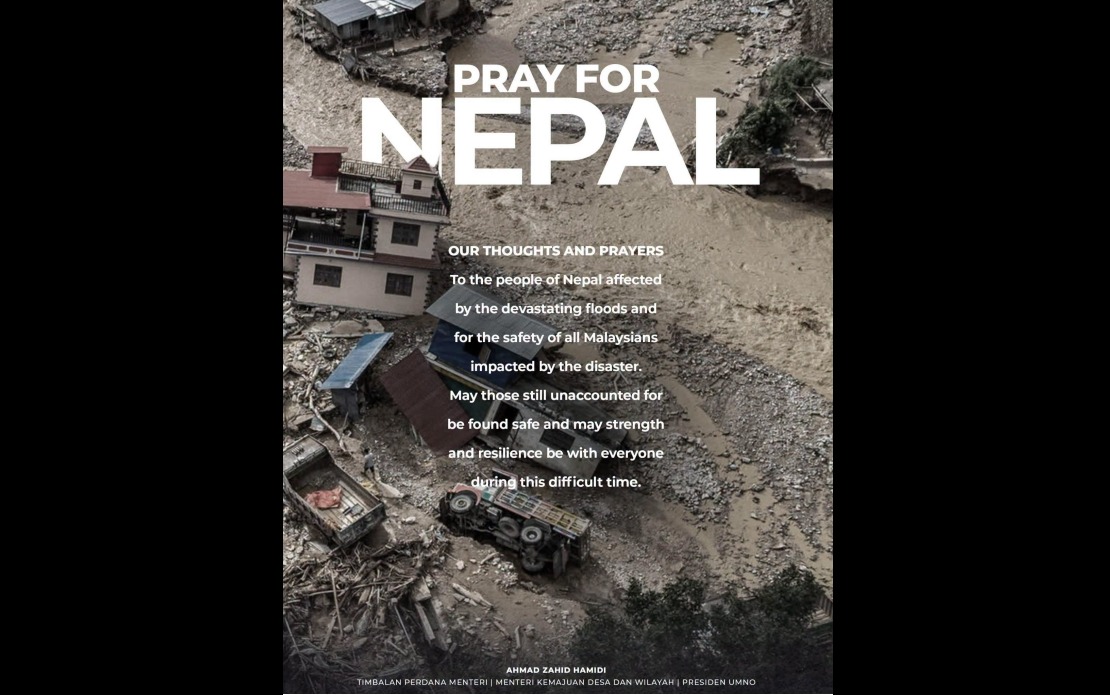
Deputy Prime Minister Datuk Seri Dr Ahmad Zahid Hamidi has publicly expressed serious alarm regarding the safety and wellbeing of Malaysian citizens affected by the catastrophic flooding that has devastated Nepal in recent days. In a statement released through social media on Wednesday, he articulated his hope that Malaysians still unaccounted for in the disaster zone will be discovered alive and restored to their families without delay.
The flooding event has proven to be one of the most destructive natural disasters to strike Nepal in recent memory, triggering widespread loss of life and displacement across multiple regions. According to official tallies compiled by Nepal's tourism authority, the confirmed death toll had reached 359 individuals as of Thursday evening local time. The precise number of missing persons and the full extent of material damage remains uncertain as rescue operations continue across affected areas.
Ahmad Zahid extended formal condolences to the families and loved ones of those who perished in the disaster, simultaneously expressing solidarity with the broader Nepali population during this period of acute crisis. His statement reflected the gravity with which Malaysian authorities regard the situation, particularly given the presence of Malaysian nationals in the affected regions.
In his statement, the Deputy Prime Minister articulated the emotional weight of the situation, noting his profound sadness at the scale of destruction wrought by the flash floods. He emphasised that his thoughts and prayers were directed towards the people of Nepal as a whole, with particular concern for those grieving lost family members and those experiencing the anguish of uncertainty as they awaited information about missing relatives.
The statement underscores Malaysia's diplomatic commitment to neighbouring nations during humanitarian emergencies. As a fellow regional nation with established people-to-people connections, Malaysia recognises the shared vulnerabilities that Asian countries face in confronting natural disasters of this magnitude. The Deputy Prime Minister's public expression of concern signals to Malaysian expatriates in Nepal that their government is actively monitoring their situation.
Ahmad Zahid appealed for divine intervention in facilitating the ongoing search and rescue efforts, expressing the hope that operations would proceed without further impediment and that individuals still in peril would be swiftly brought to safety. Such appeals reflect the cultural and religious dimensions of Malaysia's diplomatic approach, where such expressions carry weight within Malaysia's Muslim-majority context.
The Deputy Prime Minister concluded his remarks by invoking blessings upon all families touched by the tragedy, expressing hope that they would find the strength and emotional fortitude necessary to endure the challenging period ahead. This framing acknowledges both the immediate crisis and the long-term recovery process that will follow the disaster.
Nepal has experienced severe monsoon-related flooding in recent years, but the scale of this particular event has exceeded previous incidents. The mountainous terrain of Nepal and its river systems make the country particularly vulnerable to flash flooding during heavy precipitation events. The disaster highlights broader climate vulnerability issues affecting the Himalayan region.
For Malaysian readers, the situation in Nepal serves as a reminder of the geographic and climatic challenges confronting South Asian nations. It also underscores the importance of maintaining robust diplomatic channels and consular support networks for Malaysians abroad during international emergencies. Malaysian diplomatic missions in Nepal are likely coordinating with local authorities to verify the status of Malaysian citizens and provide necessary assistance.
The incident reflects ongoing concerns about climate-related disasters in Asia, where rapid urbanisation, deforestation, and changing precipitation patterns have intensified flooding risks in vulnerable regions. Southeast Asian nations, including Malaysia, face similar challenges during monsoon seasons, making cross-regional disaster management cooperation increasingly relevant.
Government responses to such disasters typically involve coordinating with international humanitarian agencies, establishing emergency support channels for affected nationals, and providing diplomatic pressure to ensure adequate rescue resources are deployed. Ahmad Zahid's public statement represents Malaysia's initial formal response, signalling readiness to provide assistance if required.

