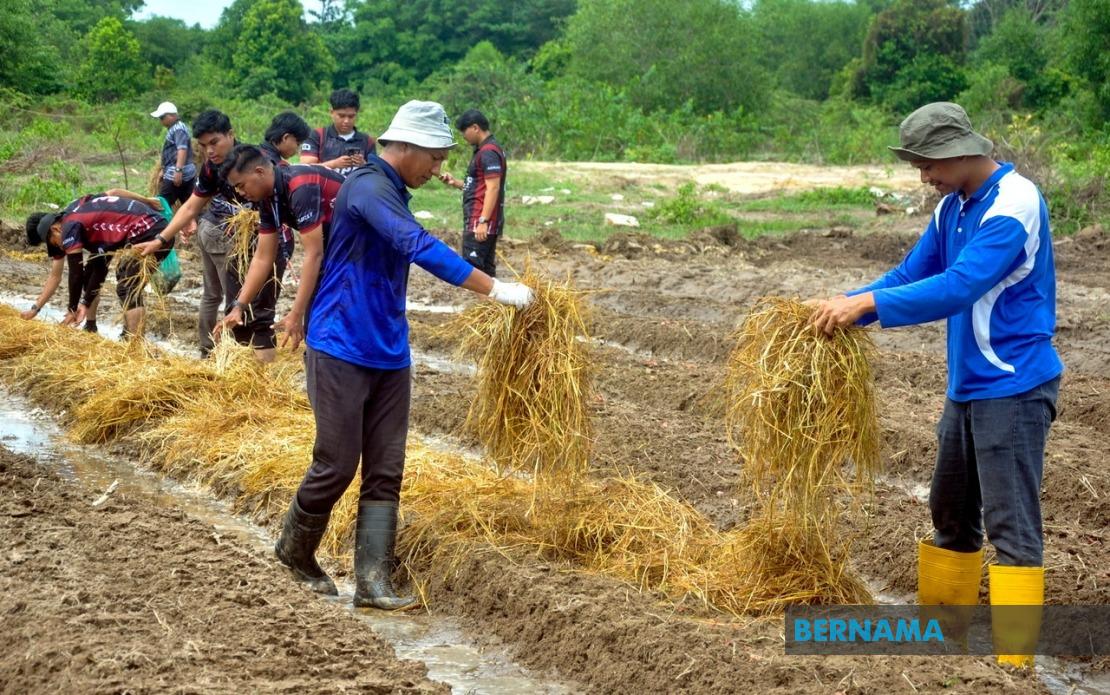
Malaysia's agricultural vocational training sector has achieved a notable milestone, with graduate employment rates climbing to 76 per cent in 2024, representing a 15-percentage-point improvement over the 61 per cent figure recorded in 2018. The finding emerges from a comprehensive Graduate Outcomes of Agricultural TVET in Malaysia report unveiled in Putrajaya, signalling growing momentum in efforts to channel skilled workers into farming and related industries. Despite this progress, however, the agricultural segment continues to trail significantly behind the broader TVET ecosystem, where employment rates average 95 per cent nationally—a gap that underscores persistent structural challenges within agribusiness recruitment and retention.
The Ministry of Agriculture and Food Security developed the report in partnership with PNB Research Institute, building on a partnership framework established to strengthen agricultural vocational pathways and bolster youth interest in food production. This collaborative approach reflects a strategic pivot toward data-driven policy formulation, enabling decision-makers to ground interventions in empirical evidence rather than assumptions. The research drew on longitudinal data spanning multiple years, allowing analysts to identify meaningful trends in graduate trajectories and career outcomes across different agricultural regions and commodity sectors.
Income analysis contained within the study reveals a competitive advantage for those who choose agricultural careers. Graduates employed within the farming and food production sector earn on average RM100 more monthly than counterparts working in non-agricultural fields, a differential that directly challenges persistent perceptions of farming as a low-wage pursuit. Agricultural entrepreneurs demonstrate even stronger financial performance, with agro-business owners recording higher incomes than graduates operating in non-agricultural sectors. This income premium, though modest in absolute terms, carries symbolic weight—it suggests the sector can offer genuine economic mobility to young people willing to invest in vocational training and entrepreneurial ventures.
Yet the sector faces a demographic crisis that threatens long-term sustainability. The farming workforce is ageing visibly, with one in two agricultural workers now aged 40 and above, a proportion that has deteriorated steadily throughout the past decade. Simultaneously, youth participation has contracted, creating a dangerous imbalance between an retiring generation of experienced farmers and insufficient numbers of younger individuals entering the profession. This demographic squeeze directly imperils Malaysia's ability to maintain domestic production capacity and food security, particularly given regional competition for arable land and resource constraints.
Geographic concentration represents another significant structural weakness. Agricultural TVET graduate participation clusters heavily in specific states, with Sabah accounting for 15 per cent of the graduate cohort, Kedah at 14 per cent, and Sarawak at 13 per cent. This concentration reflects historical patterns of agricultural development and regional comparative advantage but simultaneously indicates underutilisation of training infrastructure in major agricultural heartlands. Johor, Pahang, and Perak—states with substantial farming sectors and established commodity production systems—have yet to be fully leveraged, suggesting missed opportunities for skills development and workforce expansion in regions where agricultural enterprises already operate at scale.
To address these multifaceted challenges, the Ministry outlined six strategic policy directions aimed at recalibrating the agricultural TVET system. First, programme expansion will be tailored to reflect state-specific needs rather than applied uniformly across the nation, acknowledging that Sabah's agricultural priorities differ fundamentally from those in Peninsular states. Second, institutional success metrics will be reoriented toward outcomes directly relevant to agricultural practice and entrepreneurship rather than generic TVET benchmarks. Third, the ministry will work to reduce entrepreneurial risk through financial mechanisms and market linkages, making independent farming ventures less precarious for graduates. Fourth, all vocational programmes will systematically embed entrepreneurial and commercial skills alongside technical competencies, recognising that modern farming increasingly requires business acumen.
The fifth policy direction focuses on deepening graduate exposure to entire agricultural value chains, from primary production through processing, distribution, and retail. This integrated perspective moves beyond narrow farm-focused training to encompass opportunities across the broader agribusiness landscape, potentially widening the aperture of career possibilities available to vocational graduates. Finally, the ministry will strengthen formal collaboration frameworks with industry stakeholders, ensuring that curriculum content remains aligned with labour market demand and that employers participate actively in shaping training priorities.
These findings carry direct relevance to Malaysia's broader food security architecture. The report's presentation to the National Technical and Vocational Education and Training Council, chaired by Deputy Prime Minister Datuk Seri Dr Ahmad Zahid Hamidi, anchors agricultural TVET within the wider policy environment shaped by the National Food Security Policy 2030 and the National Agro-Food Policy 2021-2030. This institutional positioning elevates TVET from a marginal concern within agricultural circles to a central component of national food policy, signalling political commitment to workforce development as a prerequisite for meeting domestic production targets.
For Southeast Asia more broadly, Malaysia's experience offers instructive lessons. The region faces similar demographic pressures, with younger generations gravitating toward urban employment and service sector work rather than agriculture-based livelihoods. The modest income premium identified in the Malaysian study—RM100 monthly—may prove insufficient incentive where urbanisation offers cultural prestige alongside marginally higher wages. However, the finding that agricultural entrepreneurs outperform their non-agricultural counterparts provides a more compelling narrative around farming's economic potential, particularly in knowledge-intensive, value-added segments such as high-value crops, aquaculture, and agro-processing.
The 15-percentage-point employment gain achieved between 2018 and 2024 demonstrates that structural reform produces measurable results. Yet the persistent 19-percentage-point gap between agricultural TVET employment rates and the broader TVET average indicates that substantial work remains. Whether Malaysia can close this differential will depend on sustained policy execution, adequate resource allocation to underutilised agricultural states, and genuine commitment to transforming farming from a residual occupation into an aspirational career path. The coming years will reveal whether these policy directions translate into the behavioural changes—youth recruitment, graduate retention, and entrepreneurial venture creation—upon which food security ultimately depends.

