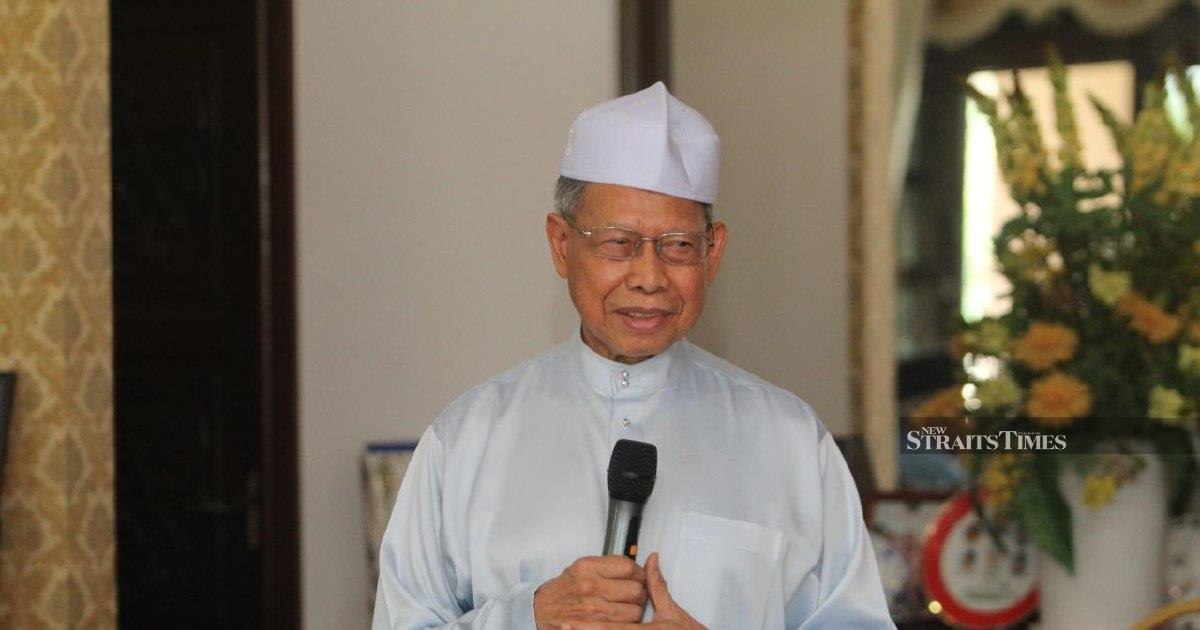
Datuk Seri Mustapa Mohamed, the veteran politician who recently made headlines by rejoining Umno after his earlier departure, has definitively closed the door on a return to electoral politics in the forthcoming general election. Speaking in Pasir Mas, the former Jeli member of parliament attributed his decision squarely to the physical realities of age, suggesting that the demands of campaigning and parliamentary life had become incompatible with his current health status.
The candidness of Mustapa's withdrawal from active electoral politics underscores a generational shift within Malaysian political circles, where party loyalty and personal health have begun intersecting more visibly. His recent decision to rejoin Umno marked a significant moment in his political journey, signalling renewed ties with the party he had previously left. However, that homecoming has not translated into plans for a direct role in the party's electoral machinery at the national level.
Mustapa's articulation of his limitations—expressing difficulty with basic mobility—reflects a practical assessment that governing and campaigning require sustained physical stamina. The rituals of constituency work, town halls, rallies, and the vigorous schedule of parliamentary sessions present genuine challenges for aging politicians. In the Malaysian context, where constituency-based politics remain rooted in personal visibility and direct constituent engagement, such physical demands are not merely ceremonial but central to effective representation.
His decision carries broader implications for Umno's internal dynamics and candidate selection strategy. Mustapa's political experience spanning decades represents institutional knowledge and networks that younger party members might lack. Yet the party's regeneration and presentability to voters increasingly depend on fielding candidates capable of embodying vigour and forward-thinking approaches. The intersection of these needs—preserving experience while projecting dynamism—has long challenged Malaysian political parties struggling with demographic and perception challenges.
The timing of Mustapa's retirement from electoral ambitions also reflects post-election realities. The electorate's voting patterns in recent general elections have shown volatility, with voters increasingly willing to punish incumbents and traditional parties perceived as disconnected or uninvigorated. In such an environment, parties have begun recognizing that candidate freshness matters substantially, particularly in constituencies that have swung between different political camps. Established names alone no longer guarantee electoral success.
Umno, in particular, has faced sustained scrutiny regarding its candidate selection processes and generational renewal. As the party navigates its identity and electoral prospects, decisions by senior figures like Mustapa to step back from direct contestation may paradoxically strengthen the narrative that fresh leadership is emerging. Conversely, the loss of experienced voices from the campaign trail removes potentially stabilizing influences and respected elder figures whose presence could energize traditional support bases.
The broader political landscape in Malaysia has evolved substantially since Mustapa last held the Jeli seat. Rural constituencies like those represented in Kedah's Jeli division have witnessed demographic shifts, changing economic priorities, and evolving voter expectations. Digital campaign strategies, social media engagement, and younger voters' different communication styles have transformed electoral competition fundamentally. Candidates must now navigate a vastly more complex information ecosystem than in previous cycles.
Mustapa's candid articulation of his physical constraints also reflects changing social attitudes toward aging in Malaysian public life. Rather than attempting to obscure limitations or project invincibility, his straightforward acknowledgment of walking difficulties and implicit inability to sustain campaigning represents a more mature approach to succession planning. However, such transparency remains relatively uncommon in Malaysian politics, where leaders often maintain public images of dynamism regardless of private circumstances.
The decision equally highlights how electoral politics at the national level demands more from candidates than policy expertise or constituent connections. Modern campaigns require personal resilience, geographic mobility, and the capacity to engage continuously across multiple platforms and formats. For an aging politician, these demands can render even the most experienced and accomplished figure unsuitable for the grind of electoral competition.
Moving forward, Mustapa's withdrawal from GE16 candidacy suggests he may instead focus on roles within Umno's organizational structure or advisory functions that leverage his experience without imposing the physical demands of electoral politics. Many Malaysian parties have developed parallel tracks enabling senior figures to remain influential while stepping back from frontline electoral roles. Such arrangements serve both the individual and the party, preserving institutional memory while ensuring that campaign resources target candidates capable of full engagement.
The trajectory of Mustapa's career—from parliamentary representation through party departure and recent reunion—ultimately reflects the complex terrain that Malaysian politics occupies, where personal health, party loyalty, electoral strategy, and generational transition constantly intersect. His decision to abstain from GE16 serves as a measured example of recognizing limitations while remaining connected to political life and his party of choice.

