Sudan's escalating humanitarian crisis has drawn renewed international attention as the African Union signalled its determination to shield the nation from external pressure while pushing domestic stakeholders toward a negotiated settlement. During meetings in Khartoum on Sunday, the continent's leading multilateral body made clear its position that only Sudanese-led solutions can resolve the conflict that has ravaged the country for over a year.
The African Union Peace and Security Council, chaired by Algerian diplomat Mohamed Khaled, delivered this message directly to Sudan's Sovereignty Council Chairman Abdel Fattah al-Burhan at the presidential palace. The delegation's visit underscored the AU's commitment to mediating the crisis while maintaining the principle that sovereignty must remain paramount. Khaled characterised the discussions as productive, noting they encompassed the interconnected issues of peace, security and stability that are essential to Sudan's recovery.
A central theme of the AU's position concerns the dangers of parallel governance structures. The bloc explicitly rejected any attempts to establish competing governmental entities that could fragment state authority and weaken national unity. This concern reflects regional experience with state collapse and the emergence of rival power centres, which have destabilised other African nations. By emphasising the indivisibility of Sudan's institutions, the AU sought to reinforce the principle that any political transition must occur through legitimate channels rather than parallel arrangements that could prolong conflict or create permanent fractures.
The rejection of foreign meddling carries particular significance given the geopolitical dimensions of Sudan's conflict. Multiple external actors have attempted to shape outcomes through military support, diplomatic pressure or financial backing to rival factions. The AU's insistence that such interference "fuels the conflict" reflects a hard-won understanding that external powers pursuing their own agendas invariably complicate internal peace processes. For Malaysia and other Southeast Asian nations concerned about international interference in regional affairs, the AU's principled stance offers a model for defending non-aligned interests.
Prime Minister Kamil Idris provided a potentially encouraging signal by announcing that Sudanese-Sudanese dialogue would commence soon. This commitment to homegrown negotiation represents movement toward the path that international observers have consistently advocated. However, the timing and inclusivity of such dialogue remain critical variables. The AU specifically called for broader participation from political forces and civil society, warning that any transition lacking genuine consensus risks becoming a vehicle for particular factions rather than national reconciliation.
The AU's emphasis on constitutional legitimacy through free and fair elections reflects international best practice in post-conflict transitions. Rather than accepting military or interim arrangements as permanent solutions, the organisation pushed for democratic processes that would allow Sudanese citizens to determine their own governance structures. This approach acknowledges that durable peace requires not just an end to fighting but a political settlement with popular legitimacy.
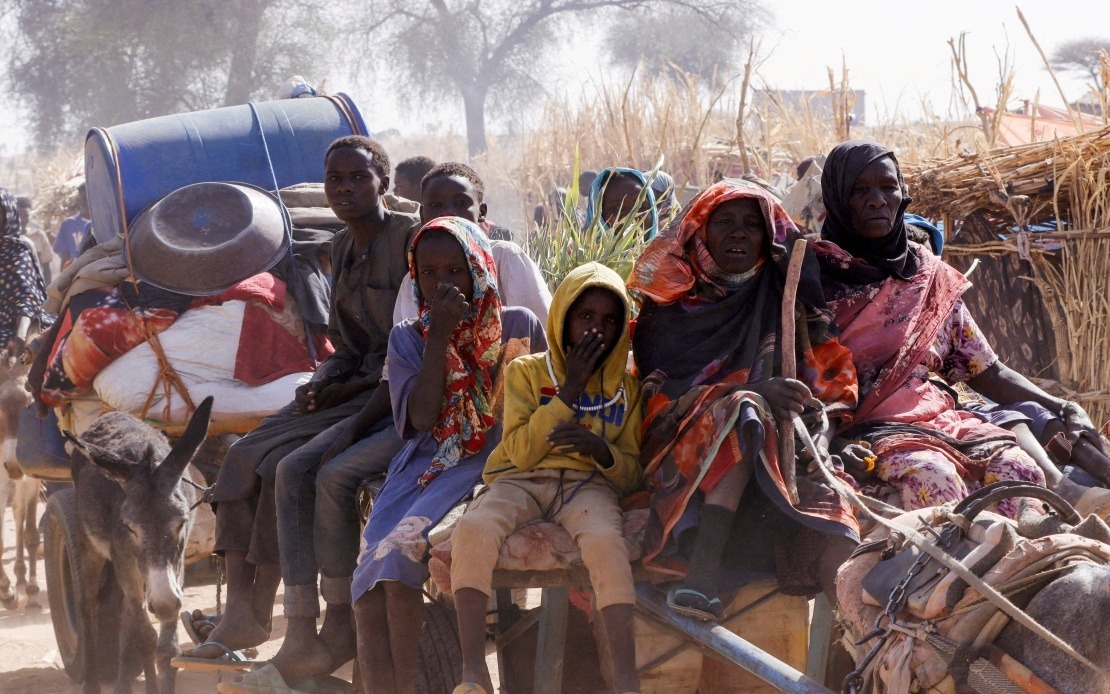
Sudan's humanitarian toll provides urgent context for these diplomatic efforts. The conflict that erupted in April 2023 between the regular army and the paramilitary Rapid Support Forces stemmed from disputes over military integration, but has metastasised into a proxy struggle with regional and international dimensions. Conservative estimates place the death toll in the tens of thousands, though the true figure may be substantially higher given the fog of war and limited independent verification capacity. More starkly, approximately 13 million people have been displaced internally or driven across borders as refugees, representing one of the world's most severe contemporary displacement crises.
The AU's call for the government to resume functioning from Khartoum carries practical implications for service delivery and institutional restoration. The displacement of state authority creates vacuums filled by armed groups, criminal networks and competing power centres, each fragmenting governance further. Re-establishing state presence and capacity in the capital would signal that legitimate institutions rather than military force determine political outcomes, potentially encouraging rebel factions to engage with negotiations rather than pursue military victory.
For regional stability, Sudan's ongoing fragmentation poses risks beyond its borders. The Nile Valley's geopolitical importance means that state collapse in Khartoum generates pressures affecting Egypt, Ethiopia and the broader East African region. Additionally, lawless territories become havens for transnational militant groups and smuggling networks that destabilise neighbouring countries. This explains why the AU's emphasis on restoring sovereign state capacity resonates with concerns held by Sudan's neighbours and by international stakeholders invested in regional stability.
The distinction the AU drew between dialogue and external coercion reflects scepticism toward military solutions. Experience across Africa and beyond demonstrates that conflicts resolved primarily through military victory tend to generate grievances and cycles of revenge that undermine subsequent peace. By contrast, negotiated settlements that accommodate diverse interests, even imperfectly, tend to prove more durable because all major parties retain some stake in implementation.
The council's framing of peace initiatives as a positive development suggests the AU recognises that momentum, however fragile, should be encouraged. The government's return to Khartoum operations, even symbolically, provides a foundation upon which more comprehensive institutional restoration could build. This represents the kind of incremental progress that characterises most successful peace processes, rather than sudden breakthroughs that rarely prove stable.
Moving forward, the challenge facing Sudan's leadership and the international community involves translating these AU principles into concrete mechanisms for inclusive dialogue. The organisation's call for political forces and civil society participation will require overcoming entrenched positions and historical grievances accumulated over Sudan's contentious modern history. Whether the government and armed movements prove willing to prioritise nation-building over factional advantage will ultimately determine whether the AU's diplomatic efforts produce lasting change or represent merely another iteration in Sudan's frustratingly cyclical path toward peace.

