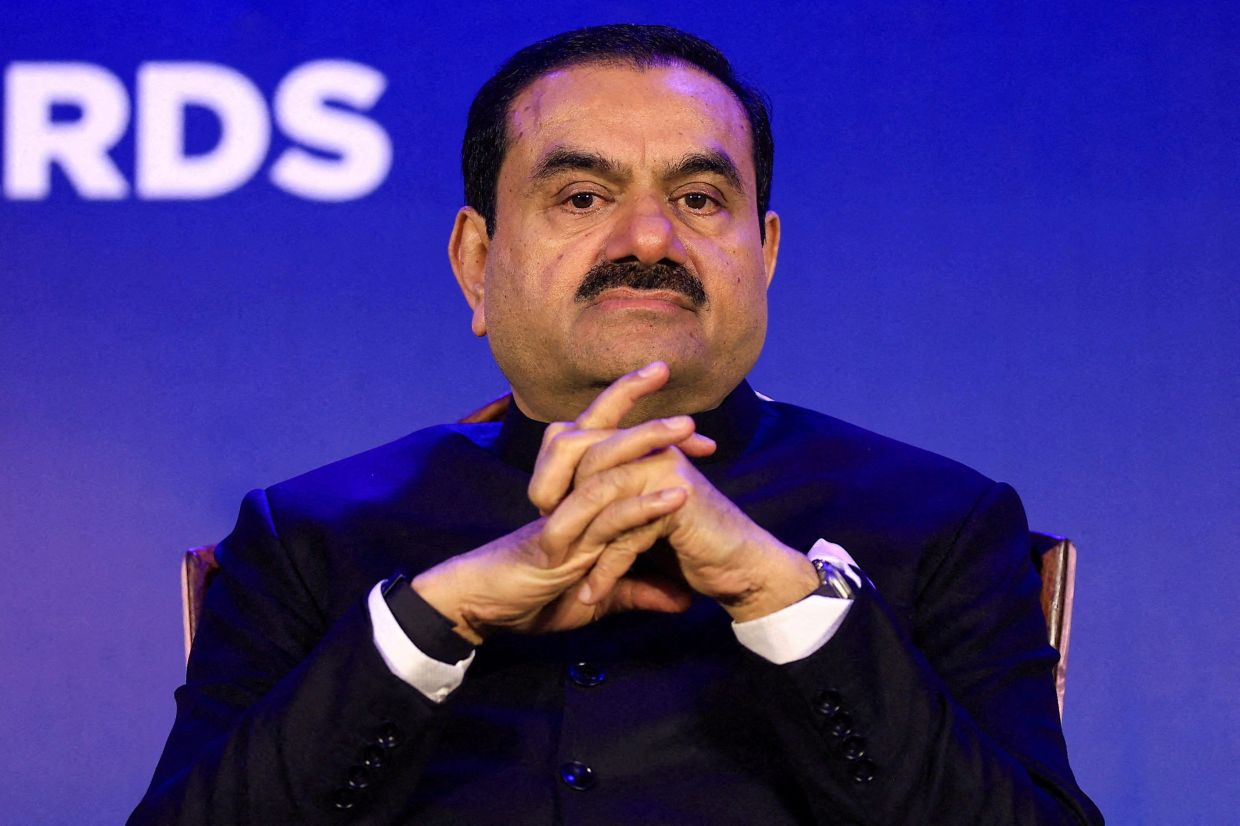
Gautam Adani's defence team has moved to formally terminate criminal charges in a New York federal court after American prosecutors signalled their intention to drop the case. The filing on Wednesday came before Judge Nicholas Garaufis in Brooklyn, where Adani's attorney Robert Giuffra formally petitioned for the dismissal of all allegations against the Indian billionaire and his co-defendants. This development marks a significant turning point in a legal saga that has shadowed Adani Group's operations and reputation since allegations first emerged in late 2023.
The criminal charges centred on accusations that Adani had orchestrated a scheme to funnel bribes to Indian government officials, allegedly facilitating his subsidiary's successful bid to develop a solar energy project. Prosecutors further alleged that Adani systematically misrepresented his company's compliance with anti-corruption standards to American investors, thereby committing securities fraud. These allegations had particularly stung given Adani Group's deep integration into India's renewable energy infrastructure and its position as a major player in the country's clean energy transition.
Adani Group has consistently maintained its innocence throughout the legal proceedings, categorically denying any involvement in bribery or fraudulent conduct. The company's steadfast denial of wrongdoing has been a core messaging pillar as it navigated shareholder concerns, lender relationships, and investor confidence across its sprawling business empire spanning ports, power generation, and logistics.
Giuffra's legal arguments centre on two primary contentions that challenge the foundation of the American prosecution. Firstly, he contends that the charges fall outside the legitimate reach of United States criminal jurisdiction, arguing that the alleged offences occurred primarily in India and therefore should be adjudicated within the Indian legal system. Secondly, he asserts that American prosecutors would face insurmountable evidentiary obstacles in proving the underlying bribery allegations, given that the purported corrupt transactions occurred outside US territory and involve Indian officials and institutions.
The Justice Department's decision to cease prosecution came after extensive negotiations and communications between federal lawyers and Adani's legal representation, as Giuffra noted in his filing to the court. These months of detailed discussions and meetings appear to have culminated in the government's determination that continuing the case was not in the public interest or that the legal foundation for prosecution was insufficiently robust. The withdrawal represents a major vindication for Adani, whose business operations had faced scrutiny from regulators, partners, and stakeholders worldwide following the initial charges.
Beyond the criminal matter, Giuffra simultaneously requested that Judge Garaufis formally conclude the civil enforcement action brought by the US Securities and Exchange Commission. That regulatory proceeding resulted in a settlement agreement whereby Adani personally committed to paying six million US dollars in penalties, while his nephew Sagar Adani agreed to pay twelve million dollars. This civil resolution provided a pathway for both parties to move beyond litigation without admission of guilt, a standard mechanism that allows companies and individuals to settle regulatory disputes.
The broader financial reckoning extends further into the Adani Group's compliance landscape. Adani Enterprises Limited, a flagship subsidiary, negotiated a separate settlement with the United States Treasury Department's Office of Foreign Assets Control, agreeing to pay two hundred and seventy-five million dollars to resolve alleged breaches of sanctions regulations regarding Iran. This substantial payment underscores the company's exposure to American financial enforcement mechanisms and its desire to restore relationships with US regulators and the international financial system.
For Malaysian and Southeast Asian observers, the Adani case carries implications for foreign investment flows and regulatory dynamics within the region. Adani Group operates across South Asia and has strategic interests in neighbouring markets, making the resolution of these American legal entanglements significant for its broader regional expansion strategy. The case also illustrates how multinational conglomerates based in Asia face jurisdictional complexity, as American courts and regulators assert authority over conduct affecting US investors and markets, even when transactions occur entirely overseas.
The dismissal of criminal charges, pending judicial approval, removes a cloud that had affected Adani Group's access to capital markets and its reputation among international institutional investors. Markets often penalise companies facing serious criminal allegations, particularly those involving alleged corruption in emerging markets, where governance concerns already command elevated risk premiums. The resolution provides clarity for stakeholders contemplating continued involvement with the conglomerate.
Judge Garaufis must formally ratify the dismissal before it becomes final, though such judicial approval of prosecutorial withdrawal is typically a procedural formality rather than a genuine obstacle. The judge's signature will mark the conclusive end of the American criminal process against Adani, leaving unresolved the continuing Indian inquiries into the solar project allegations. Indian authorities had conducted their own investigation, which has remained largely opaque to international observers.
The case highlights the intricate intersection of corporate compliance, international sanctions enforcement, and cross-border fraud prosecution in an increasingly interconnected global economy. Adani's ability to navigate these challenges and emerge from the American legal system with the prosecution abandoned suggests that either the government's evidence was deemed insufficient or that the company's legal strategy effectively undermined the prosecution's case theory. Regardless of the underlying reasons, the formal dismissal represents a material improvement in Adani's legal position and may facilitate the company's efforts to restore confidence among global investors and business partners wary of corruption-related legal exposure.

