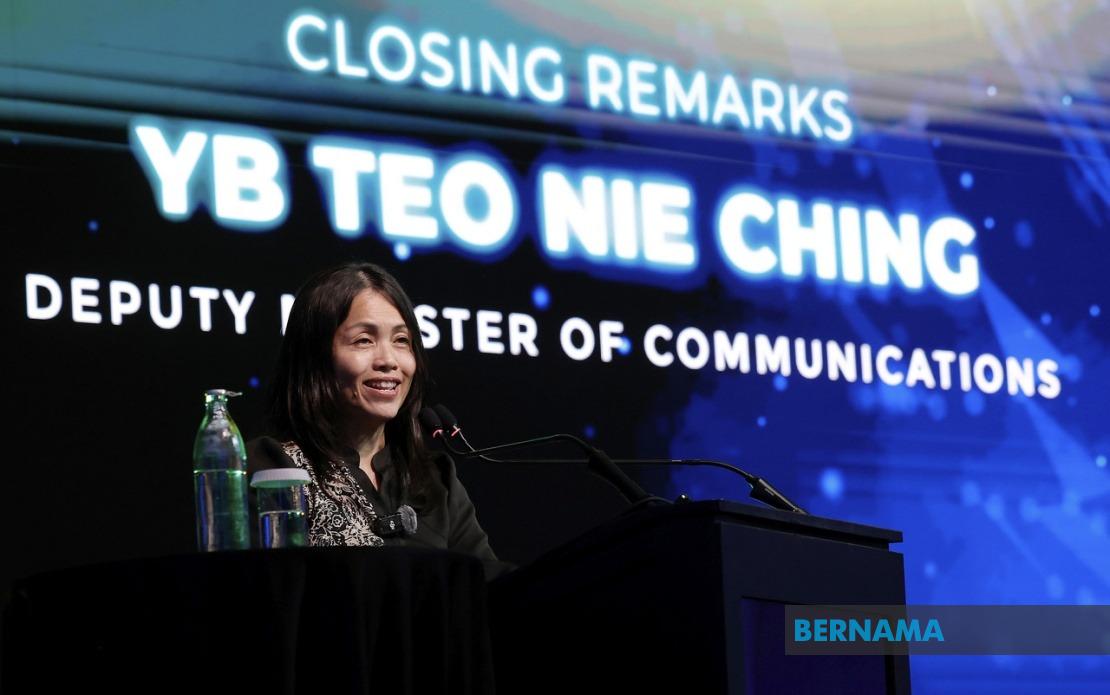
Deputy Communications Minister Teo Nie Ching has underscored that the pathway toward a genuinely secure and inclusive digital ecosystem hinges not merely on technological prowess but fundamentally on mechanisms of accountability coupled with governance structures that place citizens at their centre. Speaking at the conclusion of the two-day International Regulatory Conference 2026 in Kuala Lumpur, Teo articulated a vision where digital progress transcends the conventional metrics of innovation speed and capability, instead embracing measures rooted in resilience, safety and alignment with the broader public interest.
Teo's perspective offers a critical corrective to the technology-first narratives that often dominate global digital policy discourse. She observed that public perception and acceptance of technological systems rest upon fundamentally different foundations than those typically prioritised by engineers and entrepreneurs. Rather than assessing technology through the lens of sophistication or processing power, citizens evaluate innovations by their safety architecture, fairness in application, and whether they can reasonably place trust in systems shaping their daily lives. This distinction proves especially pertinent for Malaysia, where rapid digitalisation across commerce, governance and social services has expanded both opportunities and vulnerabilities for millions of citizens simultaneously.
The relationship between technological evolution and accountability mechanisms represents the second pillar of Teo's framework. She emphasised that governance structures cannot remain static while technological capabilities advance exponentially. Instead, regulatory thinking and accountability mechanisms must themselves evolve in tandem with innovation, ensuring that each wave of technological change encounters corresponding frameworks designed to protect the public interest. This observation reflects growing international concern that regulatory systems, often built for previous technological eras, lag dangerously behind deployment of novel digital tools affecting citizens' rights, privacy and economic wellbeing.
The scale of online harms necessitating intervention underscores why such accountability frameworks matter urgently. Malaysia's Communications and Multimedia Commission issued 1.2 million content removal requests to social media platforms spanning the period from January 1, 2022 through July 15, 2026, with platform providers successfully taking down 1.138 million instances of harmful material. These figures, whilst demonstrating significant regulatory activity, simultaneously reveal the sheer volume of problematic content circulating within Malaysia's digital spaces. The trajectory has accelerated considerably in 2026, with the commission issuing 377,502 removal requests between January 1 and July 15 alone—representing nearly 78 percent of all requests made throughout 2025 and averaging approximately 1,900 daily removal directives. During that same seven-and-a-half-month period, platforms removed 350,332 harmful content items in response.
These statistics carry particular significance for Southeast Asian observers monitoring platform accountability across the region. Malaysia's documented enforcement activity suggests that reactive content moderation following publication remains the dominant approach, even as the removal rate demonstrates platform responsiveness to regulatory pressure. Yet the sheer volume of requests required to address online harms raises questions about the effectiveness of purely reactive enforcement as a sustainable long-term strategy. For Malaysian users, especially vulnerable populations including children and elderly citizens navigating digital platforms with limited literacy in online risk assessment, such reactive approaches offer limited prospective protection.
Teo articulated a more comprehensive vision extending beyond regulatory mandates imposed on platforms. She explicitly cautioned that regulatory mechanisms, however rigorously enforced, cannot unilaterally bear the burden of securing digital spaces, protecting children from online exploitation, and ensuring platform accountability to public standards. This acknowledgement represents important intellectual honesty about regulatory capacity constraints, particularly relevant for a developing nation where enforcement resources often prove stretched across expanding digital frontiers. It also reflects accumulated international experience demonstrating that purely top-down regulatory approaches, absent broader ecosystem participation, frequently struggle to maintain effectiveness as platforms innovate around compliance measures.
Instead, Teo advocated for a collective, multi-stakeholder approach transcending traditional boundaries between regulators and regulated entities. She called upon social media platforms themselves, educational institutions, community organisations, and broader industry participants to collectively embrace responsibility for online safety. Critically, she emphasised that safety mechanisms should be architected into digital systems and platforms from inception during the design and development stages, rather than appended as afterthoughts following documented harms. This design-stage integration philosophy aligns with evolving international best practices in digital governance, suggesting that preventing harm through structural design proves substantially more effective than attempting remediation after dangerous systems already operate at scale.
The emphasis on embedded safety represents a meaningful departure from industry practice where content moderation has traditionally functioned as a post-publication enforcement layer. For Malaysian technology companies developing digital services and platforms—an increasingly significant cohort as the nation cultivates homegrown innovation—adopting safety-by-design principles could differentiate Malaysian-created technologies within regional and global markets where consumer concern about platform trustworthiness continues escalating. This approach also acknowledges that younger generations of users, who have grown up with digital technologies but lack corresponding experience assessing online risks, require systems engineered with their protection as a foundational priority.
The International Regulatory Conference 2026, now in its third edition and organised by the Malaysian Communications and Multimedia Commission, provides a significant gathering space where regulators, industry leaders and subject matter experts converge to examine the evolving digital economy landscape and emerging regulatory challenges within the communications and multimedia sectors. This edition's thematic focus on "Shaping the Next Digital Era: Regulation, Resilience and Trust" reflects acknowledgement that digital governance has matured beyond narrow technical concerns toward the fundamental questions of institutional trust, economic fairness and democratic participation that Teo's remarks emphasised.
For Malaysia specifically, the positioning of digital governance as fundamentally intertwined with public trust and accountability potentially carries substantial implications for the nation's broader digital economy ambitions. As Malaysia seeks to position itself as a regional technology hub and digital services centre, demonstrating commitment to rigorous governance standards and public-interest-aligned accountability mechanisms could provide competitive advantage over jurisdictions perceived as prioritising platform profitability over user protection. Teo's framing suggests Malaysian policymakers recognise that sustainable digital growth requires not just attracting technology companies and investment capital, but constructing governance ecosystems that citizens reasonably trust to protect their interests within digital spaces.
The practical challenge now facing Malaysian regulators, platforms, and technology stakeholders involves translating these principles into concrete institutional arrangements and design practices. The MCMC's documented enforcement activity demonstrates regulatory willingness to act decisively against harmful content, yet the sheer volume of removal requests required raises questions about whether current approaches adequately shift behaviour toward safer platform design. Moving forward, Malaysia's digital governance trajectory will likely depend upon whether regulators, platforms, and broader stakeholders can effectively operationalise Teo's vision of accountability-infused, people-centred digital systems—transforming abstract principle into tangible protections that Malaysian citizens experience daily across their increasingly digital lives.

