Malaysia's Academy in Industry (ADI) programme has emerged as a critical intervention in the nation's effort to address both youth unemployment and persistent skills shortages across key economic sectors. Launched as a strategic government initiative, ADI represents a fundamental shift in how vocational education connects with industry demands, creating pathways for individuals who have encountered barriers to conventional schooling while simultaneously furnishing employers with the qualified workforce they desperately require. The programme has gained particular significance in Malaysia's push toward becoming a high-income nation, where technical competency remains a cornerstone of economic competitiveness.
Beyond its surface function as a training platform, ADI operates as a transformative force in the lives of participants. The initiative specifically targets young Malaysians who have faced significant life obstacles or dropped out of the formal education system, demographics typically marginalised in traditional job markets. By combining workplace exposure with structured learning leading to recognised diplomas, the programme offers participants a viable alternative to conventional pathways while building their professional confidence and self-belief. This dual focus on personal development and technical skill acquisition distinguishes ADI from purely transactional training models that prioritise credentials over holistic growth.
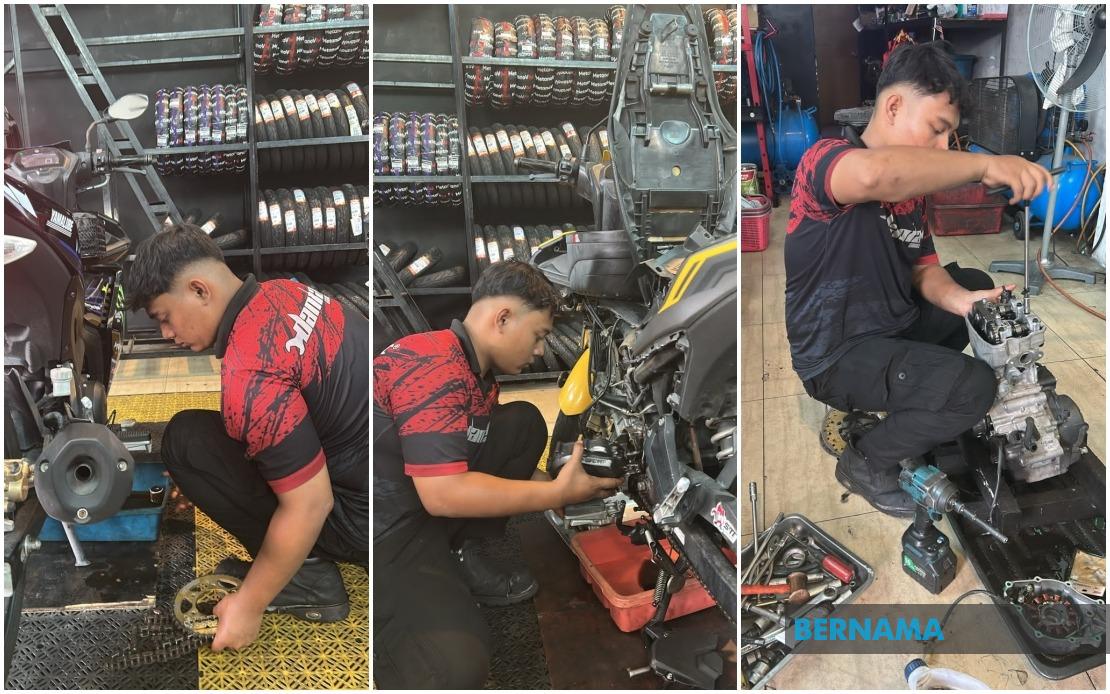
The automotive sector has proven particularly receptive to the ADI framework. Muhammad Arif Nurul Azmi, a 20-year-old from Kajang in Selangor, exemplifies the programme's impact on individual trajectories. His journey began with childhood fascination for mechanical repair—first bicycles, then motorcycles—but these early informal skills lacked the depth and business acumen required for entrepreneurship. Upon enrolling in ADI's Professional Diploma in Motorcycle Maintenance and Service, Azmi gained not only advanced technical knowledge but also essential business management capabilities, operational procedures, and workshop administration skills that transform hobbyist expertise into viable enterprise potential. His articulated ambition to establish his own motorcycle workshop represents precisely the type of small-to-medium enterprise creation that diversifies Malaysia's economy.
The philosophy undergirding ADI's curriculum reflects genuine industry consultation rather than academic abstraction. Nurul Azura Md Adnan, Academy Director at Syarikat Nawireton Legacy Sdn Bhd (operating as Dania Garage), emphasises that the programme deliberately mirrors authentic workplace conditions. This pedagogical approach prioritises foundational discipline regarding punctuality, attitude, and professional comportment before advancing to technical specialisation. The integration of workplace exposure with formal study avoids the traditional compartmentalisation that often leaves graduates unprepared for organisational realities. Participants simultaneously accumulate practical experience and academic credentials, condensing what would conventionally require sequential phases into a cohesive learning experience.
Employers participating in ADI report tangible improvements in participant productivity and professional outlook. Mohd Mustakim Mohd Munawir, chief executive of Syarikat Nawireton Legacy, notes that eight employees who entered the programme since 2024 demonstrated marked behavioural changes including enhanced focus, forward-thinking orientation, and decisiveness in professional contexts. These non-technical competencies, often termed soft skills, prove equally valuable as mechanical expertise in sustaining long-term career progression. The visible transformation in participants suggests that ADI functions as a confidence-building mechanism, enabling individuals from disadvantaged backgrounds to internalise professional identity and capability.
Malaysia's persistent shortage of skilled workers across multiple sectors provides crucial context for ADI's policy significance. Industries including food processing, automotive manufacturing, and metals fabrication face recurring recruitment challenges despite reasonable wage offerings. This mismatch between available positions and qualified applicants reflects systemic failures in vocational pipeline development. ADI directly addresses this dysfunction by systematically preparing workers equipped with both technical competence and industry-recognised certification, thereby reducing the friction between employer requirements and labour market supply. The programme thus simultaneously solves two acute national challenges: youth underemployment and sectoral skills deficiencies.
The strategic targeting of specific industrial verticals represents sophisticated labour policy design. Rather than generalist training divorced from identifiable demand, ADI establishes formal collaborations with food processing, automotive, and metals sectors, ensuring curriculum alignment with genuine workplace needs and hiring practices. This sector-specific approach maximises placement likelihood and career sustainability for participants. Employers participating in curriculum development gain assurance that graduates possess relevant capabilities, reducing expensive onboarding periods and training redundancy. The collaborative model transforms vocational education from speculative to demand-responsive, a critical distinction in developing economies where training resources remain constrained.
The recognition of participant qualifications across industry standards strengthens ADI's market credibility. Professional Diploma credentials awarded through the programme carry genuine currency with employers precisely because they emerge from workplace-integrated learning rather than classroom-only instruction. This authenticity proves particularly valuable for participants from non-traditional backgrounds who might otherwise face employer scepticism regarding their capabilities. Recognised credentials provide objective validation that transcends educational pedigree or family connections, creating merit-based advancement opportunities for individuals whose economic circumstances might otherwise foreclose professional mobility.
The ADI model addresses a persistent challenge in Malaysian vocational development: the historical perception of technical training as inferior to academic pathways. By demonstrating that vocational education produces capable, confident professionals commanding reasonable income and career progression, the programme challenges embedded social hierarchies. Azmi's explicit assertion that participants should overcome fear of failure and embrace iterative learning reflects psychological reorientation that extends beyond technical domains. This mindset shift carries broader implications for Malaysia's competitive positioning in increasingly technology-intensive manufacturing sectors where continuous adaptation and problem-solving prove essential.
For policy makers across Southeast Asia, Malaysia's ADI initiative offers instructive lessons regarding skills development architecture. The deliberate integration of personal development with technical training, the formal coupling of workplace and academic instruction, and the strategic alignment with identifiable sectoral demands represent design principles applicable across the region. As Southeast Asian economies compete for higher-value manufacturing and service provision, systematic mechanisms for converting disadvantaged youth into productive, confident workers become increasingly central to national competitiveness. ADI demonstrates that such transformation requires structural innovation combining educational reform, employer engagement, and psychological support rather than conventional classroom models.
Looking forward, the programme's expansion depends partly on employer participation rates and labour market absorption capacity. Scaling ADI across multiple sectors and geographic regions while maintaining curriculum quality and workplace integration intensity presents administrative challenges. Nevertheless, early outcomes indicate that the investment returns prove compelling. Participants gain income-generating capabilities, employers secure motivated workers with relevant skills, and the nation develops human capital more efficiently than traditional education systems permit. As Malaysia navigates demographic changes and technological disruption, initiatives like ADI that systematically convert potential into productive capacity become strategically indispensable.

