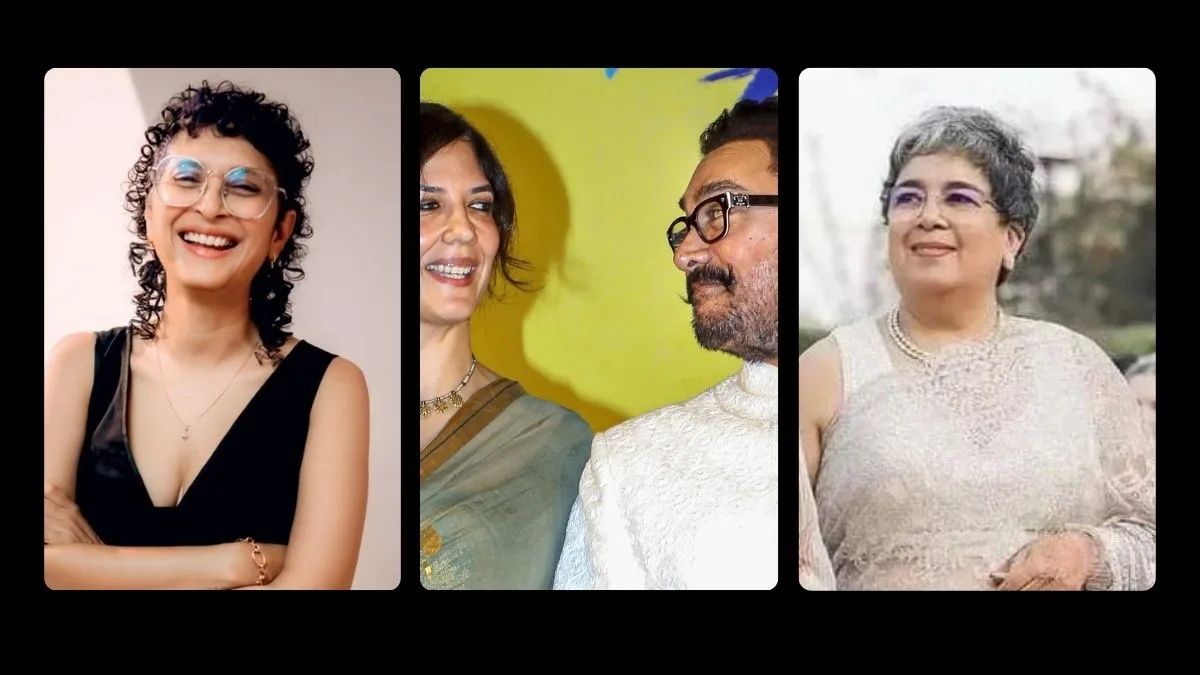
Bollywood star Aamir Khan has broken his silence on inflammatory allegations linking him to the controversial concept of 'love jihad,' firmly rejecting characterizations made following his recent marriage to longtime friend Gauri Spratt. In remarks to media, the acclaimed actor dismissed the accusations and articulated a family philosophy grounded in respect for religious pluralism and individual choice—a position he illustrated through extensive examples spanning multiple generations of his kinship network.
The narrative of 'love jihad' represents a charged political flashpoint in contemporary India, describing purported campaigns in which members of one religious community allegedly pursue relationships with members of another faith community for purposes of conversion. The term has gained considerable currency in recent years, particularly in rightwing political discourse, despite widespread criticism from civil rights advocates who view it as fundamentally divisive and empirically unfounded. Khan's intervention in this debate carries particular resonance given his profile and the intensity of online scrutiny directed toward interfaith relationships among public figures.
Khan articulated that interfaith unions have characterized his extended family for decades, functioning as an ordinary rather than exceptional aspect of family life. His narrative encompassed multiple examples intended to demonstrate the normalcy and acceptance of such arrangements within his household. Both his sisters, he explained, married Hindu men, establishing a pattern of cross-religious partnership. Similarly, his daughter entered into marriage with a Hindu spouse, further illustrating what Khan presented as an established family tradition of matrimonial diversity.
Extending his accounting beyond immediate relatives, Khan referenced his cousin and noted filmmaker Mansoor Khan, who married a Christian partner. This example appeared designed to demonstrate that acceptance of interfaith marriage extended throughout his kinship structure rather than representing isolated instances. By cataloguing these relationships, Khan constructed a broader family narrative emphasizing religious acceptance as a core value transmitted across generations.
Turning to his own marital history, Khan comprehensively addressed each marriage while maintaining that religious conversion played no role in any union. His first marriage to Reena Dutta, which commenced in 1986 and dissolved in 2002, was solemnized through civil procedures rather than religious ceremony. Subsequently, his 2005 marriage to filmmaker Kiran Rao similarly proceeded as a civil union, he clarified, again emphasizing the absence of religious conversion requirements.
Concerning his most recent marriage to Gauri Spratt, formalized on July 5 at his Mumbai residence, Khan disclosed that Spratt identifies as Christian but does not actively practise the faith. This detail appeared designed to further underscore that no conversion occurred and that individual religious observance remains a matter of personal choice within his family framework. The marriage itself, occurring through civil proceedings, maintained consistency with Khan's documented matrimonial pattern.
The timeline of Khan and Spratt's relationship reveals a lengthy acquaintance preceding their romantic involvement. The two had maintained a friendship spanning nearly 25 years before reconnecting in Bengaluru approximately two years prior to their marriage. This reconnection occurred through Khan's cousin Nuzhat Khan and gradually evolved into romantic partnership. After dating for more than two years, they proceeded toward marriage—a progression Khan's account suggests developed organically rather than through any precipitating conversion or religious accommodation.
Khan's public introduction of Spratt occurred during his 60th birthday celebrations in March of the previous year, marking the moment their relationship transitioned from private to media consciousness. This public acknowledgement preceded their marriage by several months, allowing a period during which their status as a couple became established in public discourse before formal solemnization. The relatively extended public courtship may have influenced the particular virulence of online commentary subsequently directed toward their union.
Reacting to the accusations levied against him, Khan employed pointed irony in characterizing contemporary social dynamics as becoming 'more comical as time passes,' a formulation suggesting both weariness with the discourse and implied criticism of those promoting the 'love jihad' narrative. His tone conveyed exasperation rather than defensiveness, positioning himself as responding to what he implicitly regarded as absurd accusations rather than engaging substantive critique.
The broader context for Khan's intervention involves a significant uptick in 'love jihad' allegations across India, particularly in states governed by Hindu nationalist-oriented administrations that have enacted legislation targeting interfaith marriage. Several jurisdictions have instituted legal frameworks requiring government permission for interfaith unions or establishing presumptions of coercion in conversions. This legislative environment has created heightened social and legal risks surrounding such relationships, rendering public figures' stance on interfaith partnership considerably more consequential than mere personal preference.
Khan's family example carries particular weight in this context precisely because it demonstrates sustained, normalized interfaith partnership across multiple generations without any apparent disruption or controversy—until externally imposed political narratives transformed such arrangements into objects of suspicion. His account suggests that for his family, religious diversity within matrimonial structures represents normalized practice rather than contestable ideology.
The implications for public discourse in the region extend beyond Khan's personal circumstances. By articulating that interfaith marriages have characterized his family for decades without conversion or controversy, Khan implicitly challenges the entire conceptual framework underlying 'love jihad' discourse. His intervention suggests that marriages crossing religious boundaries can occur through mutual consent, civil procedure, and respect for individual religious identity—without requiring conversion, coercion, or any sinister ulterior motive. This represents a significant public statement from a prominent figure in an environment where such declarations carry genuine social and political consequence.

