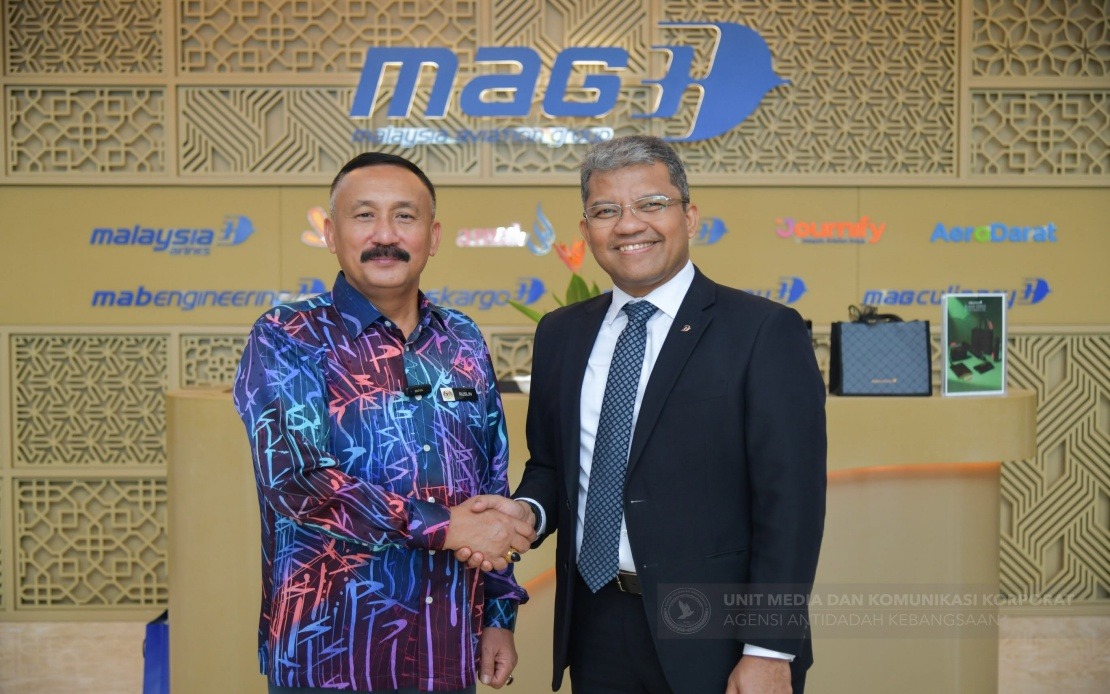
The National Anti-Drugs Agency (AADK) and Malaysia Aviation Group (MAG) have formalized a strategic alliance to combat drug and substance abuse within the aviation industry, marking a significant expansion of anti-narcotics efforts into a critical national infrastructure sector. The collaboration, cemented through a new memorandum of understanding signed during a courtesy visit to MAG headquarters in Sepang, reflects growing recognition that coordinated action across major employers is essential to addressing Malaysia's ongoing drug challenge.
AAAK director-general Datuk Ruslin Jusoh emphasized during the meeting with MAG chief executive officer Captain Nasaruddin A Bakar that the partnership would strengthen prevention, eradication, and public awareness initiatives across the aviation industry. The MoU represents a deliberate shift toward preventive engagement within workplaces rather than relying solely on enforcement mechanisms, acknowledging that the aviation sector—with its direct bearing on public safety—requires particular vigilance regarding substance abuse among personnel.
A cornerstone of the new arrangement is the implementation of the Drug-Free Workplace initiative, known locally as TEKAD, across MAG premises and all associated facilities. This comprehensive programme will establish standardized protocols for drug prevention, employee education, and workplace health measures specifically tailored to the unique operational requirements of airlines. For Malaysia Airlines and affiliated entities under the MAG umbrella, the initiative aims to create organizational cultures that actively discourage drug use while supporting affected employees through rehabilitation pathways.
The rationale for targeting the aviation sector reflects legitimate safety imperatives. Personnel involved in flight operations—from pilots and mechanics to ground crew—bear direct responsibility for passenger safety. Even minor impairment from drug use could compromise the judgment and physical coordination essential to aviation operations. By institutionalizing drug prevention at MAG facilities, both agencies are attempting to preempt incidents before they occur, protecting not only employees but the broader travelling public who depend on Malaysia's national carrier.
For Malaysian readers, this development carries particular significance given Malaysia's status as a major aviation hub in Southeast Asia. Malaysia Airlines, though facing financial challenges in recent years, remains a symbol of national pride and a critical component of regional air connectivity. The enhanced drug prevention framework signals that management and government agencies take seriously the need to maintain operational integrity and international confidence in Malaysian aviation standards. Airports and airlines globally maintain rigorous safety protocols, and demonstrating domestic commitment to substance abuse prevention aligns Malaysian practice with international norms.
Beyond the immediate aviation context, the AADK-MAG partnership illustrates a broader strategic direction in Malaysian drug policy. Rather than confining anti-narcotics efforts to law enforcement and punitive measures, the approach increasingly encompasses workplace wellness, corporate social responsibility, and institutional governance. This represents recognition that sustainable progress against drug abuse requires buy-in from major employers who can leverage their institutional platforms to influence employee behaviour and normalize substance-free workplaces.
The inclusion of AADK deputy director-general (Operations) Zainudin Abdullah and delegations from both organizations in the signing ceremony underscores the formal nature of the commitment. Such visible institutional endorsement signals that drug prevention will not be treated as a peripheral human resources matter but as a core operational priority requiring dedicated resource allocation and senior-level oversight. MAG's willingness to adopt TEKAD and collaborate with anti-drugs authorities may also influence other major Malaysian employers to implement similar initiatives, creating a cumulative effect across sectors.
Implementation challenges remain, however. Workplace drug prevention programmes require sustained funding, staff training, clear communication protocols, and regular audits to verify compliance. The aviation industry's 24/7 operational tempo and shift-based work patterns create unique difficulties for traditional intervention approaches. Nevertheless, establishing formal frameworks and institutional mechanisms provides the foundation upon which effective programmes can be built. Success will depend on genuine organizational commitment rather than cosmetic compliance.
The broader policy implications extend beyond occupational safety. As Malaysia continues efforts to reduce drug demand and supply, engaging major employers and high-consequence sectors demonstrates that progress requires multi-stakeholder engagement. Private companies have resources, reach, and institutional leverage that government agencies alone cannot replicate. Partnerships of this nature, if properly implemented and resourced, can contribute meaningfully to comprehensive drug control strategies that address both supply-side enforcement and demand-side prevention.
For the aviation workforce specifically, the MoU creates opportunities for employees struggling with substance abuse to access support services and rehabilitation options, ideally before disciplinary consequences become unavoidable. Such human-centred approaches, when combined with clear accountability measures, can balance compassion with safety imperatives. The TEKAD programme's effectiveness will ultimately depend on whether it functions as genuine occupational health intervention or becomes merely another compliance checkbox for management.

