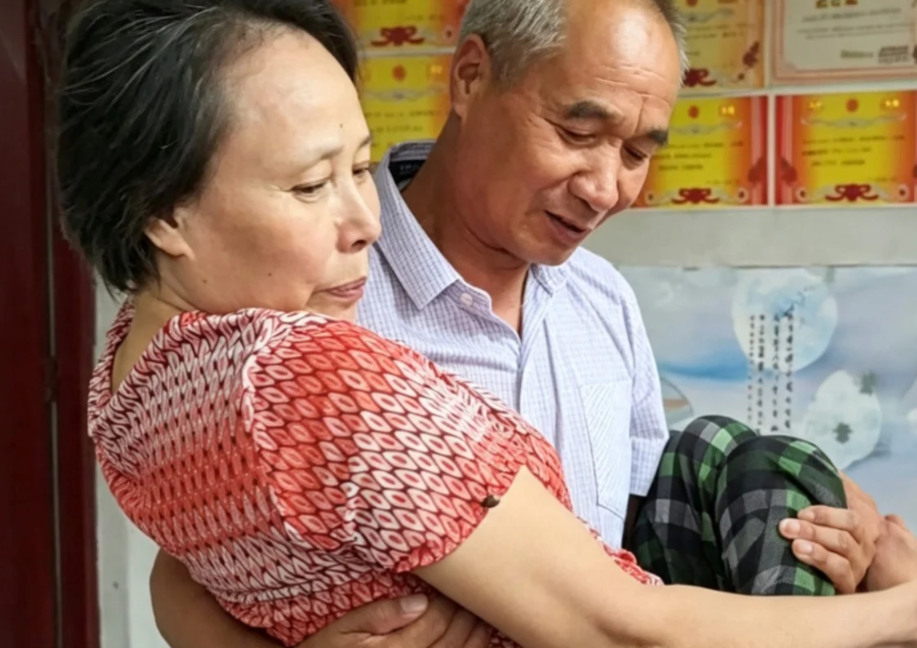
In the central Chinese province of Henan, a remarkable story of spousal devotion has resonated deeply with millions of people across the country's social media platforms. Li Junliang and his wife Jia Fang, residents of Pingdingshan, have become an embodiment of enduring commitment, with their relationship spanning more than two and a half decades since a catastrophic accident transformed their lives forever.
The turning point came in 2001 when Jia Fang, then 36 years old, experienced a severe fall from a cliff while riding a pedicab. The accident left her with complete paralysis from the chest downward, fundamentally altering the trajectory of her life and that of her family. At the time, the couple's two children were still young—their son was only ten and their daughter thirteen—making the household's circumstances even more demanding. Li Junliang, just one year older than his wife, immediately assumed the role of her full-time caregiver while simultaneously managing parental responsibilities and household management, a burden that would prove both physically and emotionally exhausting over the coming decades.
The nature of Jia's paralysis meant she required constant assistance with every aspect of daily living. In the early years following her accident, Li devoted himself to a rigorous care routine that involved turning his wife's body every two hours throughout day and night to prevent the development of bedsores—a serious complication that paraplegic patients face. This schedule meant that Li essentially forfeited uninterrupted sleep for years, a sacrifice that would gradually become visible in his appearance. Over time, as he refined his approach and understanding of his wife's needs, he adjusted the turning schedule to every four hours, though this still prevented him from achieving a full night's rest for two decades.
Beyond the essential medical care, Li has consistently sought to maintain his wife's quality of life and emotional wellbeing. He regularly transfers Jia to a wheelchair, taking her outside to experience sunlight and breathe fresh air—small gestures that carry profound significance for someone with her mobility limitations. He performs therapeutic massage on her limbs as part of a deliberate effort to slow muscular atrophy, the inevitable consequence of prolonged paralysis. These actions reflect not merely duty but a deliberate commitment to preserving Jia's dignity and connection to the world beyond their home's four walls.
The family's economic circumstances remain somewhat obscure, as the available accounts do not detail Li's professional occupation or how he has sustained the household financially throughout these 25 years. Somehow, he has managed to balance caregiving responsibilities with income generation—a logistical challenge that hints at the considerable organisational demands his life has encompassed. Despite these constraints, the family environment appears stable and orderly, with their home characterised as clean and well-maintained, a testament to Li's ability to manage multiple domains of household responsibility simultaneously.
Their two children, who are now adults, have established themselves independently and started their own families, yet evidence of Li's parental investment remains visible throughout their home. Certificates of achievement from the children's school years line the walls, physical reminders of the encouragement and support their father provided during their formative years—all while managing his wife's intensive care needs. This suggests that Li's dedication did not narrow to exclude other aspects of fatherhood, but rather expanded to encompass multiple roles with apparent equanimity.
Jia Fang herself has become vocal about her husband's sacrifices, particularly as their story gained public attention. She observed that while her hair has remained largely black, Li's has turned completely grey—a visible marker of the stress and hardship he has endured. Her gratitude, expressed publicly in interviews, carries particular weight: she credits him with providing not just physical care but emotional security and a sense of wholeness within their relationship. When asked to reflect on their partnership, Jia declared her belief that she has married the right man and considers herself the happiest person in the world—a statement that suggests emotional wellbeing can coexist with severe physical limitations when supported by genuine devotion.
Li's response to his wife's gratitude reveals the philosophical foundation underlying his commitment. He explicitly frames his actions as the fulfilment of a promise made during their wedding ceremony, when he told Jia that their home would only be complete with her presence. His affirmation that he would continue this care for another 25, 35, or even 45 years—extending well into their elderly years—demonstrates that his commitment transcends obligation and emerges from a deeper philosophical conviction about marriage and partnership. He acknowledges Jia's contributions to their family, particularly her role in bearing and raising their children, suggesting that his care constitutes reciprocity rather than unilateral sacrifice.
Their neighbours and community members have observed and commented favourably on the arrangement. One unnamed neighbour expressed particular admiration for the cleanliness and orderliness of their home while recognising that few men would possess either the strength or the character to sustain such intensive caregiving for decades. This observation carries weight precisely because it acknowledges how exceptional Li's conduct appears within the broader social context—recognition that while marriage vows theoretically encompass commitment through adversity, actually living out such commitment for 25 years represents something genuinely rare and worthy of recognition.
The couple's story has triggered substantial online commentary throughout mainland China, with observers from various backgrounds reflecting on what their relationship represents. Religious commentators have suggested that such devotion demonstrates spiritual virtue deserving of divine blessing. Secular observers have expressed simple amazement that someone would maintain such commitment when the circumstances provided ample justification for abandonment or institutional care. The widespread emotional response suggests that in contemporary Chinese society, where rapid modernisation and urbanisation have sometimes strained traditional family structures, this story resonates as a powerful affirmation of enduring values.
For readers across Southeast Asia and beyond, the account offers multiple layers of significance. It illustrates both the vulnerabilities inherent in modern life—the randomness of accidents that can devastate individuals and families—and the capacity for human beings to respond to tragedy with sustained grace and commitment. Li and Jia's experience also raises practical questions about caregiving infrastructure, social support systems, and how societies can better support families managing severe disabilities without placing unsustainable burdens on individual household members. Their story, while profoundly moving, implicitly suggests that many families face similar challenges with far less public recognition or support.

