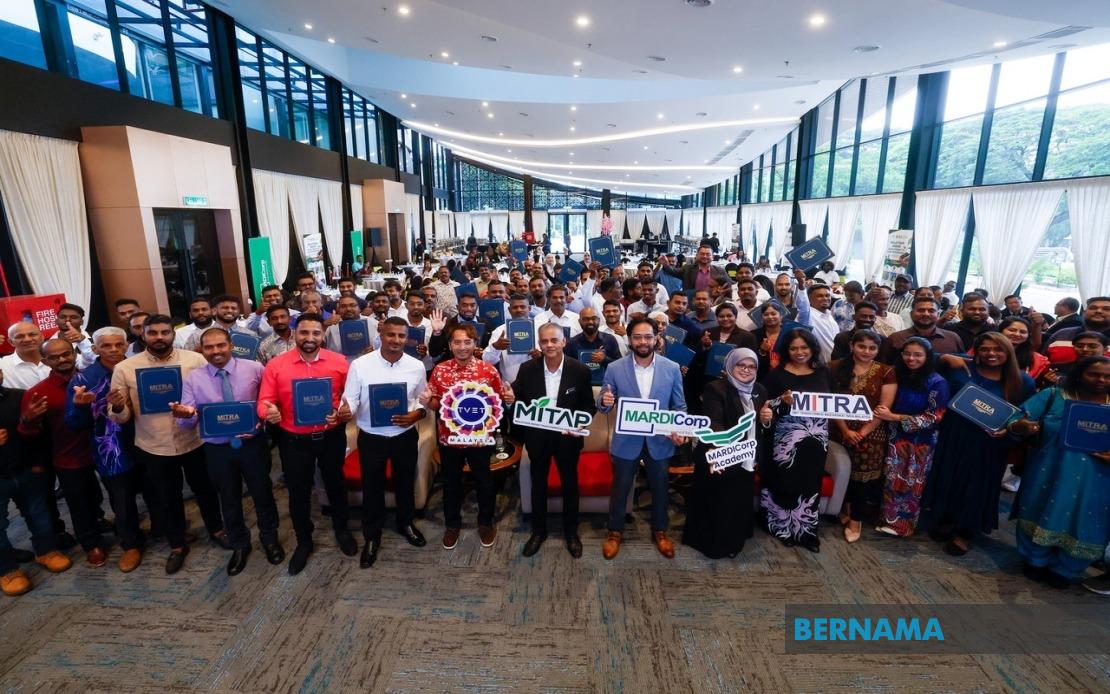
The Malaysian Indian Community Transformation Unit has distributed Agricultural Transformation Grants totalling RM2.04 million to 68 young agropreneurs as part of its broader effort to expand farming participation within the Indian community. The initiative, known as the Malaysian Indian Transformative Agri Programme, represents a strategic intervention designed to channel youth into agricultural entrepreneurship at a time when farming communities across Malaysia face generational transition challenges.
MITAP operates through two interconnected mechanisms, each addressing different stages of agricultural entrepreneurship development. The QuickWin MITRA component provides the direct financial support that recipients have now received, while the Young Agropreneur Programme functions as a capacity-building track offering structured training over ten months. This dual-track approach reflects recognition that capital alone cannot sustain agricultural ventures without accompanying knowledge transfer and skill development. Eight participants have already completed the training programme, positioning them for the transition from classroom learning to practical field implementation.
The grant beneficiaries are pursuing diverse agricultural pathways that span both traditional and emerging subsectors. Food crop production remains a foundation activity, but the programme explicitly supports higher-value ventures including dairy cattle management, beekeeping operations, oyster mushroom cultivation under controlled conditions, freshwater fish farming, and food processing technology initiatives. This diversification acknowledges that modern agricultural enterprise requires flexibility and that younger entrepreneurs often gravitate toward specialised production rather than subsistence-scale farming.
K. Raveendran Nair, the director-general of MITRA, emphasised that grant recipients will not be left to navigate their business trajectories independently. Ongoing support from MARDICorp, the Malaysian Agricultural Research and Development Institute's commercial arm, will guide participants toward integration into formal government agricultural programmes and commercial networks. This continuity of institutional support represents a departure from earlier approaches where grants were distributed with limited follow-up mechanisms, a weakness that contributed to variable success rates in past agricultural credit schemes.
Mohamad Zamir Ghazali, managing director of MARDICorp, outlined the corporation's involvement as encompassing three critical dimensions beyond initial training: marketing assistance for produce, downstream product development to add value through processing and packaging, and technology transfer to enhance productivity and quality. His emphasis on bringing participants together into formal associations reflects understanding that individual farmers operating in isolation face significant disadvantages in negotiating with buyers, accessing inputs at competitive prices, and adopting innovations that spread through peer networks.
The programme's emphasis on networking represents an often-overlooked aspect of agricultural development. When young farmers join associations and remain visible to government agencies, they gain access to market information, policy support, and collective bargaining power that isolated operators cannot achieve. This networking dimension also creates accountability mechanisms, as participants operating through registered associations are more likely to maintain standards and documentation that attract institutional buyers including hotels, food service operators, and retail chains.
Within Malaysia's broader agricultural landscape, initiatives targeting specific communities address historical underrepresentation in farming sectors and reflect demographic patterns where certain ethnic groups have traditionally concentrated in particular industries. The Indian community's relatively lower participation in agriculture compared to historical involvement reflects urbanisation trends and education patterns that pulled younger generations toward service and professional sectors. Deliberate programmes to reverse this trend require not only capital but also cultural positioning of farming as a viable modern enterprise rather than marginal activity.
The sectoral focus on food production, animal husbandry, and value-added processing aligns with Malaysia's food security objectives and import substitution goals. As the nation aims to reduce reliance on imported agricultural commodities, expanding domestic production capacity across diverse subsectors strengthens supply chain resilience. Young agropreneurs operating at smaller scales than industrial farms often serve local and regional markets more efficiently than long-distance supply chains, supporting both economic development in peripheral areas and food availability in urban centres.
The ten-month training programme duration reflects pragmatic recognition that meaningful skills development requires sustained engagement beyond one-off workshops. Participants learning dairy cattle management, fish farming protocols, or beekeeping techniques need extended exposure to seasonal cycles, problem-solving in real conditions, and mentorship that develops judgment alongside technical knowledge. This timeframe also allows selection mechanisms to operate naturally, as participants who lack genuine commitment or aptitude for farming tend to withdraw during extended programmes rather than attempting ventures they will later abandon.
For Malaysian readers and policymakers, this initiative offers insights into mechanisms for agricultural sector transformation beyond price support or input subsidies. By targeting youth who possess educational qualifications and business mindset, the programme positions agriculture as a knowledge-intensive sector rather than a fallback activity for those without other options. The emphasis on technology transfer, particularly in processing and value addition, reflects global trends where farm profitability increasingly derives from post-harvest activities rather than commodity production alone.
The programme's success will ultimately depend on whether recipients can maintain viable operations beyond the initial grant period and whether market conditions permit profitable production at their chosen scales. Agricultural ventures remain vulnerable to weather variability, pest outbreaks, commodity price fluctuations, and input cost pressures. However, the availability of ongoing institutional support, access to formal association networks, and integration with government extension services substantially improves odds compared to farmers operating without these advantages.
Beyond immediate beneficiary outcomes, MITAP serves as a demonstration model for targeted community agricultural development that could inform approaches to other underrepresented groups in farming. The structured combination of direct grants, skills training, marketing support, and institutional integration offers a framework that addresses multiple constraints simultaneously rather than assuming that capital access alone resolves participation barriers. As Malaysian agriculture confronts demographic challenges and globalisation pressures, interventions designed to attract and retain young entrepreneurs from diverse communities strengthen sectoral sustainability.

