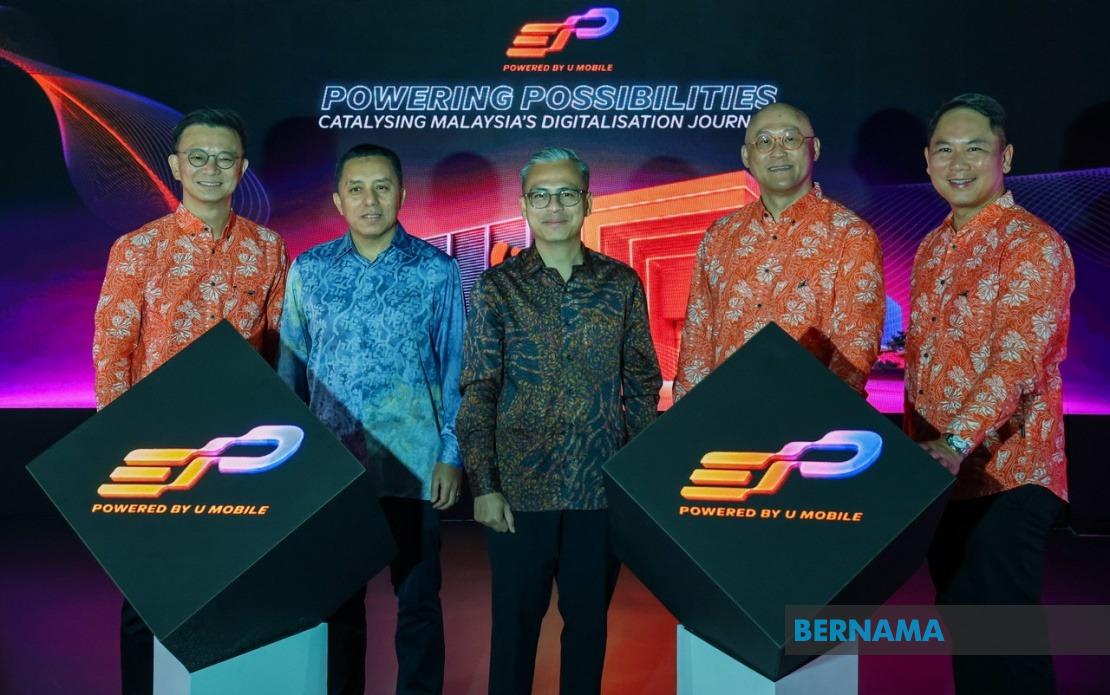
Communications Minister Datuk Seri Fahmi Fadzil has identified 5G Advanced, commonly referred to as Ultra 5G, as a crucial technology platform capable of catalysing widespread sectoral transformation across Malaysia. Speaking after inaugurating the U Mobile Enterprise Innovation Platform Hub in Kuala Lumpur, Fahmi articulated an expansive vision for how this next-generation connectivity infrastructure could reshape productivity dynamics in agriculture, healthcare, retail commerce and security operations. The minister's remarks underscored growing government recognition that advanced telecommunications infrastructure represents not merely an incremental upgrade to existing systems, but rather a foundational enabler of broader economic modernisation efforts.
The technical capabilities underlying 5G Advanced extend considerably beyond previous network generations. Operating on a 5G Standalone architecture, this iteration delivers enterprise-grade connectivity marked by substantially reduced latency, the ability to segment networks according to specific operational requirements through slicing capabilities, and computational power amplified through integrated artificial intelligence frameworks. The architecture delivers approximately double the capacity of conventional 5G deployments while incorporating enhanced security protocols powered by machine learning systems. For Malaysian industries accustomed to working within legacy infrastructure constraints, these specifications represent genuine operational opportunities rather than merely incremental performance improvements.
Within healthcare settings, the minister identified nursing workload reduction as a concrete near-term application of Ultra 5G capabilities. Hospital environments characterised by resource constraints and high patient-to-staff ratios could potentially leverage robotic systems and remote monitoring infrastructure enabled by the network's low-latency characteristics. Such deployments could redistribute labour from routine physical tasks toward higher-value clinical judgement and patient interaction, addressing persistent staffing pressures that have constrained service quality in Malaysia's public healthcare system.
Agricultural productivity represents another domain where Fahmi identified substantial transformation potential. Malaysia's oil palm sector, which generates significant export revenues but operates within increasingly demanding sustainability and efficiency frameworks, could derive considerable benefits from roboticised operations and precision monitoring systems. Drone-based crop surveillance, automated irrigation management systems, and real-time yield prediction platforms all become economically viable once underpinned by reliable Ultra 5G connectivity. This technological overlay could simultaneously address labour shortages, improve resource utilisation efficiency, and support compliance with evolving environmental standards.
Retail commerce transformation through 5G Advanced materialises primarily through enhanced data analytics capabilities that the technology platform enables. Real-time inventory management systems powered by AI algorithms could dramatically reduce stockouts and overstock conditions that currently consume working capital and reduce customer satisfaction. Consumer behaviour analytics platforms operating across connected point-of-sale systems and mobile channels could generate actionable insights regarding purchasing patterns, seasonality effects, and emerging preferences at granularity levels impossible to achieve with legacy data infrastructure. For Malaysia's growing e-commerce sector and traditional retail operators navigating the transition to omnichannel operations, such capabilities represent competitive advantages with measurable bottom-line implications.
Beyond commercial applications, Fahmi specifically highlighted strategic defence and security dimensions of Ultra 5G deployment. Drone-based surveillance systems operating across Malaysia's extensive maritime borders and terrestrial frontiers could substantially enhance monitoring capabilities at a time when resource constraints limit traditional patrol-based approaches. The minister indicated that such applications are already undergoing trial deployment in selected locations, suggesting that theoretical potential is beginning to transition into operational reality.
The security surveillance use case illuminates broader questions regarding infrastructure deployment coordination across Malaysian government agencies. Implementation would necessarily involve multiple stakeholders including the Malaysian Border Control and Protection Agency, the Royal Malaysia Police, and the Ministry of Home Affairs. Fahmi's statement that relevant agencies should assess suitability acknowledges a gap between technical capability and operational readiness. Successful deployment requires not merely network infrastructure but also organisational restructuring, personnel retraining, and integration with existing command-and-control systems.
Network coverage remains a critical constraint on such security applications. Border areas, by their nature, often experience limited telecommunications infrastructure investment because population density does not justify commercial deployment economics. Fahmi's commitment that the Malaysian Communications and Multimedia Commission would collaborate with the Home Ministry to extend coverage into these territories signals recognition that government must address market failures that prevent private-sector deployment.
The broader policy challenge Fahmi's statements implicitly identify concerns the absorption and deployment of new technologies within Malaysian institutional contexts. Technical capabilities mean little absent organisational structures, training systems, and regulatory frameworks that enable practical application. Malaysia's experience with previous technology transitions suggests that gaps between technical introduction and effective deployment can extend across multiple years, creating windows where early-adopting competitors derive competitive advantages.
Integration across sectoral silos also emerges as a pressing concern. Healthcare, agriculture, and retail each operate under distinct regulatory frameworks, labour agreements, and competitive dynamics. A genuinely transformative technology platform would require cross-sectoral learning and adaptation mechanisms that do not naturally emerge from institutional structures optimised for sectoral focus. Government agencies, industry associations, and research institutions each have roles in facilitating such knowledge transfer.
The minister's emphasis on AI integration within Ultra 5G infrastructure reflects global technological trajectories but also introduces governance complexities that Malaysia has only begun addressing. AI-powered systems designed to optimise healthcare resource allocation, agricultural operations, or retail inventory management necessarily embody assumptions about values and priorities. Decisions regarding system transparency, human oversight, bias mitigation, and liability frameworks for algorithmic errors remain unresolved within Malaysian policy contexts.
Regionally, Malaysia's positioning around Ultra 5G deployment carries implications for competitive standing within Southeast Asia. Singapore and Thailand have already commenced 5G Advanced trials, suggesting that early deployment could confer advantages in attracting technology-intensive foreign investment and developing exportable expertise in telecommunications infrastructure. Malaysia's stated commitment to comprehensive sectoral deployment could position the country as a regional innovation hub, though realisation depends on execution capacity that remains uncertain.
Fahmi's articulation of Ultra 5G's transformative potential provides welcome policy clarity regarding technology adoption priorities. However, translating such vision into widespread operational impact requires sustained institutional commitment extending well beyond ministerial pronouncements. The coming years will reveal whether Malaysia can navigate the gap between technical potential and organisational reality that has historically constrained technology transitions across the region.

