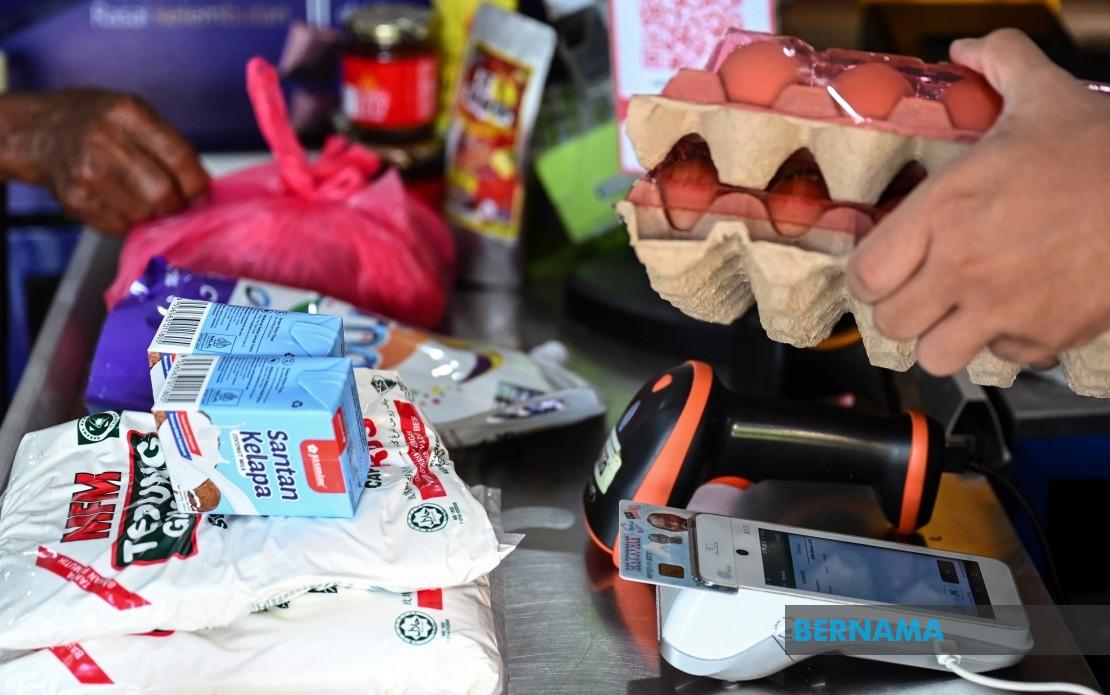
Malaysia's welfare system took another significant step forward as the Ministry of Finance began rolling out Phase 3 payments of the Sumbangan Tunai Rahmah (STR) cash assistance from August 15, reaching 5.3 million households and individuals with a RM1.2 billion allocation. This latest tranche marks a continued expansion of the country's social safety net, which has grown substantially over the course of 2026 as the government responds to persistent cost-of-living pressures affecting Malaysian families across income levels.
The beneficiary pool has expanded noticeably since the programme began the year with five million recipients, growing by 300,000 individuals to the current 5.3 million. This growth reflects both greater public awareness of the assistance programmes and expanding eligibility criteria designed to capture more vulnerable groups. The recipients comprise two main categories: 3.9 million low- and middle-income households who form the core of Malaysia's struggling working and non-working poor, and 1.4 million single senior citizens who face particular vulnerability given their limited earning capacity and fixed incomes.
Payment structures under Phase 3 differentiate support according to individual circumstances, with recipients receiving amounts ranging from RM150 to RM600 contingent on factors such as household income levels and the number of dependent children. Single senior citizens, recognized as a distinct vulnerable demographic, receive a fixed amount of RM150 per payment cycle. This differentiated approach aims to ensure that assistance is proportionate to need while managing the overall fiscal envelope, though it also means that families with more dependents receive proportionally higher support.
The cumulative impact of the first three payment phases in 2026 has delivered RM3.6 billion in direct cash transfers to the Malaysian population. When combined with the monthly SARA basic income component and the one-off SARA payment available to all Malaysian citizens aged 18 and above, eligible recipients can accumulate total assistance reaching RM3,300 by August 2026. These combined programmes represent a significant overhaul of Malaysia's approach to social assistance, moving away from episodic, ad-hoc cash handouts towards structured, regular income support mechanisms.
The restructured assistance framework introduced this year reflects a deliberate policy shift towards consistency and predictability in welfare delivery. Rather than concentrating assistance into sporadic one-off payments, the government has implemented quarterly STR disbursements alongside monthly SARA transfers, providing beneficiaries with more regular income flows that can facilitate better household budgeting and financial planning. This architectural change acknowledges that irregular lump-sum payments, while useful, fail to address the consistent, month-to-month financial pressures that low-income households face.
Prime Minister Datuk Seri Anwar Ibrahim framed the assistance expansion within a broader narrative of economic transformation and income enhancement. While acknowledging that cost-of-living challenges persist for segments of the population, the government positioned cash aid as a complementary measure alongside structural economic reforms aimed at raising incomes and living standards. The statement suggested a recognition that short-term relief mechanisms alone cannot solve underlying affordability challenges without accompanying productivity growth and wage improvements across the economy.
The scaling of assistance programmes has become possible through what the Ministry of Finance characterized as improvements in government financial management and revenue administration. The ministry indicated that better state revenue collection and more efficient governance structures have released additional resources for reallocation to social support programmes. This assertion suggests that the government views expanded welfare spending not merely as a fiscal burden but as an outcome of improved institutional efficiency and revenue performance.
The 2026 combined allocation of RM15 billion for STR and SARA represents a historic peak in Malaysia's peacetime federal welfare expenditure. This figure substantially exceeds previous assistance regimes, standing at nearly three times the level of Bantuan Rakyat 1Malaysia (BR1M) payments made in 2016, a programme that was itself considered generous when implemented. The magnitude of this allocation underscores the priority the current administration assigns to direct income support as a policy tool, particularly given sustained economic uncertainty and volatile commodity prices affecting household purchasing power across Malaysia.
For practical disbursement, the government has streamlined payment mechanisms to accommodate recipients with varying levels of banking access. Those with established bank accounts receive Phase 3 payments through direct electronic credit transfers commencing August 15, while unbanked recipients can collect physical cash at any Bank Simpanan Nasional branch throughout the country. This dual-channel approach acknowledges that financial exclusion remains a reality for portions of the intended beneficiary population, particularly among elderly and rural populations, and ensures that banking status does not create barriers to assistance receipt.
To minimize resource leakage and maintain programme integrity, the MOF has maintained open windows for new applications and appeals throughout the year rather than concentrating application periods. The official STR portal at bantuantunai.hasil.gov.my serves as the single authoritative source for applications, appeals, and programme information, while complementary details for the SARA component are available through sara.gov.my. This distributed information architecture reflects lessons from previous programmes where lack of awareness limited uptake among entitled populations.
Security concerns have prompted official warnings against fraudulent schemes attempting to exploit beneficiary populations. The ministry cautioned Malaysians to remain alert to counterfeit payment portals and phishing scams designed to harvest personal financial information from assistance recipients. Given that the STR and SARA programmes deliver payments via official banking channels, the emphasis on using only authenticated government portals serves to protect both beneficiary populations and programme integrity from opportunistic criminal elements seeking to intercept payments or compromise recipient data.

