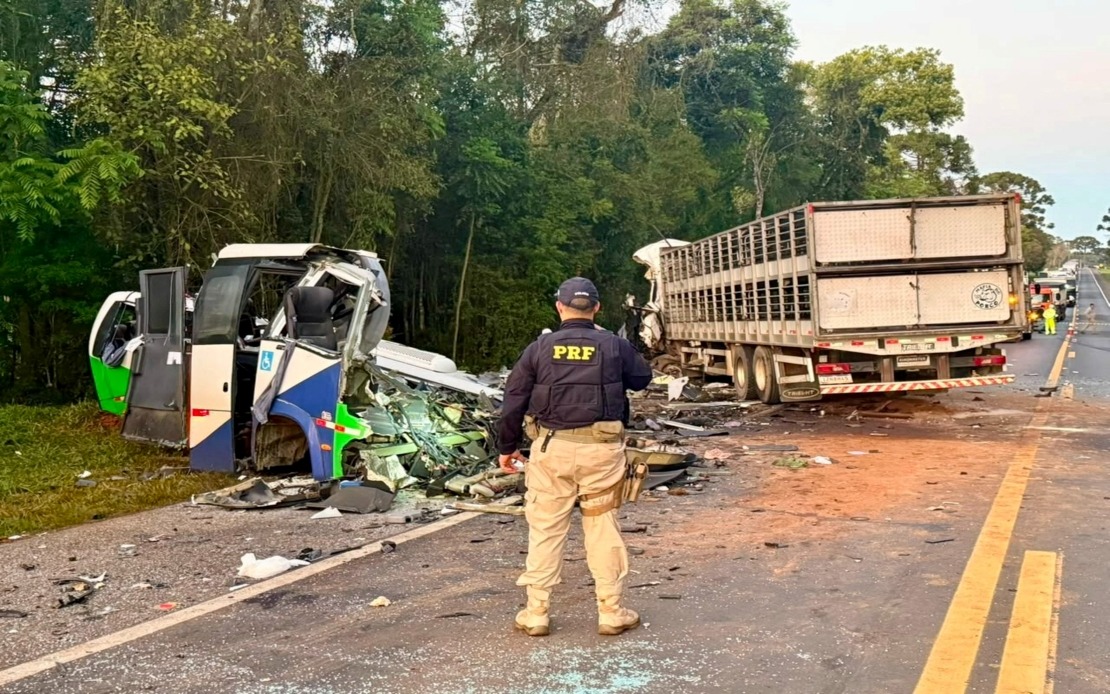
A catastrophic road accident in southern Brazil has claimed 23 lives after a minibus carrying patients to hospitals collided head-on with a lorry on a national highway in Paraná state early Wednesday morning. The collision occurred near Ipiranga in the Campos Gerais region, leaving the road closed for several hours as emergency personnel attended to the scene and began investigations into the circumstances of the tragedy.
According to preliminary findings from authorities, the lorry appears to have veered into the opposing lane directly into the path of the minibus, resulting in the violent head-on impact. The exact sequence of events that led to the lorry crossing the centre line remains under detailed investigation, though initial assessments point to a potential loss of control by the truck driver. The severity of the collision underscores how quickly tragedy can unfold on high-speed thoroughfares where vehicles travel in opposite directions with minimal protection between them.
The minibus had been operating as part of the regional health service, ferrying patients toward medical facilities in the greater Curitiba metropolitan area, approximately 200 kilometres from the accident site. This detail carries particular significance, as it suggests the vehicle was transporting vulnerable individuals—likely those already dealing with health complications—who were being transferred for specialist treatment. The loss of so many patients en route to care highlights the human dimension of the tragedy beyond mere statistics.
Among the 23 fatalities were 13 women, eight men, and two children, with the toll including the driver of the lorry itself. Beyond those killed, five additional individuals sustained injuries serious enough to warrant hospitalization. The distribution of casualties across age groups and genders underscores the indiscriminate nature of such high-speed collisions on congested roadways. Paraná State Secretariat for Public Security confirmed these figures as investigations proceeded.
The national highway where the accident occurred traverses multiple regions across southern Brazil, serving as a vital transportation corridor. However, significant portions of this route remain as only two-lane roads, creating inherent safety challenges when vehicles travelling in opposite directions share the limited space. The geometry of such narrow highways means that any loss of vehicle control or momentary driver inattention can translate instantly into catastrophic consequences, with no median barrier or additional lanes available to prevent a collision.
The structural limitations of Brazil's highway infrastructure in certain regions present ongoing safety concerns for the millions of travellers who depend on these routes daily. Two-lane national roads, particularly those crossing longer distances, are frequently subject to heavy truck traffic alongside passenger vehicles. Without modern safety features such as rumble strips, improved signage, or wider medians, the margin for human error remains dangerously slim. This accident will likely reignite discussions about infrastructure investment and safety upgrades on Brazilian highways.
In response to the magnitude of the tragedy, the Paraná state government declared three days of official mourning, acknowledging the profound impact on the local community and the families affected. Such declarations serve both as recognition of collective grief and as an opportunity for public reflection on road safety practices. The announcement also signals the seriousness with which state authorities view the incident and their commitment to understanding what occurred.
For Malaysian and Southeast Asian readers, this incident serves as a sobering reminder of the persistent dangers posed by inadequate road infrastructure and the critical importance of ongoing safety investment. Many developing nations in the region face similar challenges with two-lane highways carrying mixed traffic volumes at high speeds. The Paraná collision demonstrates how quickly preventable accidents can become mass fatalities when infrastructure falls short of demand, offering cautionary lessons for transport policy makers across ASEAN nations.
The investigation into the Paraná accident will likely examine not only the immediate cause of the lorry's lane departure but also broader contextual factors such as driver fatigue, vehicle maintenance standards, weather conditions, and visibility at the time of collision. Understanding these elements is essential not only for responding to this specific tragedy but for implementing systematic improvements that protect future travellers. The comprehensive nature of such investigations can inform regulatory changes and best practices adopted by transport authorities throughout the region.

