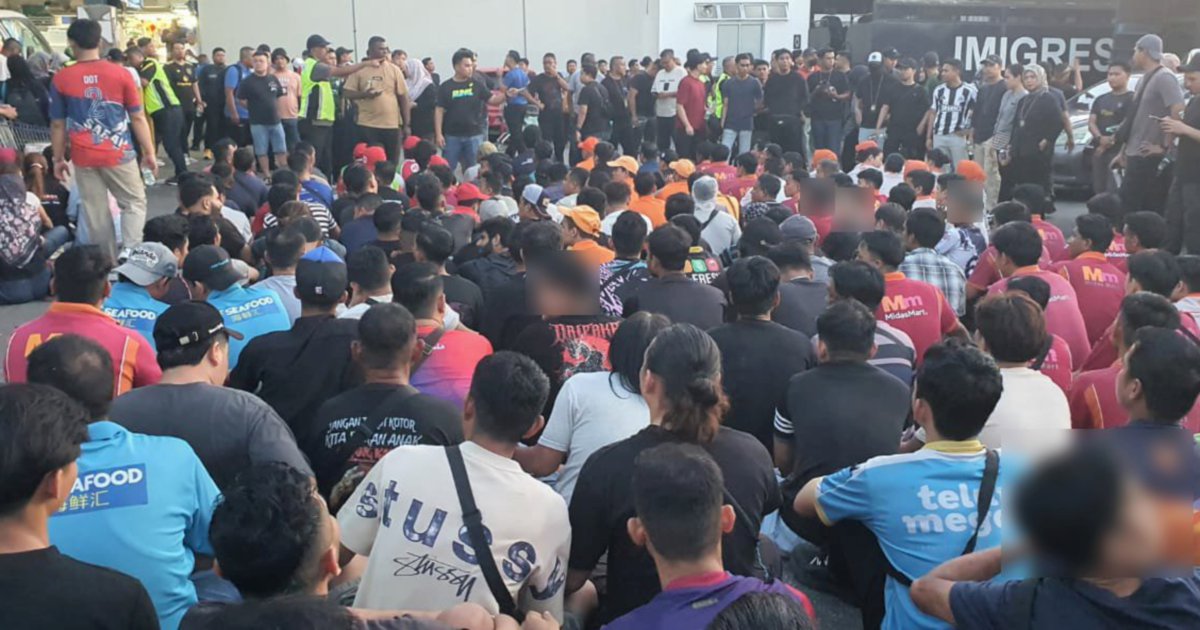
A coordinated enforcement operation across Johor has resulted in the detention of 226 undocumented migrants, marking one of the largest crackdowns on illegal immigration in the state this year. The raids have simultaneously exposed an elaborate document fraud scheme that allowed foreign workers to circumvent immigration controls for extended periods, raising fresh concerns about the effectiveness of Malaysia's border security infrastructure and the criminal networks profiting from migrant labour flows across the Straits of Johor.
At the heart of the operation lies a damning pattern of systematic abuse. An Indonesian fishmonger typifies the case: for four years, the man traversed the border monthly to have his passport stamped in apparent compliance with entry procedures, only to remain in Malaysia unlawfully, working without proper documentation between each crossing. This cyclical rhythm enabled him and others like him to maintain the facade of legitimacy while operating entirely outside the regulatory framework that governs lawful employment in the country.
The discovery of this smuggling network signals a troubling vulnerability in Malaysia's immigration and border management systems. Rather than serving as a barrier to illegal entry, the established crossing points appear to have been compromised by individuals with insider knowledge of official procedures. The deliberate stamping of passports—whether through corruption of officials or the use of counterfeit documents—created a superficial appearance of lawful status that would satisfy casual scrutiny but concealed illegal employment arrangements beneath.
For Malaysian employers relying on undocumented workers, such schemes represent an ideal scenario: they gain access to cheap labour while the workers maintain just enough documentary cover to avoid immediate detection during routine checks. The monthly border crossings served as a reset mechanism, allowing workers to restart their unlawful employment cycle repeatedly without triggering alerts that might follow continuous illegal presence in the country.
The raids themselves represent a significant enforcement effort, requiring coordination across multiple agencies and locations throughout Johor state. Authorities would have needed intelligence on where undocumented migrants were concentrating, the sectors employing them, and the networks facilitating their entry and retention. The scale of the detentions suggests not a minor or isolated problem, but systematic trafficking operating with sufficient impunity to maintain operations across years.
Indonesia remains Malaysia's primary source of migrant labour, both documented and undocumented. The ease with which Indonesian workers can cross at Johor's numerous crossing points, combined with wage differentials between the two countries, creates powerful incentives for illegal employment. Family networks on both sides of the border provide ready-made assistance systems for those seeking to work unlawfully, making interdiction efforts perpetually challenging.
The exposure of the passport stamping scheme will likely prompt immigration authorities to scrutinise the procedures and personnel at border checkpoints more rigorously. Questions will inevitably arise about how officials failed to identify discrepancies in entry and exit records, or how fraudulent stamps passed inspection. If corruption by immigration officers is confirmed, it would represent a serious breach that could extend beyond this single network.
For undocumented workers themselves, the operation delivers an immediate consequence: detention followed by deportation procedures. Yet the fundamental conditions that drive illegal migration—wage gaps, labour demand in specific sectors, and family desperation—remain unchanged. Unless addressed through broader policy mechanisms, fresh smuggling operations will likely emerge to fill the vacuum left by this disruption.
The incident underscores a reality that Malaysian policymakers have long grappled with: the nation's economy has become structurally dependent on migrant labour, much of which operates outside formal channels. Construction, agriculture, domestic work, and fisheries continue to rely heavily on undocumented workers who accept conditions that Malaysian citizens reject. As long as this demand persists without corresponding legal pathways for lower-skilled migration, underground networks will continue to supply workers willing to risk detection.
Malaysia's relationships with source countries like Indonesia also factor into enforcement outcomes. Coordinated approaches to address root causes—whether through improved documentation processes at borders, bilateral labour agreements, or joint investigation units targeting trafficking networks—offer greater promise than enforcement actions alone. The current operation demonstrates investigative capability but also highlights the need for preventative measures.
Regionally, the Johor raid reflects broader Southeast Asian challenges with irregular migration. Thailand, Singapore, and other nations in the subregion face comparable pressures from undocumented workers and smuggling networks. The sophistication of the passport-stamping scheme suggests that techniques for evading detection are becoming increasingly refined, requiring immigration agencies to continually update their countermeasure capabilities.
For Malaysian businesses and industries relying on migrant workers, the operation may prompt increased scrutiny of hiring practices and documentation verification. Employers who knowingly engaged undocumented workers face legal liability, though enforcement against employers remains inconsistent compared to worker apprehensions. A more systematic approach to corporate accountability could reshape incentives throughout the labour market.
Moving forward, the question facing authorities involves not merely prosecuting those detained, but dismantling the infrastructure that enabled four years of undetected operation. The individuals directly involved in stamp falsification or document fraud require investigation and prosecution. However, broader institutional reforms to border procedures, document security, and personnel vetting will prove essential to preventing similar schemes from reestablishing themselves in future.

