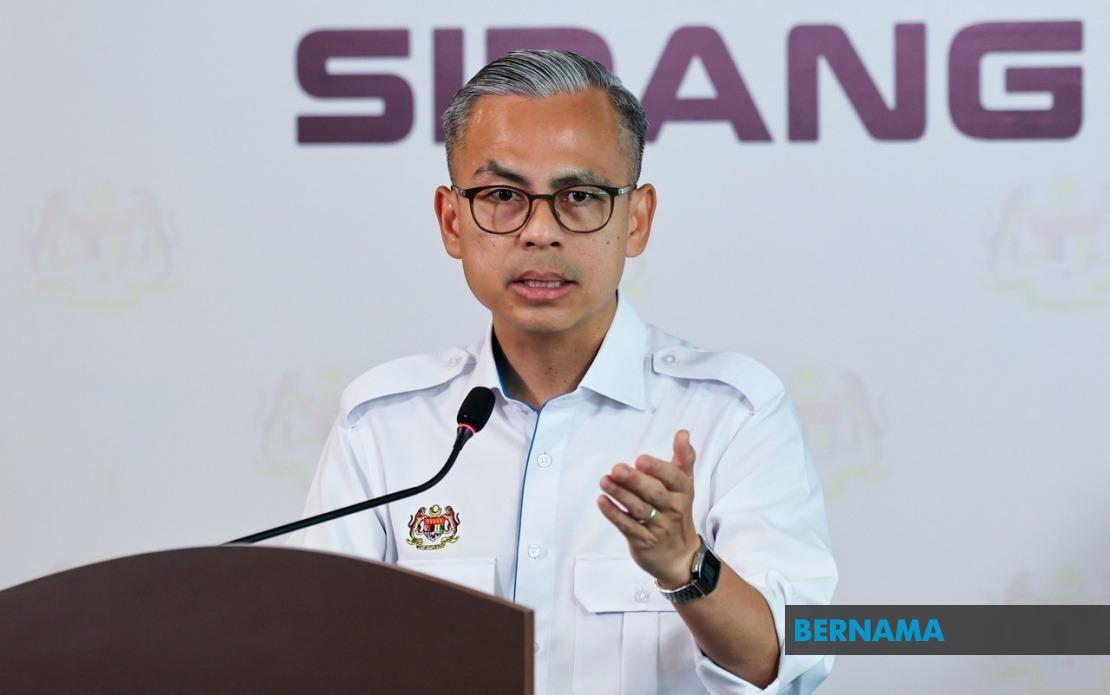
Preparations for Malaysia's 2026 National Day celebrations have reached an advanced stage, with organisers expecting to achieve near-complete readiness by tomorrow's comprehensive dress rehearsal at Dataran Putrajaya. Communications Minister Datuk Seri Fahmi Fadzil, who chairs the 2026 National Day and Malaysia Day Main Committee, indicated that the event infrastructure and procedural frameworks are substantially finalised, with only marginal refinements outstanding. The minister's optimistic assessment follows today's preliminary rehearsal, which demonstrated the structural viability and logistical coordination of the sprawling celebration.
The remaining work centres on tactical positioning and spacing between participating contingents, a crucial element that determines the visual coherence and disciplined appearance of such large-scale public pageantry. Fahmi explained that certain contingent groupings currently maintain wider intervals than desired, necessitating tighter choreographic coordination to achieve the parade's intended aesthetic impact. This fine-tuning reflects the meticulous attention required when orchestrating thousands of participants across a complex ceremonial route, where even marginal gaps can distract from the overall presentation and messaging of national unity.
Weather conditions proved favourable during today's preliminary run-through, a significant advantage given Malaysia's tropical climate and the unpredictability of monsoon patterns. Fahmi commended the enthusiasm and commitment demonstrated by all participants, ranging from security personnel to school students from three states contributing to the human graphics performance. Such positive morale among diverse groups—particularly young students who form the visual centrepieces of these events—often translates into smoother execution during the actual celebration and reflects the grassroots engagement that state-level participation generates.
A distinctive dimension of this year's commemoration involves inaugural elements that distinguish the 2026 celebration from previous iterations. The Johor Military Force will participate in a national parade setting for the first time, while a specially designed maritime asset—the Ibrahim-class boat conceived by His Majesty Sultan Ibrahim, King of Malaysia—will feature prominently. These additions represent deliberate choices to incorporate contemporary national symbols and regional military contributions, thereby expanding the celebratory scope beyond traditional formations and demonstrating institutional evolution within Malaysia's ceremonial framework.
A significant logistical feature involves a multi-tiered structure accommodating 1,500 students for the human graphics component, designed to create dramatic visual patterns viewable from elevated vantage points. Fahmi provided detailed assurances regarding safety protocols, noting that Putrajaya Corporation has conducted comprehensive assessments and certified the structure's integrity. The perceptible slight movement observed during rehearsals falls within engineering tolerance specifications and actually accommodates the rhythmic bodily movements necessary for such performances. This represents the structure's third deployment, with no previous safety incidents, reinforcing the established reliability of this staging mechanism.
The structure's apparent asymmetrical alignment generated initial concern, but Fahmi clarified that geometric considerations explain this positioning. The parade route and Putrajaya Corporation's administrative building exist on different axes, a spatial reality that constrains perfect symmetrical placement. Additionally, organisers reduced student participant numbers from 2,000 to 1,500 this iteration, further affecting proportional alignment. Nevertheless, Fahmi indicated that technical modifications will be reviewed for subsequent national day celebrations to prevent similar visual asymmetries that might invite unfavourable public perception, demonstrating organisers' sensitivity to aesthetic and symbolic dimensions of state pageantry.
For Malaysian audiences, these preparations underscore the considerable logistical machinery underlying national celebrations that appear seamless from a spectator perspective. The coordination required across military units, civilian agencies, educational institutions, and state governments reveals the interconnected nature of modern national commemoration. The involvement of three states' student populations in human graphics also reflects the federal structure's participatory character, distributing celebratory responsibility beyond the federal capital and promoting distributed engagement across the federation.
From a Southeast Asian perspective, Malaysia's investment in such elaborate national ceremonies positions the country within a regional tradition of substantial state-sponsored celebrations. While some neighbouring nations emphasise military spectacle, Malaysia's integration of youth participation, civilian contingents, and royal symbolic elements creates a distinctive model balancing institutional authority with popular engagement. The inclusion of newly designed maritime assets and regional military components signals Malaysia's ongoing navigation of contemporary security interests within celebratory frameworks.
The deliberate incorporation of novel elements—particularly Sultan Ibrahim's Ibrahim-class boat design—reflects the monarchy's active role in national symbolism beyond ceremonial functions. This integration of royal innovation into public celebration mechanisms reinforces Malaysia's constitutional monarchy's substantive engagement with contemporary national identity formation. The boat's appearance transforms it from a maritime capability into a symbolic statement about royal involvement in technological and strategic development.
Looking forward, tomorrow's comprehensive dress rehearsal will test the refined coordination procedures and validate the technical adjustments implemented following today's preliminary run. For organisers, this represents the critical validation checkpoint before the actual 2026 celebration. Successful completion will confirm that the estimated 99-percent readiness has genuinely addressed substantive coordination challenges rather than merely advancing contingent timelines. The intensity of preparation visible through these statements reflects genuine institutional commitment to delivering a nationally significant event that consolidates public pride and institutional capability demonstrations.

