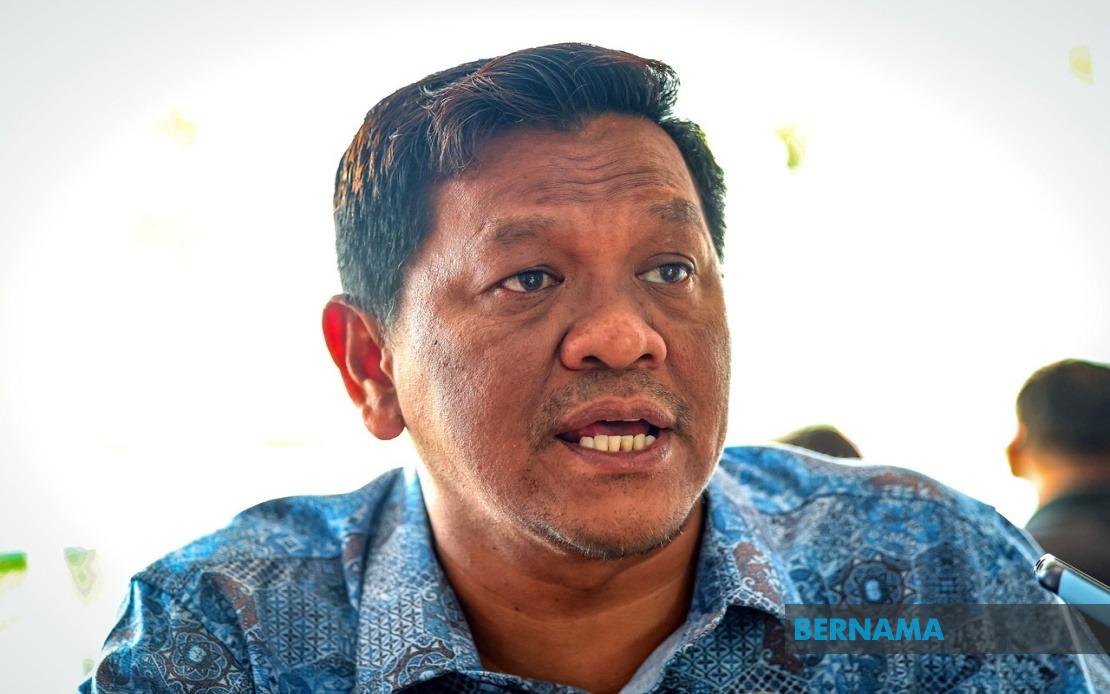
The government distributed RM5 fuel vouchers to 200 motorcyclists in Renggam on June 25 as part of a wider community engagement initiative spearheaded by the National Security Council (MKN). The assistance programme sought to ease the financial pressures faced by daily commuters who rely heavily on motorcycles for their livelihoods and mobility across the Johor town. Abdullah Izhar Mohamed Yusof, political secretary to the Communications Minister, emphasized that the voucher scheme represents the administration's commitment to supporting citizens while building social cohesion at the grassroots level.
According to Abdullah Izhar, the Jiwa@Komuniti MADANI Sembang Santai World Cup Edition programme in Kluang is designed as a recurring intervention rather than a one-off assistance drive. Officials from the National Security Council, Information Department (JaPen) and Department of Community Communications (J-KOM) converged at the event to interact directly with residents, creating a platform for two-way dialogue that extends beyond simple welfare distribution. The structured approach suggests the government views cash assistance as inseparable from broader communication objectives around policy transparency and public understanding of state initiatives.
The programme's architecture reveals important insights into how Malaysian authorities currently conceptualize community outreach in the digital age. Rather than distributing aid through conventional channels, organizers paired voucher handouts with briefings on contemporary policy matters, allowing participants to ask questions and voice local concerns. This integration of material support with information dissemination addresses a persistent challenge in governance: ensuring that assistance reaches intended beneficiaries while simultaneously building trust through transparent dialogue about government decisions and their underlying rationale.
For motorcyclists in Renggam, the voucher distribution offers immediate, tangible relief at a moment when fuel costs remain a significant household expense. Many riders operate on thin margins, using motorcycles for delivery work, ride-hailing services, or commuting to factories and construction sites. RM5 may seem modest, yet for a worker purchasing petrol every few days, such vouchers reduce out-of-pocket expenses and provide breathing room in already constrained household budgets. The targeting of motorcyclists specifically acknowledges that this group—often younger, less wealthy, and more vulnerable to fuel price fluctuations—faces particular economic pressures.
Abdullah Izhar's statement that such programmes will continue regularly signals a shift toward sustained engagement rather than sporadic announcements. This consistency matters greatly in rural and semi-urban areas like Renggam, where residents often feel neglected by central government attention. By institutionalizing grassroots outreach visits and voucher schemes, the MKN appears to be establishing a template for regular contact between officials and communities, potentially strengthening the feedback loop between citizens and policymakers. Whether resources will remain sufficient to maintain this cadence as other priorities emerge remains an open question.
The recipients themselves expressed appreciation tinged with cautious hope about future arrangements. M. Raja, 56, a father of five from Taman Sri Jaya, articulated the sentiment shared by many beneficiaries: gratitude for assistance, coupled with a modest wish for enhancement or expansion. His remark that monthly vouchers would be preferable reflects the reality that one-time distributions, while welcome, address only partial and temporary need. Hee Eeck Kwe, 66, from Kampung Baru, highlighted another dimension—the psychological importance of inclusion, noting that rural residents appreciated being remembered in government assistance schemes rather than overlooked in favor of urban populations.
The event also functioned as a vehicle for communicating government messaging on information integrity and policy awareness. The participation of JaPen and J-KOM indicates that officials sought not merely to dispense vouchers but to use the gathering as an opportunity to explain government positions on current issues and counter misinformation. In Malaysia's increasingly complex media landscape, where social media spreads rumors and unverified claims at alarming speed, such face-to-face engagement offers an alternative channel for factual information to reach community members, particularly older residents less reliant on digital platforms.
From a regional perspective, Renggam's experience reflects broader Southeast Asian patterns in how middle-income nations balance welfare provision with political engagement. Governments across the region—from Thailand to the Philippines—have adopted similar strategies of pairing material assistance with public information campaigns, recognizing that economic support alone, without concurrent efforts to build understanding of policy frameworks, may fail to generate sustainable political legitimacy. The Malaysian approach integrates these dimensions, treating the voucher distribution as an entry point for deeper community dialogue rather than as charity disconnected from governance communication.
The National Security Council's involvement in administering fuel vouchers also signals how contemporary Malaysian governance has expanded the security apparatus's remit beyond traditional law-and-order functions. By positioning MKN as a vehicle for community welfare and information distribution, the government arguably seeks to reframe security institutions as proactive partners in social development. This institutional approach has implications for how citizens perceive state authority and whether they view government agencies as responsive to grassroots needs or merely as enforcement bodies.
Looking forward, the scalability of such programmes presents both opportunity and challenge. If the government intends to replicate the Renggam model across Malaysia's numerous towns and districts, logistical complexity and fiscal demands will escalate quickly. Officials must determine whether voucher schemes will expand to other groups—bus drivers, taxi operators, agricultural workers—or remain focused on motorcyclists. Similarly, the content and quality of government briefings during these events will shape whether they succeed in building genuine understanding of policies or devolve into one-way messaging that residents view skeptically.
The programme ultimately reflects a government attempting to reconnect with citizens beyond electoral cycles, using modest material incentives as catalysts for sustained dialogue. Whether such initiatives can meaningfully address economic pressures facing working-class Malaysians, or whether they represent tokenistic gestures that leave underlying structural issues unresolved, will depend on how the government operationalizes its stated commitment to regular, nationwide outreach. The genuine enthusiasm from beneficiaries suggests appetite for such engagement, but sustaining momentum and demonstrating tangible policy responsiveness to concerns raised during these sessions will determine the initiative's long-term success.

