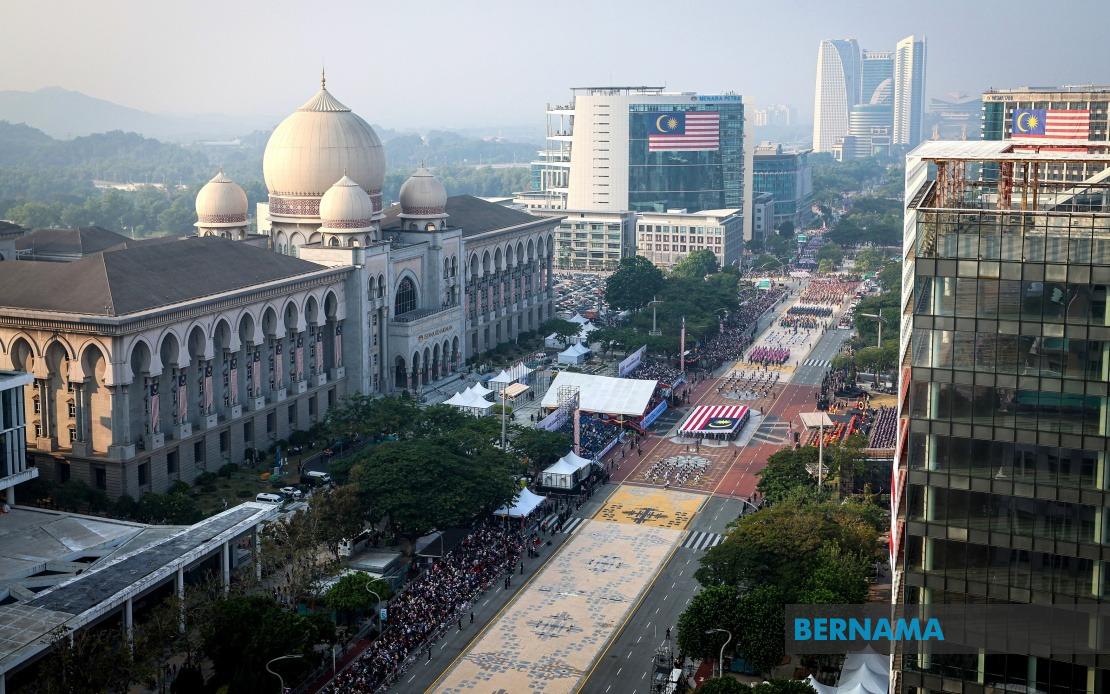
Malaysia's security forces are preparing for one of the nation's most significant annual gatherings, with the Royal Malaysia Police announcing a substantial deployment ahead of the 2026 National Day celebrations scheduled for August 31 at Dataran Putrajaya. The decision to position 2,354 personnel across the venue reflects the authorities' commitment to maintaining order and ensuring public safety during what officials anticipate will be a well-attended civic occasion.
Putrajaya district police chief ACP Aidi Sham Mohamed outlined the operational strategy during a media briefing following a comprehensive rehearsal of the event. The deployment will encompass both static security checkpoints and mobile traffic management units stationed at key locations throughout Dataran Putrajaya, creating a security perimeter designed to facilitate smooth movement while screening attendees and their belongings. This layered approach to crowd management has become standard practice for large public gatherings in Malaysia, where balancing accessibility with safety remains a persistent administrative challenge.
The police leadership has extended a direct appeal to members of the public attending the festivities, emphasising practical measures that can collectively enhance the overall experience. Early arrival has been recommended to avoid congestion during peak hours, and visitors have been encouraged to familiarise themselves with on-site regulations before entering. The advice extends to parking discipline, with authorities explicitly cautioning against leaving vehicles in unauthorised zones, which could obstruct emergency access routes and compromise traffic flow on surrounding roads.
Beyond traffic considerations, law enforcement has prioritised the security dimension with particular emphasis on preventing the entry of weapons or dangerous items into the celebration venue. ACP Aidi Sham issued a clear directive that attendees should refrain from bringing any potentially hazardous implements, framing the restriction not as a prohibition but as a shared responsibility toward preserving the sanctity of Malaysia's founding commemoration. This messaging reflects a deliberate effort to cultivate cooperative rather than adversarial public attitudes toward security procedures.
Communications Minister Datuk Seri Fahmi Fadzil confirmed that the 2026 National Day celebration will proceed according to its traditional format, indicating no significant departures from established protocols. The event will centre on the theme "Malaysia MADANI: Kesejahteraan Dinikmati", a framing that emphasises the government's vision of equitable prosperity and shared wellbeing across Malaysian society. This thematic choice carries political significance, positioning the celebration as a platform for articulating contemporary governance priorities alongside historical commemoration.
Organisers are preparing facilities and logistics to accommodate an anticipated attendance exceeding 80,000 visitors, a figure that underscores the enduring public interest in National Day observances at the capital's most prominent civic space. Dataran Putrajaya has become the focal point for Malaysia's most elaborate National Day ceremonies in recent years, with its open plaza design permitting the staging of elaborate processions, military displays, and cultural performances that have transformed the occasion into a multimedia spectacle accessible to hundreds of thousands simultaneously.
The scale of police deployment reflects not merely routine event management but rather a sophisticated understanding of contemporary security challenges facing large public congregations. With 2,354 personnel assigned to a single venue, the force density approaches one officer per 34 anticipated attendees, a ratio that permits both visible deterrence and rapid response capacity. This allocation suggests authorities are prioritising prevention through presence while maintaining sufficient reserves for emergency intervention should incidents arise.
For Malaysian residents and expatriate communities in the capital region, the National Day celebration represents a rare occasion when civic participation transcends routine administrative function and becomes collective national expression. The police's emphasis on public cooperation rather than enforcement-heavy approaches signals an institutional commitment to preserving the celebratory atmosphere whilst satisfying legitimate security imperatives. The careful balance struck in official communications indicates official recognition that excessive security theatre could undermine the inclusive spirit that National Day is meant to embody.
The elaborate preparation visible through rehearsals and personnel assignments also demonstrates Malaysia's investment in maintaining national ceremonies with the professionalism expected of a middle-income nation. For Southeast Asian observers, Malaysia's approach to securing large public events offers instructive contrasts with regional peers, reflecting particular historical experiences and institutional capacities. The comprehensive police briefing and media engagement suggest authorities view public communication about security measures as integral to operational success rather than peripheral to it.
Looking forward to the August 31 celebrations, the convergence of detailed planning, substantial personnel deployment, and explicit public guidance establishes conditions for what authorities envision as a secure, orderly, and dignified commemoration of Malaysia's independence. Whether the anticipated 80,000 visitors will indeed attend depends partly on external factors including weather and competing events, but the infrastructure being established indicates organisational confidence in the event's continued cultural significance. The National Day celebration at Dataran Putrajaya has evolved into a significant test of Malaysia's capacity to manage large-scale civic participation, and the police deployment reflects institutional commitment to preserving this tradition.

