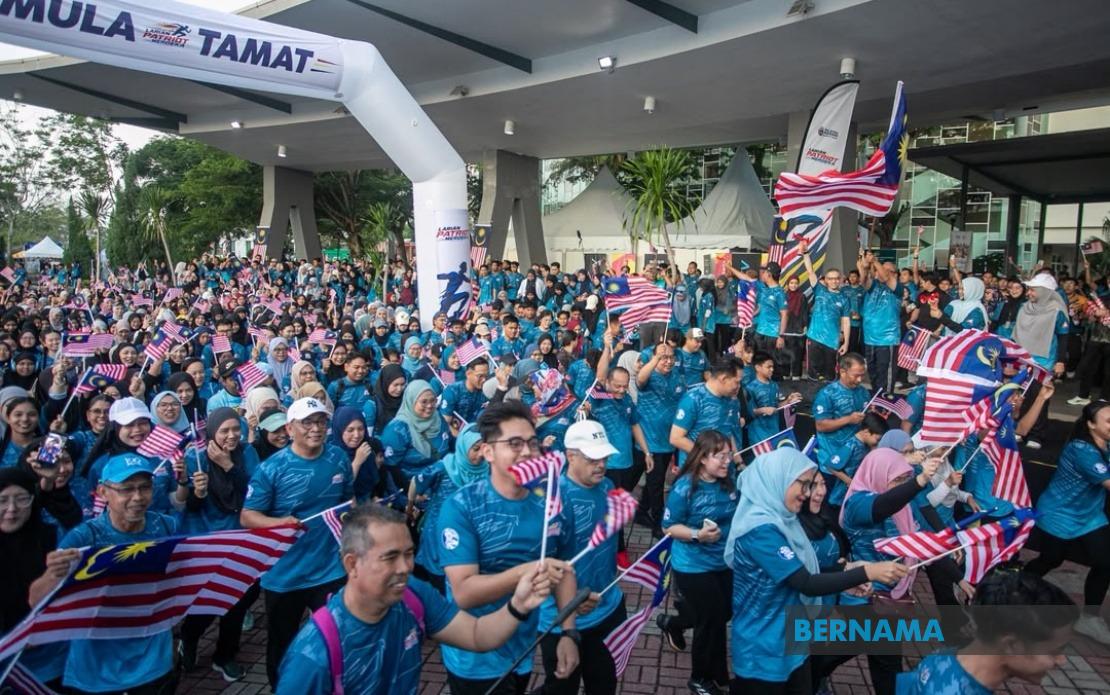
The grounds of the Sultan Azlan Shah Ministry of Health Training Institute in Ipoh buzzed with activity from dawn on Friday as approximately 2,000 Malaysians of all ages and backgrounds gathered for the Patriot Merdeka Run, a community event designed to blend fitness activities with expressions of national pride ahead of the 2026 National Month and Malaysia Day celebrations.
By 7 am, the venue had already filled with families and individuals eager to participate in an initiative that organisers framed as both a health promotion effort and a platform for strengthening national cohesion. The early morning gathering reflected genuine public engagement with patriotic themes, as children accompanied their parents and community members arrived in groups representing various neighbourhoods and organisations across the Perak capital.
Before the race commenced, participants engaged in a coordinated mass aerobics session that created a visually striking spectacle of collective movement. The pre-run activity served both practical and symbolic purposes—warming participants up for the run while reinforcing the sense of national unity through synchronised public exercise. Flags of Jalur Gemilang were prominently displayed and waved throughout the gathering, with participants using the national symbol as a focal point for expressing their connection to Malaysia.
At 7.30 am, Datuk Abdul Halim Hamzah, secretary-general of the Communications Ministry, officially flagged off the 2.5-kilometre fun run. The route was lined with the Jalur Gemilang, creating a patriotic corridor through which participants journeyed. The colour-coordinated attire worn by many runners—featuring the red, white, blue, and yellow of Malaysia's national flag—demonstrated how the event had captured public imagination beyond mere participation, inspiring creative and visible expressions of national sentiment.
The atmosphere throughout the morning was characterised by genuine enthusiasm and intergenerational participation. Young children being guided through the route by parents, enthusiastic exchanges between participants, and the overall carnival-like atmosphere reflected how patriotic messaging need not feel forced or obligatory when structured around accessible community activities. The event successfully demonstrated that expressions of national pride can emerge organically when communities are given platforms and encouragement to participate together.
Beyond the immediate spectacle, the Patriot Merdeka Run served a dual mandate articulated by organisers: promoting healthier lifestyles among Malaysians while deepening appreciation for national identity and independence. This combination addresses concerns about both public health and social cohesion, two areas where Malaysian policymakers have sought greater engagement. By framing patriotic celebration through the accessible lens of a community fun run, organisers avoided the potentially alienating nature of formal or mandatory patriotic events.
The gathering represented the opening salvo of Malaysia's 2026 National Day and Malaysia Day celebrations, with the Fly the Jalur Gemilang Campaign (MPBKKJG 2026) providing the broader framework within which such community activities are situated. Officials hope that sustained programming throughout the year leading up to the 2026 festivities will progressively build momentum and deepen public consciousness about the significance of national independence.
Prime Minister Datuk Seri Anwar Ibrahim was scheduled to officiate the formal launch of the 2026 National Day celebrations at 10 am on the same day, elevating the profile of the initiative through senior government endorsement. The participation of the Prime Minister underscores governmental commitment to making the 2026 celebrations a focal point for national reflection and unity-building.
For Southeast Asian observers, the Ipoh gathering illustrates how Malaysian authorities are attempting to build national cohesion through inclusive, participatory activities that welcome citizens across demographic divides. In an era where social fragmentation and polarisation concern governments throughout the region, initiatives that successfully mobilise diverse populations around shared national symbols offer templates for understanding how democratic societies can reinforce unity without coercion. The emphasis on family participation and intergenerational involvement particularly distinguishes this approach from top-down patriotic messaging.
The scale of participation—2,000 people turning out for an early morning event in Ipoh—suggests genuine public appetite for opportunities to engage with national identity in non-confrontational, community-centred contexts. This finding carries implications for how Malaysian policymakers might structure future initiatives aimed at strengthening national consciousness and social cohesion, particularly during periods of transition or commemoration.
Looking ahead to 2026, organisers will likely seek to replicate the success of the Ipoh run through similar community-based initiatives nationwide, potentially expanding participation numbers and geographic reach. The combination of health promotion with patriotic expression, tested successfully in Ipoh, may become a template for subsequent campaigns designed to deepen Malaysian public engagement with national narratives and values during the crucial celebratory period leading toward Malaysia's national milestone.

