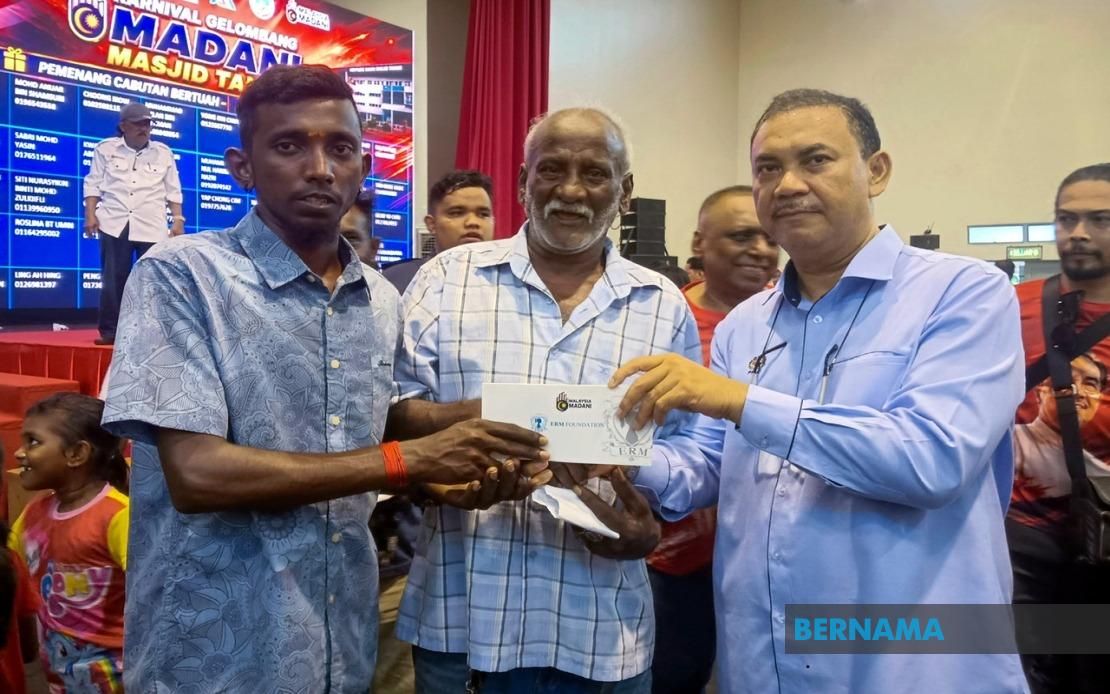
The Gelombang MADANI Carnival in Alor Gajah delivered tangible relief to thousands of economically disadvantaged families across the Masjid Tanah parliamentary constituency on August 7, with the Sentuhan MADANI Donation initiative reaching residents who struggle with basic living costs. The intervention targeted households from the lower-income B40 category alongside vulnerable populations including elderly citizens, persons with disabilities, and low-wage earners—demographics that face persistent financial strain in Malaysia's cost-of-living environment.
Each of the 2,000 beneficiaries received RM200 in direct cash assistance, a sum designed to provide immediate relief for essential household expenses such as food, utilities, and medical costs. Datuk Azman Abidin, the Prime Minister's political secretary, emphasised the programme's breadth during remarks at the distribution ceremony held at Masjid Tanah Sports Complex, noting that recipients spanned five constituent state assemblies within the parliamentary seat. The geographical coverage encompassed Kuala Linggi, Lendu, Tanjung Bidara, Ayer Limau, and Taboh Naning, ensuring that assistance reached multiple communities across Melaka's Alor Gajah area.
The initiative reflects a deliberate policy focus on direct cash transfers as a poverty alleviation mechanism, moving beyond the rhetoric of development to place resources directly into the hands of struggling families. Malaysia's persistent income inequality and the rising cost of essential services have made such targeted interventions increasingly necessary, particularly following economic pressures that have accumulated since the pandemic. For many beneficiaries, the timing of such assistance proves crucial, as household budgets stretch ever thinner with inflation affecting everything from food prices to utilities.
Ramlah Othman, a 63-year-old resident from Tanjung Bidara, articulated the genuine impact such assistance carries for individuals managing on inadequate incomes. Her recognition that the contribution would lighten the load of daily household management speaks to a reality many Malaysian families confront—the perpetual calculation of how to stretch limited resources across competing needs. For pensioners and those in precarious employment situations, the predictability of basic expenses often leaves no room for unexpected costs or emergencies, making government support programmes essential safety nets.
The programme's explicit inclusion of persons with disabilities and senior citizens reflects policy acknowledgement of these groups' particular vulnerability. Individuals aged 69 with significant health conditions, such as N. Mariappan, a stroke patient from Ladang Sungai Baru, often face compounding financial difficulties as medical expenses intersect with limited earning capacity. The recognition that government has responsibility toward this demographic, as Mariappan noted, carries psychological as well as material significance, affirming that vulnerable citizens remain part of the social contract rather than falling into administrative blind spots.
The MADANI initiative's nomenclature—invoking concepts of wisdom and integrity—signals that such assistance programmes represent more than temporary relief measures but rather reflect a governance philosophy prioritising citizen welfare. The association with carnival and community gatherings transforms what might otherwise be a bureaucratic distribution exercise into an event affirming collective social responsibility and mutual support. This approach builds dignity into assistance provision, framing beneficiaries not as supplicants but as community members deserving recognition and support.
For Malaysian policymakers, the scale of this single intervention—reaching 2,000 households across one parliamentary constituency—underscores the magnitude of need remaining in the lower-income segments of society. While such programmes generate positive headlines and demonstrable goodwill, they also highlight the limits of episodic cash transfers in addressing systemic poverty. The RM200 per household, while genuinely appreciated by recipients, represents a temporary intervention rather than a structural solution to income inequality and employment precarity that characterises segments of Malaysia's labour market.
The multi-constituency approach adopted here—distributing assistance across five state assemblies within a single parliamentary area—suggests recognition that economic disadvantage does not respect administrative boundaries and that equitable coverage requires deliberate mapping of need across geographical divisions. This methodical approach contrasts with ad-hoc or politically motivated distribution patterns, though observers might question whether targeted need-based selection genuinely identified the most vulnerable or whether administrative convenience shaped recipient lists.
Recipient testimonies emphasising gratitude and relief indicate genuine material benefit, yet they also reveal the stark reality that RM200 constitutes newsworthy assistance for households struggling with survival-level financial management. The circumstance that such modest sums generate meaningful expressions of thanks underscores how severely constrained budgets have become for Malaysia's poorest citizens and how limited their resources for managing unexpected expenses or building any financial resilience. This reality demands sustained attention from policymakers focused on raising incomes and employment quality rather than relying exclusively on periodic assistance schemes.
The timing and geography of the MADANI carnival in Melaka, specifically within the Alor Gajah division, reflects political considerations alongside social policy objectives. Melaka has emerged as a significant electoral battleground, making high-visibility welfare initiatives particularly relevant to contemporary Malaysian political dynamics. Nevertheless, the demonstrable delivery of resources to identified recipients provides tangible benefit regardless of the political calculus surrounding programme implementation.

