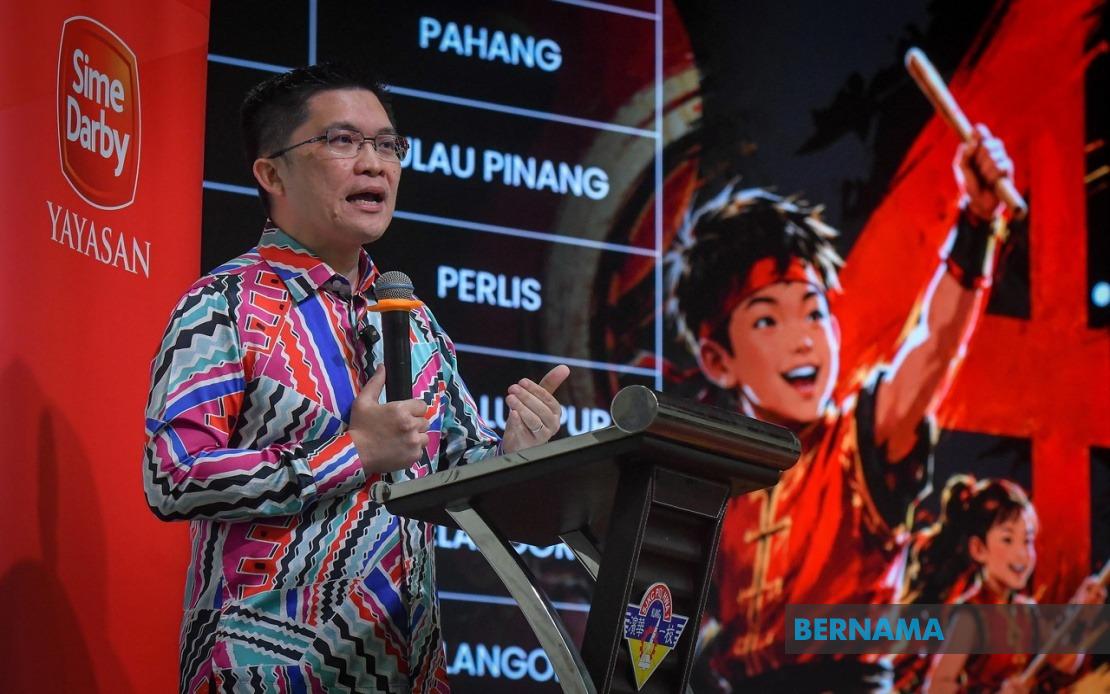
Malaysia's Education Ministry is stepping up efforts to nurture homegrown cultural talent by launching the first National 24 Festival Drums Primary School Invitational Championship, set to take place at Indera Mulia Stadium in Ipoh, Perak on August 8. The competition will draw 16 teams from across the country, marking a significant milestone in promoting what is widely regarded as a distinctly Malaysian performing art form.
Deputy Education Minister Wong Kah Woh announced the initiative during a press conference held at SJKC Pin Hwa 1 in Shah Alam on July 7, positioning the championship as a cornerstone of the ministry's broader strategy to strengthen co-curricular activities while safeguarding the nation's cultural identity through the education system. The championship represents a collaborative effort between the Education Ministry and the Malaysia 24 Festival Drums Association, reflecting growing institutional recognition of the art form's significance within Malaysia's cultural landscape.
The 24 Festival Drums is a relatively modern addition to Malaysia's performing arts heritage, having been created domestically in 1988 in Johor. What makes this art form particularly noteworthy is its rapid evolution from a local creation to an internationally recognised cultural expression. Since its establishment as a National Intangible Heritage in 2009, the 24 Festival Drums has transcended Malaysian borders and found audiences across Asia and beyond, with documented presence in countries including China. This trajectory demonstrates how contemporary cultural innovations rooted in Malaysian identity can achieve global resonance.
Wong's remarks underscore the Education Ministry's recognition that cultural preservation in the modern era requires active institutional support and integration into formal education pathways. By establishing a national championship specifically for primary school students, the ministry is creating a structured platform for younger generations to engage with and master this art form during formative years. This approach contrasts with more traditional methods of cultural transmission and signals a modernised approach to heritage education that treats cultural practices as dynamic, evolving disciplines worthy of competitive recognition and academic investment.
The championship carries particular symbolic significance through its naming. The competition's challenge trophy will be designated the Tan Hooi Song Trophy, honouring the late co-founder of the 24 Festival Drums movement. This recognition acknowledges Tan's foundational contributions to establishing and developing the art form during its early years in Johor. The decision to memorialise a cultural pioneer through a national championship trophy reflects how institutional frameworks can perpetuate recognition of individual cultural entrepreneurs whose work might otherwise be forgotten.
For Malaysia specifically, and for Southeast Asia more broadly, the championship represents an interesting case study in how nations cultivate cultural soft power through education. By introducing students to the 24 Festival Drums at primary level through competitive frameworks, the Education Ministry is building a generational cohort with deep familiarity with the art form. These younger practitioners may eventually become cultural ambassadors, perpetuating and evolving the tradition as they mature.
The timing of this inaugural championship also reflects broader regional trends. Southeast Asian nations have increasingly recognised that cultural industries and cultural diplomacy constitute important economic and geopolitical assets. By investing in youth engagement with homegrown art forms, Malaysia positions itself within this regional conversation about cultural identity and soft power projection. The 24 Festival Drums, as a Malaysian invention with demonstrated international appeal, represents precisely the kind of cultural asset that can enhance the nation's standing in regional and global forums.
The competitive structure of the championship carries implications beyond cultural preservation. By bringing together 16 primary school teams for a high-profile national competition, the Education Ministry is normalising cultural performance as a serious co-curricular pursuit with status comparable to sports championships or academic competitions. This legitimisation can influence how students, parents, and educators perceive participation in cultural activities, potentially expanding participation across socioeconomic and ethnic lines.
Educators and cultural observers across the region will likely monitor this championship's success as an indicator of how traditional societies can successfully modernise cultural transmission through competitive platforms. The approach pioneered here—institutional sponsorship, national-level competition, memorial recognition of cultural pioneers—offers a replicable model that other Southeast Asian nations might adapt for their own heritage art forms.
The inaugural championship in Ipoh thus represents far more than a regional performance event. It embodies Malaysia's institutional commitment to ensuring that the 24 Festival Drums remains vibrant and relevant for future generations, while simultaneously projecting a vision of contemporary Malaysia as a nation that values its cultural innovations sufficiently to invest educational resources and competitive platforms in their continuation. For primary school participants, the championship offers a rare opportunity to represent their schools and communities on a national stage while contributing to the evolution of a distinctly Malaysian cultural form.

