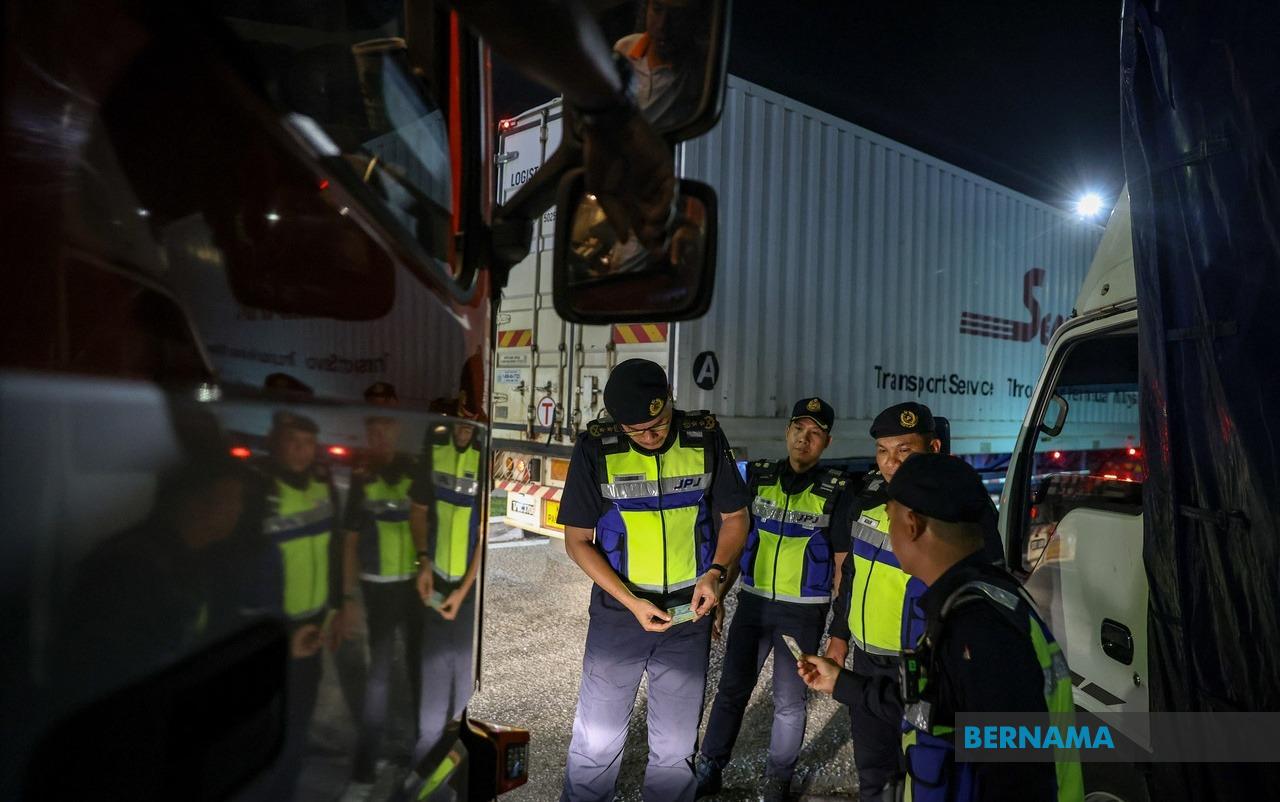
Authorities in Johor have intensified efforts to root out drug use among commercial transport operators, with an integrated enforcement operation yielding 16 positive drug cases among drivers tested over the first ten days of July. The coordinated crackdown, involving the state's Road Transport Department (JPJ), Royal Malaysia Police (PDRM), the National Anti-Drug Agency (NADA), and toll operator PLUS Malaysia Berhad, represents a significant escalation in road safety measures targeting professional drivers whose impairment poses risks to other road users.
Zulkarnain Yasin, director of the Johor JPJ, disclosed the findings following the operation's enforcement activity at the Pagoh Rest and Service Area southbound. The scope of the initiative extended across multiple high-traffic locations throughout the state, demonstrating a systematic approach to catching impaired drivers rather than relying on reactive enforcement alone. By positioning checkpoints at strategic junctions—including rest areas, enforcement stations, and transport terminals—authorities maximized the likelihood of detecting violations during periods of peak commercial transport activity.
Of 164 drivers who underwent compulsory urine screening, the positive cases broke down into distinct substance categories. Ten drivers tested positive for methamphetamine, while three others returned results for crystal methamphetamine, commonly known as "ice" on Malaysian streets. Two additional drivers had consumed ganja, and one tested positive for morphine. The prevalence of amphetamine-based substances among commercial operators raises particular concern, as these stimulants can produce euphoria and heightened alertness in the short term but inevitably lead to erratic judgment, reduced reaction times, and dangerous risk-taking once their effects diminish or tolerance builds.
The legal consequences for affected drivers carry substantial weight. Under Section 56(4) of the Road Transport Act 1987, the JPJ possesses authority to suspend or permanently revoke vocational driving licences held by individuals testing positive for controlled substances. This sanction effectively terminates their livelihoods in professional transport, creating a powerful deterrent beyond standard criminal penalties. For operators of goods vehicles and public transport, such a license revocation represents not merely a fine but the permanent loss of earning capacity within their profession—a consequence that extends beyond the individual driver to affect their families and employers.
Beyond drug detection, the operation revealed the scale of non-compliance with fundamental road safety requirements across Johor's transport sector. The enforcement sweep documented 707 instances of drivers operating without valid driving licences, a staggering figure that underscores how widespread unlicensed driving remains despite decades of enforcement campaigns. Road tax violations numbered 626 cases, while 574 drivers were found carrying expired insurance certificates, leaving them legally uninsured and exposing the public to financial risk should accidents occur. These figures suggest systemic failures in vehicle administration and operator accountability rather than isolated lapses.
Goods vehicle licensing requirements proved equally problematic, with 128 drivers unable to produce valid Goods Vehicle Licences (GDL). The detection of 113 overloaded vehicles indicates that some operators deliberately exceed weight limits to maximize profits per journey, degrading road surfaces, increasing accident severity, and creating handling difficulties particularly in adverse weather. Additionally, 30 cases involved expired driving licences, 14 involved expired GDLs, and 51 vehicles carried expired PUSPAKOM roadworthiness certificates—suggesting that many operators view vehicle inspection and licensing as inconvenient administrative burdens rather than essential safety mechanisms.
Technical violations compounded the safety deficiencies. Inspectors identified 39 cases of unauthorized vehicle modifications, ranging from suspension changes to engine tuning that may compromise stability or braking performance. Thirty additional cases involved tyres failing to meet specification standards, whether undersized, mismatched, or excessively worn—a particularly hazardous condition during monsoon season when road grip becomes marginal. A further 928 technical offences covered miscellaneous mechanical defects, indicating that substantial portions of Johor's commercial vehicle fleet operate in substandard conditions that would be unthinkable in developed jurisdictions.
The operation's methodology reflects an evolving enforcement philosophy in Malaysia. Rather than focusing exclusively on speed or traffic flow violations, authorities increasingly recognize that systematic audits of driver fitness, vehicle condition, and operator compliance address root causes of fatal accidents. The integration of NADA into road operations demonstrates official acknowledgment that substance abuse among transport workers represents a genuine public health threat requiring coordinated response across multiple agencies.
For Malaysian readers and regional observers, these findings carry implications extending beyond statistics. Johor's transport corridors carry substantial volumes of cross-border traffic to Singapore and link Malaysia's industrial heartland to major ports. Commercial operators found non-compliant represent not only local safety concerns but also potential embarrassments at international checkpoints where foreign authorities increasingly scrutinize vehicles from Malaysia. As other Southeast Asian nations tighten standards for imported goods transported by cross-border operators, Malaysia's reputation for road safety and professional transport standards directly affects trade competitiveness.
The sheer volume of violations—over 2,500 recorded offences during a single operation spanning ten days—suggests that enforcement remains episodic rather than continuous. While the Johor operation achieved impressive results, genuine improvement in transport safety would require sustained, routine compliance checking that makes violation detection inevitable rather than occasional. The detection of drug-positive drivers, while headline-worthy, likely represents the visible tip of a much larger problem of substance use among operators working long, fatiguing shifts on highways where stimulant use becomes tempting.
Moving forward, transport industry stakeholders and policymakers should consider whether current licensing structures adequately filter out unsuitable operators at initial qualification stages. The recurrence of unlicensed and uninsured driving despite existing penalties suggests that reactive enforcement, however rigorous, cannot substitute for stronger administrative gatekeeping. Industry associations might also benefit from developing voluntary compliance programs that incentivize operators maintaining fleets in exemplary condition, creating competitive advantage while simultaneously reducing public risk. The Johor operation demonstrates official commitment to road safety, yet sustained improvement requires complementary measures addressing operator accountability and workplace culture within the transport sector.

