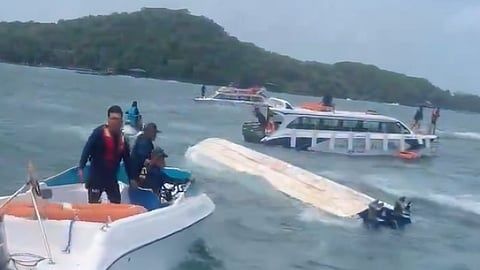
A catastrophic maritime accident in southern Vietnam has claimed the lives of 15 Indian tourists after their chartered speedboat capsized near one of Southeast Asia's most visited holiday destinations. The vessel overturned on Saturday approximately 400 metres from Hon May Rut Ngoai Island, which sits close to Phu Quoc, Vietnam's largest island situated in the Gulf of Thailand. The incident has reignited concerns about maritime safety standards in the region, where tourism volumes continue to surge despite persistent structural and operational challenges in the boat charter industry.
The fatal vessel was transporting 32 Indian tourists together with four crew members when disaster struck during what should have been a routine island excursion. Of the 36 people aboard, rescue operations managed to pull 21 survivors from the water, though authorities confirmed that all 15 fatalities were subsequently recovered. The injured survivors were evacuated to nearby medical facilities for treatment, though the full extent of their conditions remains unconfirmed.
Initial accounts from eyewitnesses who observed the unfolding tragedy provide crucial details about the immediate aftermath. According to reports published in Vietnamese media, nearby fishing and tourist vessels responded instinctively to the emergency, with crews beginning extraction operations before official rescue agencies could mobilise. This rapid civilian intervention likely prevented the death toll from rising further, demonstrating the vital role of quick-thinking bystanders in maritime emergencies. However, rescue efforts were severely hampered by the fact that numerous passengers became trapped within the vessel's hull as it overturned, complicating and extending the already dangerous operation.
The arrival of dedicated emergency services, including border guards, naval personnel, coast guard operatives, and other search-and-rescue teams, marked a transition to more coordinated response efforts. Despite the availability of professional expertise and equipment, the operational difficulty persisted due to the vessel's orientation and the water conditions surrounding the disaster site. The combination of these factors suggests that the rescue took considerably longer than might have been anticipated, with crews forced to work under challenging circumstances to retrieve both living survivors and deceased victims.
Phu Quoc stands as one of Vietnam's premier beach tourism destinations and has experienced exponential growth in visitor numbers over the past decade. The island's appeal lies in its renowned white-sand beaches, pristine tropical waters, and relatively unspoiled natural environment compared to other Southeast Asian resort areas. Hon May Rut island, located roughly ten kilometres south of Phu Quoc proper, attracts substantial tourist traffic precisely because of its picturesque geography and reputation for water-based recreational activities. The collective draw of these destinations generates millions of tourist visits annually, encompassing both Vietnamese domestic travellers and significant international visitor numbers.
Indian travellers have increasingly featured among the international tourist cohorts exploring Vietnam's southern coastal regions in recent years, reflecting broader patterns of outbound tourism from India and rising middle-class disposable incomes. The prevalence of chartered speedboat excursions as a standard tourism offering reflects the competitive nature of the industry, where operators attempt to maximise visitor experiences through close proximity to scenic island locations. This commercial model, while economically beneficial for local communities, creates inherent operational pressures that may sometimes compromise safety protocols.
Vietnam's maritime tourism sector, like many others across Southeast Asia, operates within a regulatory framework that has been subject to ongoing scrutiny from international observers. While the country has implemented various safety standards and licensing requirements, inconsistent enforcement and periodic lapses in adherence to established protocols remain documented concerns. The incident near Phu Quoc underscores these systemic vulnerabilities and raises questions about whether current oversight mechanisms adequately protect the thousands of tourists who engage in boat-based activities throughout Vietnam's extensive coastal zones.
Authorities have initiated a formal investigation to determine the precise circumstances that led to the capsizing. At present, the specific cause remains unclear, though preliminary speculation might consider factors such as adverse weather conditions, operational error, vessel maintenance deficiencies, or structural complications. The investigation will likely examine crucial elements including passenger weight distribution, crew training and certification, adherence to safety procedures, weather forecasting consultations before departure, and the vessel's mechanical and structural condition. International maritime safety bodies may also become involved given the involvement of foreign nationals and the incident's severity.
This tragedy carries significant implications for tourism operators throughout Southeast Asia and raises important questions for Malaysian travel agencies and tourists who regularly engage in similar maritime experiences. The incident demonstrates that even popular, well-established tourist routes can harbour unexpected hazards, necessitating heightened personal vigilance among travellers booking boat excursions. For Malaysian visitors exploring Vietnam's attractions, this serves as a sobering reminder to verify operator credentials, assess vessel conditions independently, and prioritise personal safety equipment usage regardless of perceived risk levels.
The broader ramifications of this disaster will likely extend beyond immediate grief and recriminations. Regional tourism boards and maritime authorities may face renewed pressure to strengthen enforcement of existing safety regulations and potentially introduce additional protective measures. Insurance companies may reassess coverage terms, vessel operators may face increased scrutiny, and consumer expectations regarding safety transparency may intensify. The incident represents a critical juncture for the region's tourism industry to reaffirm its commitment to balancing economic expansion with passenger safety imperatives.

