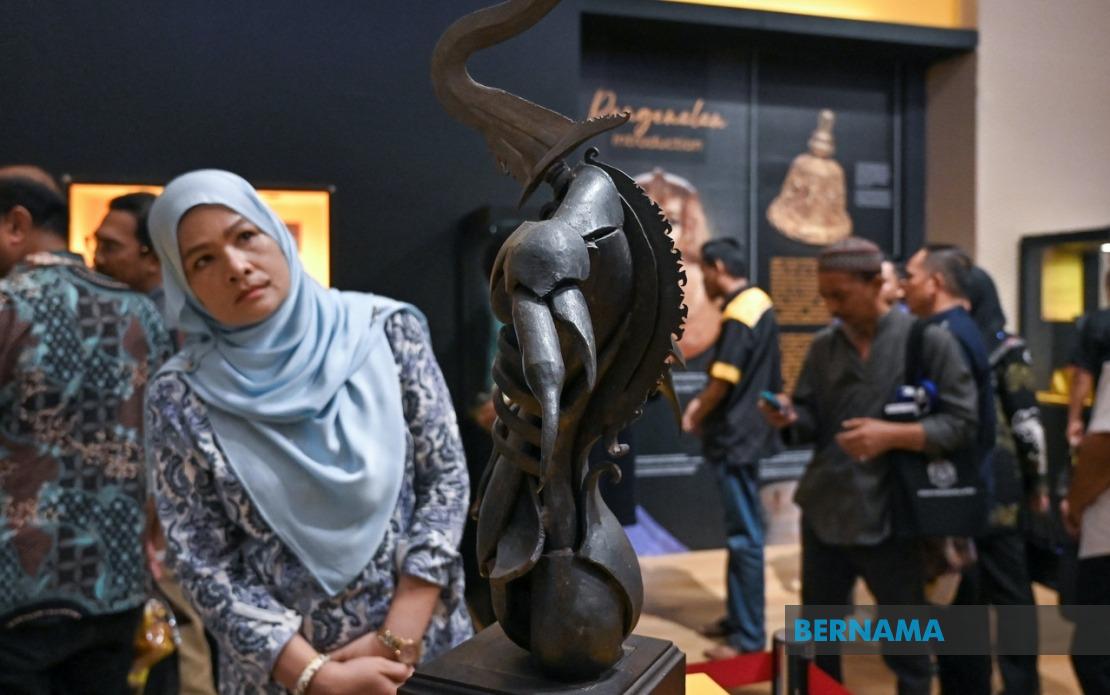
The Perak Museum in Taiping has opened its doors to one of the region's most comprehensive collections of Malay metal heritage, bringing together 140 treasured pieces that collectively illustrate the profound relationship between metalwork and cultural identity across the Malay world. The exhibition, titled 'Magic and Metal: Spirit, Power and Art', represents an ambitious curatorial venture that positions the museum as a custodian not merely of objects, but of narratives embedded within metal—narratives that speak to spirituality, sovereignty and artistic mastery.
Unveiled in early June and scheduled to remain on view through the end of December, the exhibition operates around three interconnected thematic pillars: spirit, power and art. These frameworks allow visitors to understand how metalwork functioned as far more than utilitarian craftsmanship in traditional Malay societies. Instead, metals were understood as conduits for mystical forces, instruments of authority, and expressions of aesthetic refinement that elevated everyday objects into repositories of cultural meaning.
Mohd Nasrulamiazam Mohd Nasir, the museum's director, emphasized during the official launch that this exhibition marks a watershed moment for the institution. For the first time, the Perak Museum has assembled its early metal-based holdings in a single, thematically coherent presentation, allowing the public and scholars alike to perceive connections and patterns that might otherwise remain obscured across separate storage facilities or displays.
The ambition of the curatorial team extended beyond the museum's own vaults. Strategic partnerships with private collectors and cultural organizations have substantially enriched the offering. Raja Syahriman Raja Aziddin contributed sculpture collections, while Yayasan Al-Amin provided silver ornaments of ceremonial and artistic importance. Nor Azahar Ibrahim lent pieces from a significant collection of traditional Malay weaponry, collectively ensuring that the exhibition benefits from both institutional and private stewardship of heritage.
The Department of Museums Malaysia, represented at the opening by director-general Datuk Kamarul Baharin A. Kasim, has positioned this exhibition within a broader strategic agenda to reinvigorate museums as intellectual and cultural anchors within their communities. Rather than serving primarily as repositories of antiquities, these institutions are being repositioned as spaces where knowledge generation, historical research and heritage interpretation occur in service of public understanding and national cultural cohesion.
Among the most historically resonant pieces on display are items steeped in royal lineage and martial tradition. A nineteenth-century Malay traditional weapon featuring an ornate snail-shell hilt once belonged to Sultan Abdullah Muhammad Shah II, the twenty-sixth Sultan of Perak—an object that carries not merely functional significance but embodies the authority and dignity of the sultanate itself. Complementing this are eighteenth-century Bugis warrior armor pieces that document the martial heritage of communities whose seafaring prowess and military expertise shaped regional history. Additionally, a spoon and fork set that belonged to Raja Laut Ibni Sultan Muhammad Shah, son of the third Sultan of Selangor, illustrates how metalwork pervaded even intimate domains of royal life.
The visitor response in the exhibition's early weeks has been encouraging, with nearly twenty thousand people having visited since the June opening. The museum has set an ambitious target of one hundred thousand visitors by year's end, reflecting confidence that the exhibition's thematic richness and visual appeal will resonate across diverse audiences—from heritage enthusiasts and academic researchers to families seeking to deepen their understanding of Malaysian cultural foundations.
For Malaysian and Southeast Asian observers, this exhibition offers particular relevance in an era when heritage institutions across the region are recalibrating their roles in relation to national identity and cultural preservation. The Perak Museum's initiative demonstrates how regional museums can move beyond custodial functions toward active interpretation and contextualization of material culture. The emphasis on understanding metals as spiritually and symbolically charged objects—rather than merely as technical achievements—invites visitors to reconsider how pre-colonial and early modern Malay societies understood the relationship between materials, meaning and power.
The exhibition also underscores ongoing conversations within Malaysian cultural institutions about provenance, stewardship and the ethical dimensions of heritage preservation. By incorporating works from private collectors alongside institutional holdings, and by crediting these contributors explicitly, the Perak Museum models a collaborative approach to heritage management that acknowledges the distributed nature of cultural custodianship in contemporary Malaysia. This approach recognizes that significant pieces of national heritage often reside outside formal institutional frameworks, held by families, collectors and organizations whose commitment to preservation merits recognition and partnership.
For the broader Southeast Asian context, the exhibition demonstrates how individual museum initiatives can contribute to regional intellectual discourse about shared cultural histories. The metalwork traditions displayed at Taiping reflect influences and exchanges that transcended modern political boundaries—Bugis armor speaks to maritime networks connecting present-day Indonesia with Malaya, while royal regalia embodies diplomatic and dynastic relationships that shaped the peninsula's political evolution. By presenting these pieces in historical and cultural context, the Perak Museum contributes to a more nuanced understanding of Southeast Asian heritage than national frameworks alone can provide.
As the exhibition continues its run through December 31, it stands as a significant curatorial achievement and an invitation to deeper engagement with the material foundations of Malay culture and identity. Whether visitors approach the displayed metalwork primarily as aesthetic objects, historical documents or spiritual artifacts, the exhibition succeeds in demonstrating that such categorizations, while useful for analysis, ultimately fail to capture the integrated worldview within which these pieces were created and valued. In an increasingly globalized world where cultural identity faces perpetual reconfiguration, institutions like the Perak Museum serve the vital function of anchoring contemporary understanding to historical depth and material authenticity.

