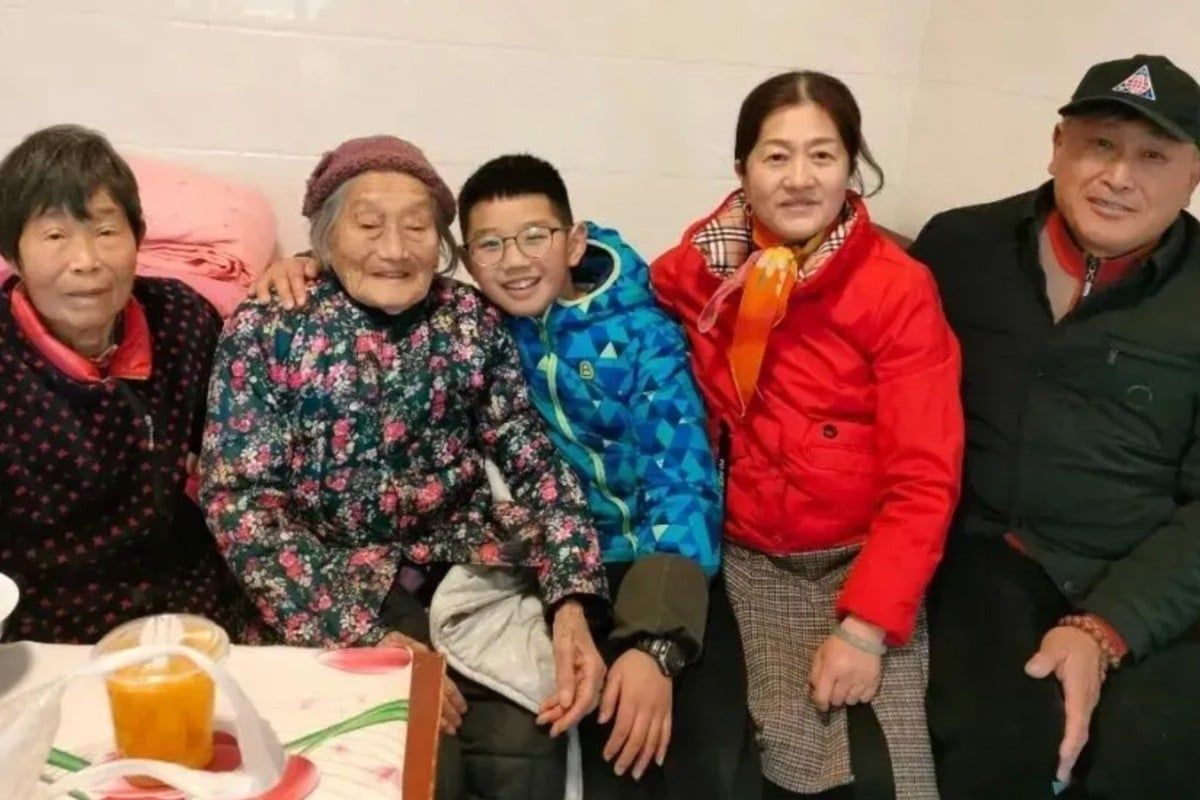
Wang Gaiying, a 111-year-old grandmother residing in Rugao, Jiangsu province in eastern China, has become an unexpected internet sensation after attributing her exceptional lifespan to everyday activities that most people dismiss as mundane. Rather than crediting any special treatments or exotic remedies, she emphasizes that staying physically active through household chores—wiping tables, folding clothes, and tidying her living space—provides the consistent movement her body needs to maintain mobility and cardiovascular health well into her second century.
Rugao holds a distinctive place in China's demographic landscape as one of the country's recognized "longevity capitals," a designation earned through generations of residents who have consistently lived into their 100s and beyond. As of February this year, the city was home to 672 centenarians according to local reporting, making it a natural laboratory for understanding the factors that contribute to exceptional longevity. This concentration of exceptionally long-lived residents has attracted both media attention and scientific inquiry from researchers seeking to understand what makes Rugao different from other regions.
Scientists at the Chinese Academy of Sciences' Institute of Soil Science in Nanjing have identified a compelling environmental factor underlying Rugao's reputation for longevity. The region's mineral-rich soil produces agricultural crops that are naturally abundant in trace elements considered essential for human health and disease prevention. This geological advantage means that residents like Wang have benefited throughout their lives from consuming locally grown vegetables and staple foods that carry these health-promoting minerals, providing a dietary foundation that may have contributed significantly to their extended lifespans.
Wang's household structure itself reflects traditional values that remain significant across East Asia. She lives as part of a five-generation family arrangement, providing her with constant social interaction and a sense of purpose within a multigenerational home. Despite her advanced age, she has maintained an active role in family life and decision-making, resisting the isolation that often accompanies aging in more individualistic societies. Her engagement with younger family members, including a grandson now aged 60, keeps her cognitively stimulated and emotionally invested in family affairs.
Throughout her 100s, Wang continued working in agricultural fields, harvesting peanuts and watermelons with the deliberate pace that her aging body required. Rather than viewing this as labor to be avoided, she frames it as purposeful activity that keeps her engaged with the natural world and her community. Even as her physical capacity has gradually diminished with age, she has maintained what she describes as a "spirited" approach to life, often insisting to family members that she is not truly old because she retains the ability to move independently and complete meaningful tasks without assistance.
Wang's approach to nutrition demonstrates a sophisticated understanding of dietary balance developed over more than a century of living. Rather than following restrictive diets or pursuing expensive health supplements, she maintains variety in her meals through her family's careful rotation of different dishes and staple preparations, alternating between steamed buns and dumplings while avoiding monotony. Fish holds particular importance in her diet because of its tender texture and ease of digestion, making it an ideal protein source for someone of her age. She consciously practices moderation, believing that variety and restraint matter far more than indulgence, and she avoids overeating despite living in an environment where her family ensures she is never lacking for food.
Interestingly, Wang's former habits have been modified based on practical health concerns. Social media influencer Yaoqing Ge, who documented Wang's life last December, revealed that the centenarian previously enjoyed rice soaked in baijiu, a traditional Chinese spirit consumed for centuries in celebrations and as a supposed health tonic. However, her family discontinued this practice approximately five years ago after calculating that the risks outweighed any potential benefits—specifically, the danger of intoxication leading to falls or other injuries in an elderly person. This decision demonstrates how even long-standing cultural traditions can be pragmatically adjusted when evidence suggests they pose greater hazards than advantages.
Beyond physical habits, Wang credits her longevity to psychological and spiritual practices that have become increasingly validated by modern gerontological research. She maintains a personal discipline of performing one small act of kindness daily, whether this involves complimenting a family member, sending a brief greeting to an elderly friend, or other gestures of goodwill. Known among those who know her for maintaining an exceptionally calm demeanor, Wang has developed a philosophy of emotional regulation that involves refusing to carry frustrations into sleep. When troubled or angry about something, she sleeps on the problem rather than dwelling on it, consistently discovering upon waking that the source of her distress was less significant than it initially appeared. This approach to managing stress and negative emotions aligns with contemporary understanding of how chronic stress and anxiety accelerate aging and contribute to age-related diseases.
Wang's daily schedule reflects remarkable discipline and consistency maintained across her entire lifetime. She follows a structured sleep pattern of eleven hours nightly—from 7 p.m. to 7 a.m.—supplemented by one or two daytime naps depending on her activity levels. This sleep architecture provides her body with extended periods for cellular repair and regeneration, supporting cognitive function and physical resilience. The consistency of her routine, maintained seemingly without exception across decades, suggests that her body has adapted to anticipate and prepare for these regular rest periods, optimizing their restorative effects.
The response to Wang's story on Chinese social media reveals how her life resonates with contemporary concerns about aging and health. Online observers have noted that while Rugao residents may possess genetic advantages that predispose them toward longevity, Wang's personal practices demonstrate that environmental factors, lifestyle choices, and psychological resilience play equally crucial roles. For Malaysian and Southeast Asian readers, Wang's example offers insights relevant to our own aging populations, particularly as chronic diseases associated with sedentary lifestyles and social isolation become increasingly prevalent in rapidly urbanizing societies. Her emphasis on meaningful daily movement, family connection, dietary balance, and emotional regulation provides a blueprint that transcends cultural boundaries.

