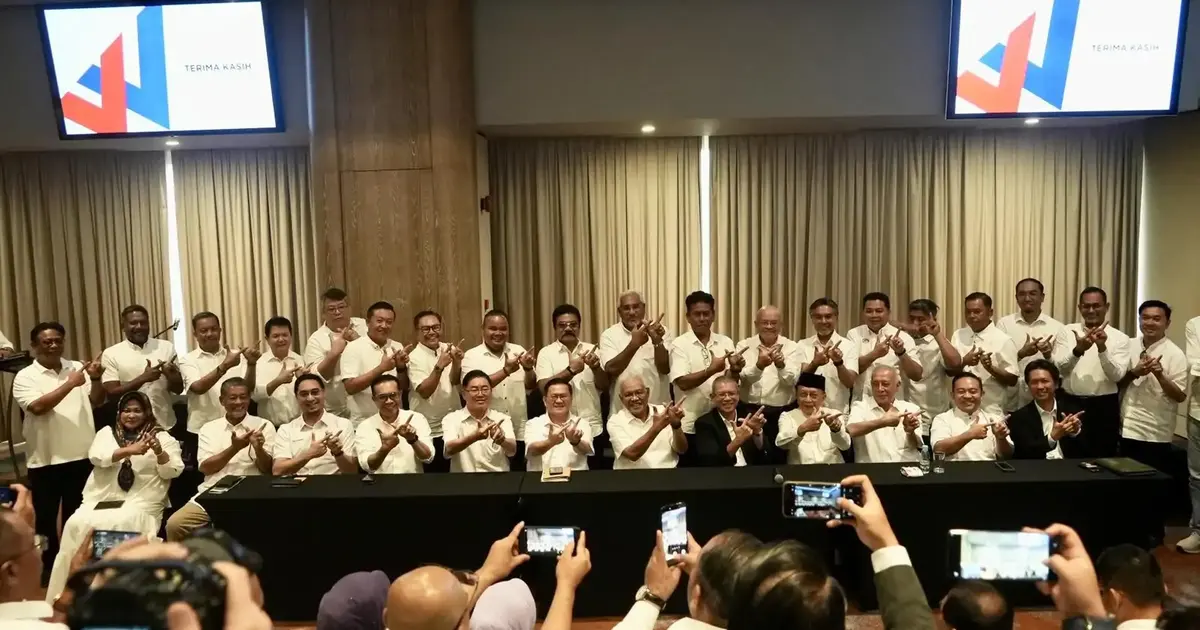
The decision on whether Wawasan will join Perikatan Nasional hinges on a majority vote at the coalition's Supreme Council, according to PN election director Sanusi. This announcement comes as the bloc navigates internal tensions over the potential expansion of its membership, with at least one major component party expressing reservations about the proposed admission.
Sanusi's statement clarifies the procedural path forward for resolving the membership question, establishing that the coalition's decision-making apparatus will ultimately determine the outcome through democratic voting rather than unanimous consent. The affirmation of this voting mechanism represents a significant moment in how PN conducts internal governance on matters affecting its composition and strategic direction.
Bersatu, one of PN's founding parties, has raised objections to Wawasan's entry into the coalition. These concerns, however, will not prevent the Supreme Council from proceeding to a vote on the matter. The willingness to move forward despite internal disagreement underscores how established coalitions in Malaysia handle competing interests among member parties—through structured procedures that allow minorities to voice opposition while majority opinion ultimately prevails.
The backdrop of this development reflects broader shifts within Malaysian coalition politics. PN, which emerged as a significant political force in recent years, continues to evolve its membership and structure. The potential inclusion of Wawasan would represent an expansion of the coalition's reach and arguably its political weight, though the nature and significance of this particular admission remains dependent on context surrounding Wawasan's political standing and regional representation.
For Malaysian political observers, the episode illustrates how major coalitions manage internal discord without fracturing. The Supreme Council's role as the arbiter reinforces that despite public disagreements among component parties, established mechanisms exist to facilitate decision-making. This contrasts with more volatile periods of Malaysian politics when coalition tensions have led to splits and reconfiguration of political alignments.
Bersatu's objections likely stem from concerns about the coalition's direction, the influence of new entrants, or potential impacts on seat allocation in future elections. Such calculations are routine within coalition politics, where parties must weigh the benefits of maintaining bloc unity against protecting their own organisational interests and electoral prospects. The party's formal reservation of its position, while allowing the vote to proceed, reflects this balance.
The voting mechanism also carries implications for how PN positions itself relative to other major coalitions. In Malaysia's multiparty environment, coalition strength is measured not merely by ideology or formal agreements but by the actual numbers and political capital that member parties command. Any expansion of membership potentially reshapes this calculus, which may explain why some parties approach such questions cautiously.
Sanusi's role as PN election director places him in a position where he must articulate the coalition's procedural standards and maintain legitimacy across its diverse membership. His statement acknowledging Bersatu's objections while affirming the voting process demonstrates an effort to preserve coalition cohesion by respecting the grievances of concerned parties even while overriding them through majority decision.
The timeline for the Supreme Council vote remains unclear from available information, though the establishment of this procedural framework suggests the matter will be resolved through formal channels relatively soon. The months ahead will reveal whether the vote produces consensus support for Wawasan's admission or whether a narrow majority approval sets the stage for further internal adjustments within PN.
For regional observers, PN's internal dynamics merit attention given Malaysia's significant political influence in Southeast Asia. Coalition stability directly affects Malaysia's domestic policy consistency and international engagement. Expansions or contractions of major political blocs can signal shifting political winds and recalibrations of power that extend beyond Malaysia's borders.
The Wawasan admission question also intersects with broader questions about PN's future direction and identity. As the coalition continues to absorb or ally with new parties, it must clarify what unites its members beyond electoral calculation. The debate over Wawasan's entry, though concerning a procedural matter on its surface, ultimately reflects deeper questions about the coalition's cohesion and long-term viability in Malaysia's competitive political landscape.
Governance within political coalitions remains one of the least-discussed but most consequential aspects of Malaysian politics. How PN resolves the Wawasan question will provide insights into whether the coalition can maintain discipline and direction amid competing party interests, or whether internal tensions will eventually reshape the broader coalition architecture that has emerged since 2020.