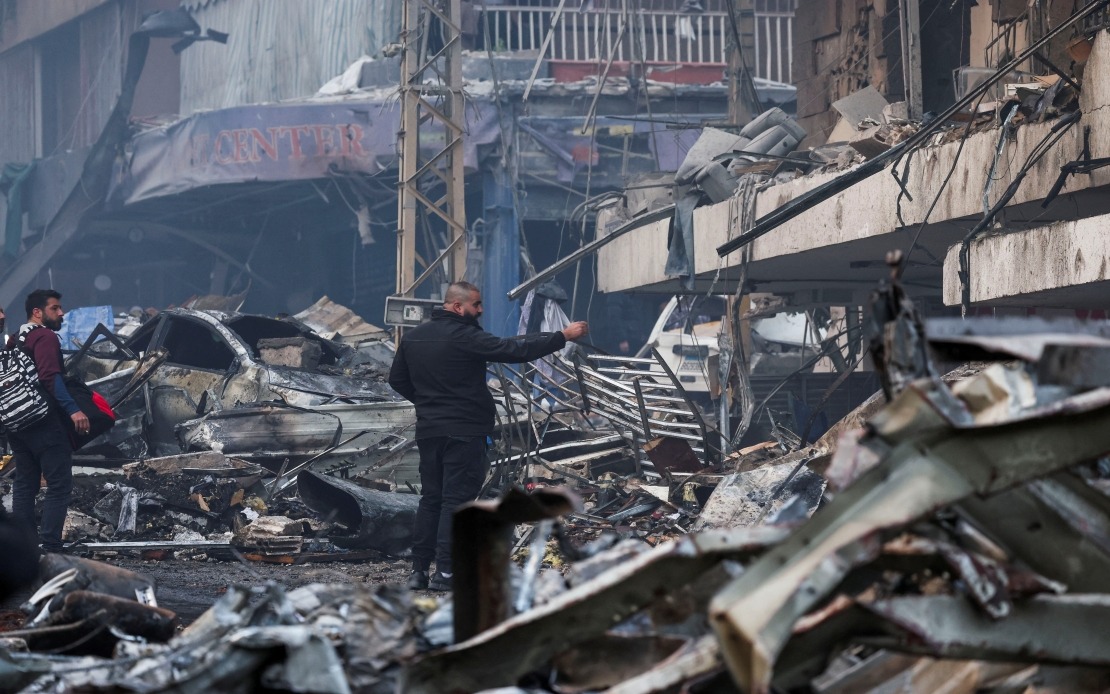
The United States has activated a real-time surveillance and tracking system designed to monitor the escalating confrontation between Israel and Hezbollah across Lebanese territory. Operating through the Pentagon's Central Command (CENTCOM), this monitoring apparatus represents Washington's commitment to maintaining oversight of military operations on the ground whilst diplomatic efforts intensify to establish a lasting ceasefire. A senior US official disclosed the development during briefings on Monday, positioning the initiative as a critical component of American-led mediation between the two adversaries.
The primary objective of the monitoring mechanism centres on enabling both Israel and Lebanon to engage in negotiations from positions of equal standing as sovereign nations. By providing real-time intelligence and verification of military activities, the US intends to reduce the likelihood of escalation whilst building confidence between the parties. American officials frame this surveillance effort not as imposing external control but rather as creating the transparency necessary for genuine diplomatic progress. The mechanism emerged from high-level conversations that US Secretary of State Marco Rubio conducted with Israeli Prime Minister Benjamin Netanyahu and Lebanese President Joseph Aoun on Friday, during which discussions focused on solidifying existing ceasefire arrangements and establishing frameworks for comprehensive peace negotiations.
The timing of this initiative coincides with substantive direct negotiations scheduled to take place in Washington between June 23 and 25, bringing Israeli and Lebanese delegations to the American capital for talks mediated by US officials. These discussions aim to transcend immediate military concerns and address the deeper security architecture that has historically generated instability along the Israel-Lebanon border. The talks represent an elevation of diplomatic intensity, suggesting that both sides have signalled sufficient receptiveness to American mediation efforts to justify bringing principal negotiators into the same venues.
Parallel to American efforts, Qatar and Pakistan—acting as mediators in regional disputes—announced on Sunday the establishment of a separate conflict-prevention mechanism termed a "de-confliction cell." This multilayered structure would bring together representatives from the United States, Iran, and Lebanon, with Qatar and Pakistan facilitating discussions to ensure compliance with military cessation agreements. The initiative reflects coordination among several global actors attempting to stabilize the Lebanese theatre and prevent further deterioration of regional security dynamics. This arrangement emerged following the conclusion of remote negotiations between Washington and Tehran at the Burgenstock resort in Switzerland, where both parties reached preliminary understandings about establishing an extended dialogue period.
The broader diplomatic context extends beyond Israel-Hezbollah tensions to encompass the complex relationship between the United States and Iran. Last week, these two adversarial powers executed a memorandum of understanding establishing a sixty-day window for intensive negotiations on outstanding disputes. The agreement encompasses highly contentious matters including Iran's accumulated stocks of enriched uranium, the future trajectory of its nuclear development programme, and various other unresolved issues that have poisoned bilateral relations for years. This opening of direct communication channels, however limited, suggests a degree of willingness from both governments to explore negotiated solutions rather than pursue escalatory confrontation.
The fourteen-point memorandum of understanding signed by Washington and Tehran establishes several significant commitments affecting regional stability broadly. Among its provisions, the document mandates an immediate cessation of military operations across all geographical theatres, with Lebanon specifically designated as a focal point requiring adherence to peaceful conduct. Additional components address American economic measures against Iran, including the naval blockade that has restricted Iranian access to international maritime commerce and pressured the country's economy. The agreement also stipulates guarantees for safe passage of commercial shipping through the critical Strait of Hormuz, a chokepoint through which substantial quantities of global petroleum resources transit annually.
For Malaysian and Southeast Asian observers, these developments carry significance beyond immediate Middle Eastern geopolitics. The Strait of Hormuz represents a critical transit route for energy supplies destined for Asian markets, and any instability threatening free passage directly affects regional energy security and economic stability. Furthermore, the involvement of multiple mediators from different geopolitical alignments—American officials, Qatari intermediaries, and Pakistani facilitators—demonstrates how conflicts in distant regions increasingly require complex multilateral coordination. This pattern reflects the interconnected nature of contemporary international relations, where local disputes rapidly acquire global dimensions requiring diplomatic solutions engaging numerous state and non-state actors.
The establishment of monitoring mechanisms by the United States through CENTCOM also illustrates how military institutions increasingly engage in tasks extending beyond traditional combat operations. The system requires sophisticated intelligence gathering, data analysis, and communication capabilities to provide decision-makers with accurate, timely information about military deployments and activities. Such transparency mechanisms have become standard components of contemporary peace processes, with verification and monitoring arrangements designed to build confidence between parties with deep mutual suspicions.
Looking forward, the success of these diplomatic initiatives depends substantially on whether both Israel and Hezbollah demonstrate genuine commitment to abiding by ceasefire terms and negotiated agreements. The presence of American monitoring reduces but does not eliminate incentives for either side to exploit ambiguities or test the boundaries of agreed constraints. The involvement of additional mediators from Qatar and Pakistan suggests international recognition that American diplomacy alone may prove insufficient given the deep roots of Israeli-Hezbollah animosity and the broader regional tensions involving Iran. As talks proceed in Washington and multilateral coordination mechanisms activate, the coming weeks will prove critical in determining whether current diplomatic momentum can translate into durable agreements that genuinely end the cycle of violence troubling Lebanon.