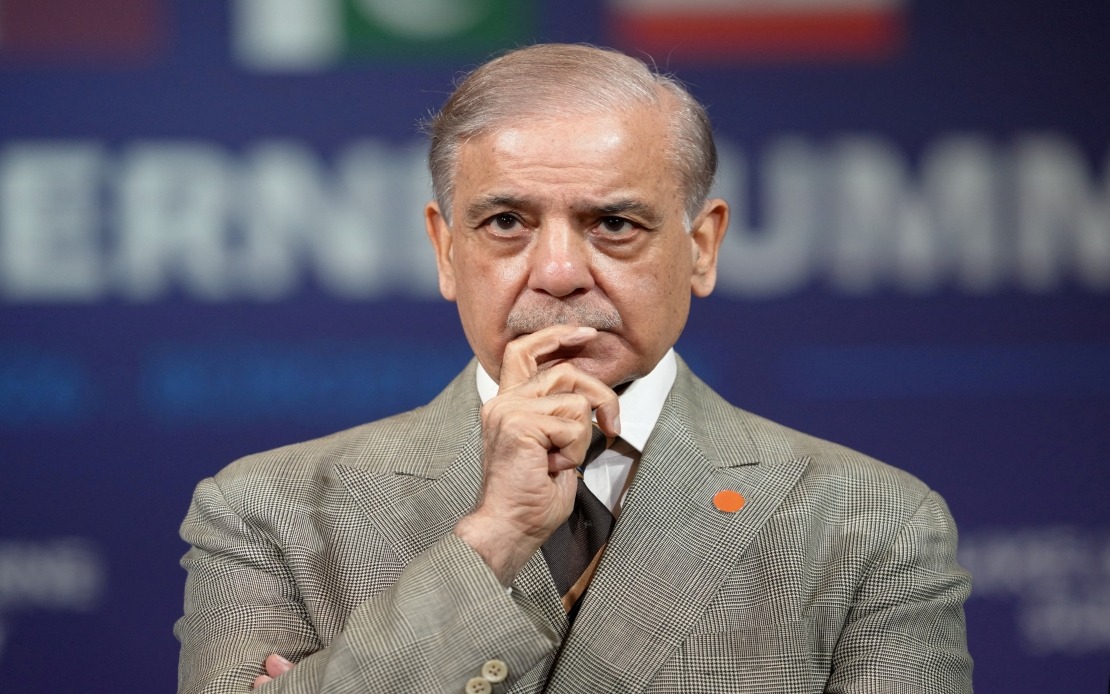
Pakistan's Prime Minister Shehbaz Sharif confirmed on Tuesday that the United States and Iran have committed to intensive negotiations spanning the next two months, focusing on their most contentious bilateral issues including nuclear capability, ballistic missile development, and billions of dollars in frozen Iranian assets abroad. Speaking to lawmakers in the National Assembly in Karachi, Sharif characterized the forthcoming talks as a critical window for converting a recently signed memorandum of understanding into a durable diplomatic settlement between the two long-estranged powers.
The announcement follows the conclusion of technical negotiations in Burgenstock, Switzerland, which ended early Monday after both sides agreed on procedural mechanisms and a structured roadmap for future discussions. Pakistan and Qatar jointly facilitated the Switzerland meeting, marking a significant role for regional actors in mediating one of the world's most intractable geopolitical standoffs. The June 17 signing of the Islamabad Memorandum of Understanding (MoU)—which Pakistan itself endorsed as a guarantor—signals an unprecedented willingness from both Washington and Tehran to pursue structured engagement despite decades of mutual suspicion and economic sanctions.
Sharif's optimistic assessment that the MoU framework "will turn into a long-lasting agreement in the next 60 days" reflects the cautious hope among mediators that substantive progress is achievable when backed by high-level political commitment. The timeframe is deliberately compressed, signalling that both delegations recognize the urgency of momentum in diplomacy. Technical teams will now address three interconnected domains: the status of Iran's nuclear programme under international safeguards, the future trajectory of Iran's missile arsenal, and the mechanics for unfreezing Iranian state assets that have been sequestered in foreign banks and central banks as enforcement of international sanctions regimes.
However, Tehran's Foreign Ministry immediately introduced a complicating note to the optimistic narrative. Spokesman Esmaeil Baghaei stated categorically that Iran's ballistic missile capabilities were never on the negotiating agenda during the Switzerland discussions, effectively drawing a red line ahead of the technical talks. This distinction is operationally significant: if Iran refuses to discuss missiles as part of a final agreement, the negotiators will face a fundamental impasse, as the US and its regional allies—particularly Israel—view Iran's missile programme as inseparable from nuclear proliferation concerns. Missiles serve as delivery mechanisms for nuclear warheads, making this omission potentially fatal to any comprehensive settlement.
Baghaei's second statement—that Iran will not permit International Atomic Energy Agency (IAEA) inspectors to access nuclear facilities damaged or targeted during the recent Israel-US military operations against Iranian soil—introduces another significant constraint. This position, if maintained, would contradict one of the core verification mechanisms any nuclear agreement would require. The IAEA's ability to conduct snap inspections and access sensitive sites underpins the credibility of nuclear monitoring regimes globally. Iran's refusal to allow such access to damaged facilities suggests Tehran may be concerned about evidence preservation or that inspections could reveal undisclosed weapons-related activities.
For Malaysia and Southeast Asian observers, these developments carry important implications for regional security architecture. Iran's assertiveness in missile development and its resistance to intrusive international inspections signal that any US-Iran rapprochement will likely remain limited in scope, preserving Tehran's strategic autonomy in the Middle East and Persian Gulf. This has consequences for the stability of global energy markets, which directly affect oil-dependent economies across ASEAN. If negotiations collapse or proceed slowly, the risk of miscalculation and renewed military confrontation in the Middle East remains elevated, with potential spillover effects on maritime commerce through the Strait of Hormuz—a chokepoint through which roughly one-fifth of the world's seaborne oil passes.
Pakistan's role as both mediator and signatory to the MoU reflects Islamabad's strategic investment in de-escalation in the Middle East. Pakistan hosts millions of Afghan refugees and maintains complex relationships with both Saudi Arabia and Iran, making it acutely sensitive to regional volatility. By positioning itself as a trusted intermediary alongside Qatar, Pakistan aims to enhance its diplomatic standing and potentially secure commitments from both the US and Iran regarding its own security interests—particularly concerning terrorism emanating from ungoverned spaces and the volatile Afghanistan-Pakistan border region.
The structure of the upcoming 60-day negotiation period suggests both sides recognize that a comprehensive agreement cannot be rushed. Technical teams typically require weeks to draft legal language, model verification protocols, and align complex economic provisions. The involvement of mediators indicates that neither party trusts the other sufficiently for direct bilateral negotiations without neutral observers. This arrangement, while facilitating dialogue, also means that third-party mediators like Pakistan and Qatar will gain significant insight into both parties' red lines, bottom lines, and strategic priorities—information that carries diplomatic currency in broader Middle Eastern affairs.
The frozen assets question represents perhaps the most tractable issue among the three. Estimates suggest Iran has upwards of $6 billion to $100 billion in blocked funds depending on which accounts and currencies are included in calculations. Unfreezing these resources would provide Iran with crucial financial relief and could theoretically incentivize Tehran to maintain compliance with any final agreement. However, the mechanics are complicated by multiple legal jurisdictions, sanctions imposed by different US administrations with varying scopes, and the claims of terrorism victims against the Iranian state in American courts.
Sharif's characterization of the Switzerland talks as "historic" represents political positioning that may exceed the substantive breakthroughs actually achieved. Diplomatic language often inflates incremental progress as historic achievement, particularly when mediators wish to demonstrate success to their domestic audiences. Pakistan's National Assembly, the audience for Sharif's remarks, includes constituencies concerned about regional security and Pakistan's international standing. By claiming historic progress, Sharif shores up his government's credibility in foreign affairs during a period of domestic economic strain.
The coming 60 days will test whether the structural agreements reached in Switzerland can withstand the technical complexities and political pressures that emerge during detailed negotiations. Iran's preemptive statements about missiles and IAEA access suggest that Tehran may use the negotiation period to consolidate positions rather than soften them. Meanwhile, the new US administration's approach to Iran negotiations remains a variable; changes in Washington's negotiating team or strategic priorities could unravel fragile consensus. For regional stability and the interests of Southeast Asian nations dependent on Middle Eastern energy supplies and unobstructed maritime trade, the stakes of these 60 days are considerable.