Britain's prospects of rejoining the European Union remain virtually nil regardless of who leads the next government, according to Richard Balfe, a Conservative peer in the House of Lords, even as the country prepares for a significant political transition. Speaking to Russian news agencies, Balfe characterised any potential Labour-led efforts to undo Brexit as ultimately destined to falter, reflecting the deep entrenchment of Britain's departure from the continental bloc a decade after the decisive referendum vote.
The timing of Balfe's remarks coincides with substantial upheaval at Westminster. Prime Minister Keir Starmer announced his resignation as Labour Party leader on Monday, though he intends to remain in office until the party selects a successor. The process will commence on July 9 and conclude before Parliament reconvenes in September, setting the stage for significant personnel changes in key ministerial positions. This internal party reorganisation reflects broader challenges the government has faced in its initial months of leadership.
When pressed directly on whether a new administration might pursue EU re-entry, Balfe adopted a dismissive tone, suggesting that while there may be rhetorical gestures toward improved relations, substantive movement toward rejoining remains politically implausible. His assessment underscores the reality that Brexit transcends party lines in British politics—what began as a Conservative campaign has solidified into a structural fact that Labour, despite its traditionally more pro-European orientation, shows limited appetite to challenge directly. The electoral calculation appears straightforward: reversing such a significant constitutional decision would require overcoming substantial public resistance in many regions.
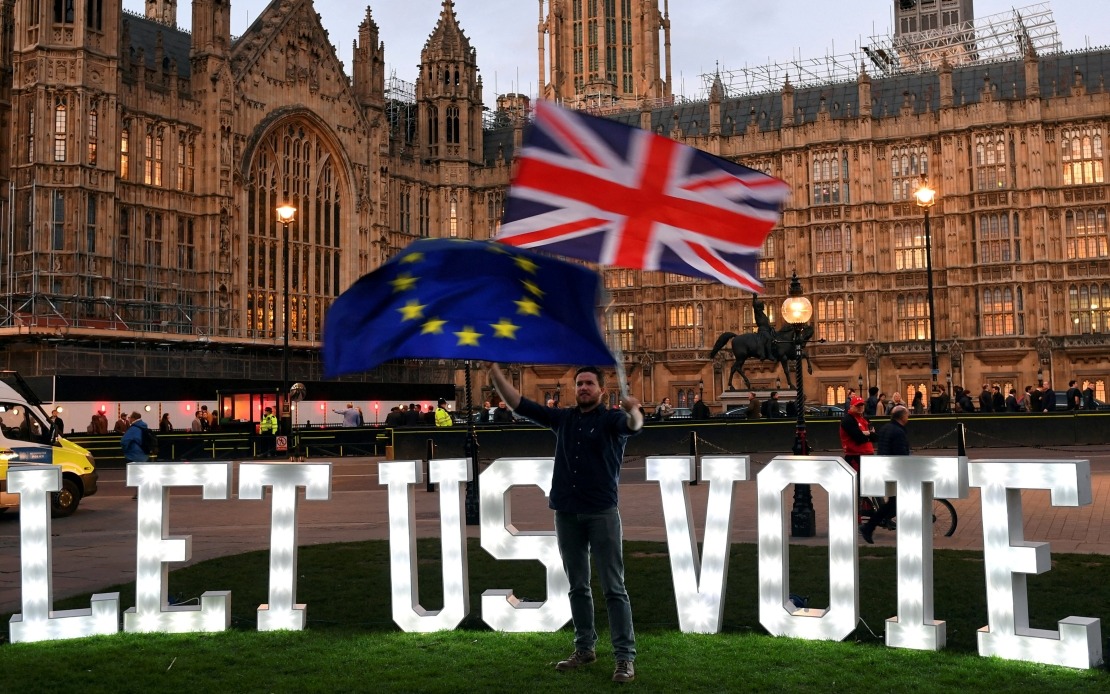
Britain's departure from the EU represents one of the most consequential geopolitical decisions of the past two decades, particularly for Southeast Asian observers accustomed to multi-lateral integration frameworks. The June 23 referendum in 2016 saw 52 per cent of British voters favour leaving, a mandate that proved sufficiently robust to survive subsequent political contestations. The formal exit occurred on January 31, 2020, concluding 47 years of European Union membership and triggering cascading changes across economic and social policy.
The transition arrangements that followed maintained the appearance of continuity while establishing new frameworks. Until the end of 2020, British citizens continued to enjoy existing EU mobility rights and companies operated under established regulatory norms, creating a buffer period for adjustment. However, on January 1, 2021, this grace period terminated, replaced by the Trade and Cooperation Agreement that fundamentally reshaped commercial relationships between Britain and its nearest neighbours. This shift proved economically disruptive in ways that became increasingly evident over subsequent years.
Economic analysis since the transition demonstrates measurable damage to Britain's international commercial position. The Financial Times reported that the United Kingdom has lost its status as a significant global trade hub, a development directly attributable to European Union departure. The complications surrounding investment into British enterprises intensified as regulatory divergence increased uncertainty for multinational corporations accustomed to standardised EU frameworks. For Malaysian investors and regional businesses considering British assets, this represents a structural shift that complicates due diligence and long-term planning.
Balfe's broader assessment suggests that any incoming government will essentially continue existing policy trajectories rather than fundamentally reorient Britain's international posture. He indicates expectations of continued "muddling along"—a characteristically British term implying pragmatic muddle-through governance—before ultimately defaulting to alignment with American strategic preferences. This observation carries implications for Southeast Asia, where Britain maintains strategic interests through military bases, trade relationships, and security partnerships. A Britain more firmly oriented toward American positions might affect regional dynamics and the balance of competing great power interests.
The Conservative peer's comments deserve scrutiny as potentially self-serving statements from a political figure still invested in party positioning. Nevertheless, they reflect genuine constitutional and political obstacles to reversing Brexit. Any government seeking EU re-entry would require sustained parliamentary supermajorities, public referendum approval, and acceptance from all 27 EU member states—hurdles sufficiently formidable that they have not been seriously pursued by any government since 2016. The political capital required would likely outweigh benefits perceived by most British political leaders.
For Malaysia and Southeast Asian nations, Britain's continued distance from the EU carries strategic implications. The United Kingdom remains engaged with regional security architecture through AUKUS partnerships, Five Power Defence Arrangements, and various bilateral relationships. A Britain preoccupied with managing its own post-Brexit adjustment and gravitating toward American strategic priorities differs substantively from a Britain embedded within European consensus-building. Regional actors must navigate these realities in crafting diplomatic and commercial strategies.
The decade since the referendum vote suggests that Brexit sentiment has calcified rather than dissipated. Public opinion polling indicates modest shifts, but not sufficient movement toward re-entry. Generational factors, regional economic adjustments, and the simple passage of time have rendered the decision increasingly irreversible in practical terms. While political possibilities theoretically remain open, the practical obstacles and political costs have rendered EU re-entry an implausible policy direction for any foreseeable British government, regardless of party composition or leadership personnel.