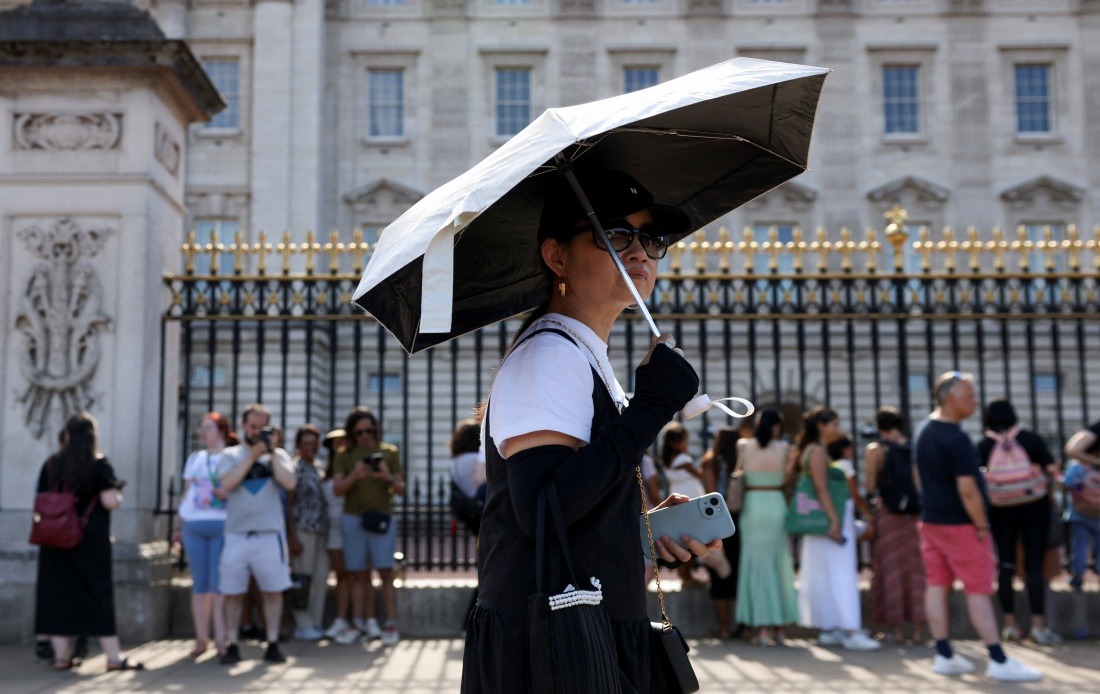
The United Kingdom's ceremonial guard operations face an unprecedented disruption this week as the Household Division announced the cancellation of iconic changing ceremonies across major locations including Buckingham Palace, Windsor, and central London. The decision reflects growing concerns about extreme heat conditions expected to sweep across the country, with meteorological forecasters warning of record-breaking temperatures that could exceed those typically seen in June by a significant margin.
The UK's Met Office issued a red weather alert on Monday—the highest level in its warning system—for much of the country including Wales, signalling forecasters' grave concerns about the health risks posed by the incoming heatwave. This classification reflects not merely high temperatures but the potential for serious harm to the general population, particularly vulnerable groups such as the elderly and those with underlying health conditions. Red alerts are issued only when there is a reasonable expectation of widespread effects on people and infrastructure.
Temperatures across southern England are projected to reach 39 degrees Celsius during Wednesday and Thursday, with certain regions potentially experiencing even more severe conditions. Such readings would represent a notable departure from typical June weather patterns and could establish new seasonal records. The forecast prompted authorities to adopt preventive measures affecting multiple sectors of public life, from ceremonial arrangements to educational institutions.
In its official statement, the Household Division explained that the wellbeing of serving soldiers, military working horses, and assembled members of the public attending these events remained the paramount consideration. The ceremonial guard changes, which draw crowds of tourists and residents to central London and Windsor, involve personnel and animals standing in full ceremonial dress under direct sunlight for extended periods. The combination of heavy uniforms, lack of shade in many areas, and prolonged standing poses genuine occupational health risks during extreme temperature conditions.
The scope of cancellations spans three consecutive days—Tuesday, Wednesday, and Thursday—indicating authorities' expectation that dangerous conditions will persist throughout this period rather than peak on a single day. This extended precaution demonstrates a shift in how official institutions balance tradition with contemporary public health understanding, contrasting with historical approaches that might have proceeded regardless of weather conditions.
For Wednesday specifically, the Royal Horse Guards' traditional changing ceremony will proceed in modified form, beginning earlier in the morning when temperatures remain lower. This compromise allows ceremonial duties to continue while minimising exposure to peak daytime heat. Additionally, soldiers stationed on duty will be positioned in shaded locations wherever possible, and rotation schedules will be intensified to reduce individual exposure time to the extreme conditions. These adjustments reflect practical adaptations designed to permit ceremonial continuity within a health-conscious framework.
The heatwave's impact extends well beyond ceremonial London. Educational institutions across southern England have suspended normal operations, with entire county councils implementing closure directives. Somerset's local authority announced that approximately 100 schools would remain shut during the extreme heat period, a decision made partly due to inadequate cooling infrastructure in many school buildings. The county sits within the territory covered by the red weather warning, making such precautions necessary.
Buckinghamshire reported a comparable number of school closures, while Gloucestershire suspended classes in more than 80 institutions. These three counties, along with London itself, form part of the region expected to experience the most severe heat conditions. In London, nearly ten major educational establishments cancelled in-person instruction, requiring students to remain home during what should have been a normal week of lessons. Such widespread educational disruption highlights how severe weather increasingly disrupts normal institutional functioning across multiple domains.
The decision to cancel guard ceremonies reflects broader societal recognition that climate conditions are shifting in ways that challenge traditionally-scheduled outdoor activities and ceremonies. What might once have been considered excessive caution now represents standard practice in response to meteorological warnings. The Household Division's prioritisation of personnel and animal welfare over ceremonial continuity signals institutional adaptation to contemporary climate realities, particularly relevant as southeastern England—home to the capital—experiences more frequent temperature extremes.
For Malaysian observers, the UK heatwave offers perspective on how even wealthy, developed nations with sophisticated infrastructure experience disruption when temperatures exceed historical norms. While Malaysia's tropical climate means residents are accustomed to high temperatures year-round, the psychological and institutional impact of unprecedented heat spikes differs markedly. The UK's response demonstrates how climate adaptation requires rethinking ceremonies, educational calendars, and workplace practices—challenges that Southeast Asian countries will increasingly face as regional temperatures continue to shift upward.